CNC Machining Parts: Radiation-Resistant for Nuclear Applications
Date:2026-06-29Article editor:Starting Point PrecisionViews:299In the demanding environment of nuclear power generation, fuel reprocessing, and medical isotope production, component failure is not an option. Radiation-resistant CNC machining has emerged as the critical enabler for producing precision parts that withstand extreme neutron flux, gamma radiation, and elevated temperatures—while maintaining tight tolerances over decades of service life.

Conventional stainless steels and aluminium alloys suffer from radiation embrittlement and swelling, leading to microcracking and loss of dimensional stability. Neutron irradiation displaces atoms, creating vacancies and interstitial clusters that harden materials but reduce ductility. For rotating machinery, control rod guides, and fuel assembly components, this means accelerated wear and unplanned outages.
Leading nuclear OEMs specify high‑purity austenitic stainless steels (e.g., 316L, 304H), Inconel® alloys (625, 718), and zirconium‑based alloys for their low thermal neutron capture cross‑sections and resistance to irradiation‑induced intergranular corrosion. More advanced options include SiC‑reinforced composites and titanium‑zirconium‑molybdenum (TZM) alloys for extreme service conditions. Our CNC processes are qualified to ASME Section III material standards, ensuring traceability from billet to finished part.
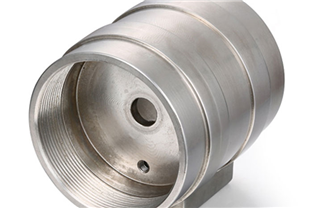
Radiation resistance isn't only about chemistry—it’s about surface integrity. Conventional machining introduces residual tensile stresses and micro‑tears that act as crack initiation sites under irradiation. Our proprietary cryogenic cooling and low‑feed/high‑speed strategies minimise work hardening and subsurface damage. Post‑machining electropolishing and passivation remove contaminated layers, reducing the risk of stress corrosion cracking (SCC) in high‑temperature water.
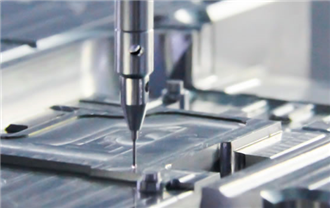
For channels, thin‑walled tubes, and complex internal geometries, we employ EDM (electrical discharge machining) and laser‑assisted milling to achieve ±5 µm tolerances without inducing detrimental phase transformations. Every batch undergoes non‑destructive testing (NDT) including ultrasonic and eddy‑current inspection, backed by our ISO 19443 nuclear quality management system.
Successful CNC parts for nuclear service integrate redundant load paths, large fillet radii to reduce stress concentrations, and self‑aligning features to accommodate thermal expansion. We collaborate with customers from the conceptual stage, using finite‑element analysis (FEA) to predict irradiation creep and swelling over a 60‑year design life.
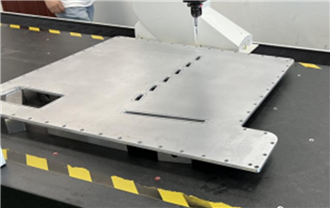
Every radiation‑resistant part ships with a fully documented pedigree—including mill test reports, in‑process inspection data, and final CMM (coordinate measuring machine) reports. We maintain batch‑level traceability to the original melt, ensuring that any future investigation can pinpoint root causes. Our facility is audited annually by the NRC (Nuclear Regulatory Commission) and IAEA for compliance with 10 CFR Part 21 and ASME NQA‑1.
For components requiring remote handling, we incorporate lifting eyes, chamfered edges, and RFID tags to facilitate robotic deployment in high‑radiation areas.
A leading European nuclear fuel supplier approached us with a critical challenge: their existing spacer grids, produced by conventional casting, exhibited fretting wear and irradiation‑induced relaxation after just 18 months in a pressurised water reactor (PWR). The grids required complex honeycomb structures with 0.3‑mm‑thick straps and precision‑formed spring clips.
We redesigned the manufacturing route using 5‑axis CNC milling from solution‑annealed Inconel 718 plate, followed by laser peening to impart compressive residual stresses. The finished grids passed accelerated irradiation testing at the INL Advanced Test Reactor—simulating 4 years of full‑power operation with < 0.2% dimensional change and no measurable fretting. The client reported a 40% extension in refuelling intervals, directly translating into millions of euros in operational savings.
Radiation‑resistant CNC machining is not a commodity service—it is a fusion of metallurgy, precision engineering, and rigorous quality culture. From small‑batch prototype to high‑volume production, our approach ensures that every part contributes to safer, more reliable nuclear operations. Contact our engineering team to discuss your specific neutron fluence and temperature requirements.
Q1:What materials are best for CNC machining in high‑radiation environments?
Austenitic stainless steels (316L, 304H), nickel‑based superalloys (Inconel 625/718), zirconium alloys (Zircaloy‑4), and titanium alloys (Ti‑6Al‑4V) are widely used. The choice depends on neutron spectrum, temperature, and coolant chemistry. We recommend a trade‑off analysis between swelling resistance and thermal conductivity.
Poorly controlled machining introduces residual tensile stress, surface roughness, and micro‑cracks that accelerate irradiation‑assisted stress corrosion cracking (IASCC). Using sharp tools, optimised feeds/speeds, and post‑machining surface treatments (electropolishing, shot peening) can preserve or even enhance radiation resistance.
We routinely hold ±0.01 mm on critical dimensions and ±0.005 mm on bore diameters for control rod guide tubes. For special applications, we can achieve ±2 µm with thermal compensation and in‑process probing.
Yes, we partner with accredited labs for post‑irradiation examination (PIE), including tensile, impact, and microstructural analysis. We can facilitate testing at research reactors to qualify new material‑process combinations for your specific application.
We are certified to ASME NQA‑1, ISO 19443, and 10 CFR 50 Appendix B. Our facility is registered with the NRC and holds a valid QA‑program approval for safety‑related components.
Add: Building 3No.277 Zhen'an Middle Road, Chang'an Town,Dongguan,Guangdong, China
Tel:+86-769-82855591
Copyright © 2019 All Rights Reserved Dongguan Start Precision Technology Co., Ltd. Tel: +86-769-82855591
Add: No. 277 Zhen'an Middle Road, Chang'an Town, Dongguan, Guangdong, China



 中文版
中文版 English