CNC Machining Parts: Mastering Precision with Tolerance Control
Date:2026-02-05Article editor:Starting Point PrecisionViews:583
Product Advantages: Precision, Versatility, and Efficiency
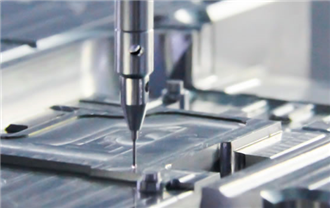
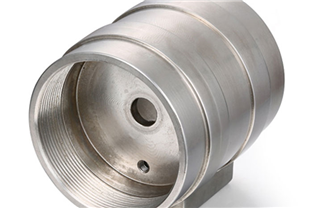
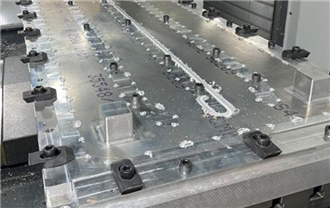
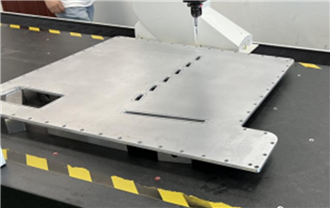
The primary advantage of CNC machining is its unmatched precision and repeatability. By following computerized instructions, CNC machines produce parts with exceptional dimensional accuracy, consistently holding tight tolerances often within ±0.025mm or better. This reliability reduces assembly issues and ensures part interchangeability. Furthermore, CNC Machining Parts offer remarkable material versatility, from metals like aluminum and stainless steel to engineering plastics. The process is also highly efficient for both prototyping and production, enabling rapid iteration and scalable manufacturing. Advanced capabilities like multi-axis machining allow for creating complex geometries in a single setup, reducing lead times and potential errors.
For a deeper dive into precision standards, refer to resources from the American Society of Mechanical Engineers (ASME).
Application Scenarios: Where Precision is Non-Negotiable
In some Industries, like Aerospace & Defense, Medical Devices, Automotive, and Electronics & Telecommunications, They have extremely strict requirements for the precision parts.They must obey strict tolerances that can product safety and high performance products, and the industry can continue to innovate and make breakthroughs.
Common Questions (FAQ) on CNC Machining Parts
Q1: What is a standard machining tolerance, and when do I need tighter specs?
A: A common standard tolerance is ±0.125mm (±0.005"). Tighter tolerances (e.g., ±0.025mm) are needed for parts that must fit with others, move, or bear load precisely. Specify tight tolerances only on critical features to control costs. Learn more about specifying requirements on our CNC machining services page.
Q2: How does material choice affect achievable tolerance and cost?
A: Stable metals like aluminum and brass generally hold tighter tolerances more easily. Some plastics are prone to warping or moisture absorption, making very tight tolerances challenging and costly. Discuss your material needs with our engineers for optimal results.
Q3: How can I reduce the cost of my CNC machined parts?
A: Key strategies include: optimizing tolerances (use standard where possible), designing for manufacturability (avoid deep pockets, sharp internal corners), and selecting suitable materials.
Additionally,GD&T is important to reduce tolerances . As long as you understand and can apply it to your work correctly, it can create a larger "tolerance zone" than simple plus/minus dimensions, so it can make your creation possible.
Q4: What file format and information do you need for a quote?
A: We require a 3D CAD file (STEP or IGES preferred) and key details: material, quantity, surface finish (e.g., as-machined, anodized), and any critical dimensions or tolerances called out on a 2D drawing.
Conclusion
CNC machined parts are high-quality components that integrate precision, strength, and versatility. Understanding the role of tolerance—from leveraging its advantages to applying it wisely across different applications—enables designers and engineers to fully harness this technology. By partnering with a knowledgeable manufacturer, you can navigate common questions and optimize your designs for performance, reliability, and cost-effectiveness.
Add: Building 3No.277 Zhen'an Middle Road, Chang'an Town,Dongguan,Guangdong, China
Tel:+86-769-82855591
Copyright © 2019 All Rights Reserved Dongguan Start Precision Technology Co., Ltd. Tel: +86-769-82855591
Add: No. 277 Zhen'an Middle Road, Chang'an Town, Dongguan, Guangdong, China



 中文版
中文版 English