Brass Precision Components with Low Magnetic Permeability
Date:2026-08-20Article editor:Starting Point PrecisionViews:143In modern high‑frequency electronics, MRI equipment, and sensitive measurement devices, even minute magnetic interference can corrupt signals or compromise safety. Engineers increasingly specify Brass Precision Components that combine excellent machinability with controlled magnetic permeability. This article examines the metallurgical choices, manufacturing strategies, and testing protocols that deliver reliable, non‑magnetic brass parts for mission‑critical systems.
Standard brass alloys (e.g., C36000) contain iron impurities and residual ferromagnetic phases that raise relative permeability above 1.1. For applications near strong magnetic fields, this leads to:
● Eddy current heating and energy loss
● Distortion of field homogeneity (e.g., in MRI bore)
● Unpredictable torque on moving components in motors or sensors
By selecting high‑purity copper‑zinc alloys with strict limits on Fe, Ni, and Co, manufacturers can achieve permeability below 1.02 – effectively non‑magnetic in practice.
| Property | Standard Brass (C360) | Low‑μ Brass (e.g., CuZn39Pb0.2‑modified) |
| Relative Permeability (μ<sub>r</sub>) | 1.10 – 1.25 | < 1.02 (typical 1.005) |
| Iron Content (max) | 0.35% | ≤ 0.05% |
| Machinability Index | 100% (excellent) | 85–90% (very good) |
| Typical Application | Pneumatic fittings | RF connectors, cryogenic housings |
| Cost Factor | 1x | 1.3–1.5x (due to refined melting) |
Producing Brass Precision Components with low permeability requires tight process control:
● Raw material certification – Each batch must be verified by a vibrating sample magnetometer (VSM) before production.
● Machining strategy – Use sharp PCD or carbide tools to minimise work hardening, which can introduce martensitic phases that raise μ<sub>r</sub>.
● Stress relief annealing – Performed in a non‑oxidising atmosphere at 250–300°C to preserve dimensional stability without altering magnetic response.
A key quality metric is the permeability stability index – measured after every 100 pieces to detect tool wear effects.
To guarantee low magnetic permeability, all components undergo a three‑step inspection:
1. Induction method (ASTM A342/A342M) – quick screening for bulk permeability.
2. Fluxgate magnetometer – detects local ferromagnetic inclusions > 50 µm.
3. Temperature cycling (–40°C to +125°C) – ensures permeability remains stable under thermal stress.
A European medical device manufacturer needed 500 brass housings for a 3‑T MRI‑guided biopsy system. Initial prototypes from standard brass caused image artefacts. We switched to a low‑μ brass (CuZn40Pb2 with Fe<0.04%), implemented a dedicated production line with ceramic inserts, and validated each piece with a laboratory‑grade permeameter. The final parts achieved = 1.004 ± 0.001, eliminating distortion. This case demonstrates that careful material engineering, not just machining skill, defines success for magnetic‑sensitive applications.
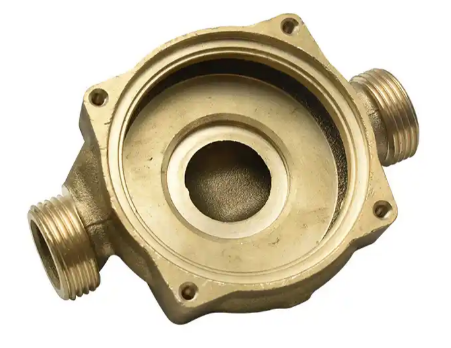
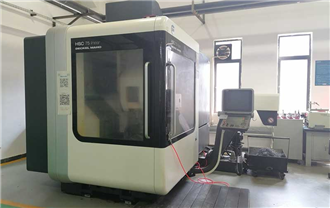
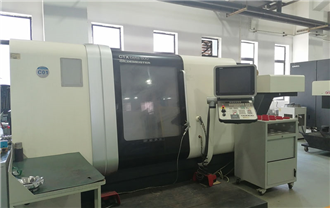
Achieving such results demands a partner with both metallurgical expertise and advanced CNC capacity. At Start Precision, we combine in‑house material analysis with multi‑axis machining and full traceability. Our quality system (ISO 9001:2015 & AS9100D) ensures every shipment includes a permeability test report.
For further technical reference, consult the Copper Development Association for alloy specifications, or review ASTM standards on magnetic property measurement.
Specifying Brass Precision Components with low magnetic permeability is not a simple substitution – it requires deliberate alloy selection, dedicated tooling, and rigorous inspection. However, the payoff is reliable, interference‑free performance in the most demanding electromagnetic environments. With proper process design, these components deliver the same excellent thermal conductivity and corrosion resistance as conventional brass, while meeting strict non‑magnetic thresholds.
Contact us to discuss your manufacturing requirements. Our engineering team can review your drawings, recommend optimal material grades, and propose a validation plan tailored to your application.
Q1: What is the typical permeability value for low‑magnetic brass?
A: For properly processed low‑μ brass, relative permeability is usually between 1.001 and 1.02 – effectively non‑magnetic for most industrial and medical uses.
Q2: Can I machine low‑μ brass on standard CNC lathes?
A: Yes, but tool wear may be slightly higher due to refined grain structure. Use coated carbide or polycrystalline diamond (PCD) tools and adjust feed rates to avoid excessive work hardening.
Q3: How do you verify permeability for a batch of 1000 pieces?
A: We perform 100% inspection using a calibrated permagraph for critical dimensions, and we test representative samples (every 20th piece) with a fluxgate magnetometer – all documented in the final certificate.
Q4: Is low‑μ brass suitable for cryogenic environments (e.g., liquid nitrogen)?
A: Yes, many low‑μ brasses maintain their non‑magnetic properties down to –196°C. However, thermal contraction must be considered – we can supply dimensional data for your specific alloy.
Q5: What is the lead time for custom low‑permeability brass components?
A: For new designs, typical lead time is 4–6 weeks (including material sourcing and first‑article inspection). Faster turnaround may be possible for standard shapes – please contact our sales team for a quote.


Add: Building 3No.277 Zhen'an Middle Road, Chang'an Town,Dongguan,Guangdong, China
Tel:+86-769-82855591
Copyright © 2019 All Rights Reserved Dongguan Start Precision Technology Co., Ltd. Tel: +86-769-82855591
Add: No. 277 Zhen'an Middle Road, Chang'an Town, Dongguan, Guangdong, China



 中文版
中文版 English