CNC Precision Turned Parts for Inconel machining
Date:2026-08-20Article editor:Starting Point PrecisionViews:126Machining Inconel—a nickel-chromium superalloy—is notoriously difficult. Its high strength and heat resistance, while valuable in service, cause rapid tool wear, severe work hardening, and extreme cutting temperatures during production. Mastering CNC Precision Turned Parts from this material requires not just skill, but a systematic approach to counteract these obstacles.
At Dongguan Start Point Precision Technology Co., Ltd., we have developed proven strategies to consistently deliver high-tolerance Inconel components—routinely holding ±0.01mm on critical dimensions, with the ability to tighten further when required. Below, we detail our methods and the types of parts we excel at producing.
| Challenge | Impact on Machining | Our Engineering Response |
| Work Hardening | Creates a hardened surface layer that causes edge chipping, poor finish, and rapid tool failure if not cut beneath. | Use positive rake inserts and maintain aggressive, constant feed rates to cut under the hardened zone. Our Japan TAKZSAWA NEX-108 turning centers provide the low-end torque required. |
| Intense Cutting Heat | Leads to crater wear, thermal distortion of the part, and loss of dimensional control. | Deploy high-pressure coolant (1000+ PSI) directly at the cutting edge and select PVD TiAlN-coated tools. |
| Vibration & Tool Deflection | Causes chatter, poor surface finish, and inaccuracies in thin-wall sections or deep bores. | Employ rigid workholding and short tool overhangs. |
| Abrasive Wear | Abrasive carbides in the alloy cause flank wear and notch wear, shortening tool life. | Optimize speeds (typically 25–40 m/min for Inconel 718) and use tough carbide substrates with advanced coatings, balancing tool life with productivity. |
Our capabilities cover a wide spectrum of critical components across industries:
● Aerospace: Turbine housings, engine mounts, exhaust nozzles, landing gear bushings, and hydraulic fittings.
● Medical: Surgical instrument shafts, implantable device components, and orthopedic drill guides.
● Automotive & Motorsport: Exhaust valves, turbocharger rotors, EGR system components, and high-performance connecting rods.
● Oil & Gas: Downhole tool components, valve seats, and subsea connector pins.
● General Industrial: Heat exchanger fittings, chemical pump shafts, and furnace roller pins.
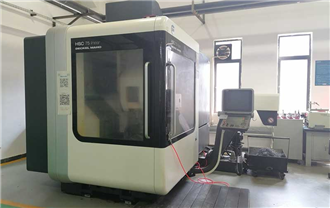
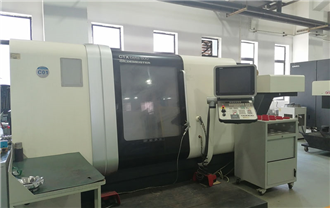
We routinely handle complex geometries, including threads, internal bores, thin walls, and off-axis features—often in a single setup using our DMG HSC 75 linear five-axis centers. For a complete view of our machinery, refer to our Precision equipment list.
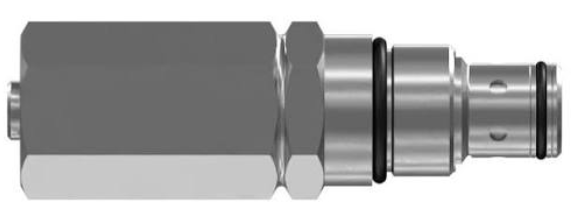
A recent project demanded an Inconel 718 hydraulic fitting with a ±0.01 and a delicate thin-wall section. The risk of distortion was high.
Our Approach:
● Machine: DMG CTX beta 800 for rigidity.
● Workholding: Custom expanding mandrel to support the thin wall internally.
● Tooling: Specially ground positive-rake insert with small nose radius to lower cutting forces.
● Program: Single continuous finish pass to avoid tool “push-off.”
Outcome: Zero scrap; bore tolerance held consistently; thin wall remained perfectly round. This exemplifies our capability to turn theoretical challenges into reliable production.
Our advantage lies in a diverse equipment fleet (DMG, Mazak, HAAS, Sodick, Seibu, and more) and a relentless focus on process optimization. From programming to inspection, every step is tailored to the unique demands of Inconel. We leverage industry-best practices—for example, machining parameter guidelines help us fine-tune speeds and feeds for each specific alloy, ensuring we hit ±0.01mm as a routine benchmark while maximizing tool life.
We don’t just machine parts—we engineer solutions. Visit our company homepage to learn more about our technical strength in CNC milling, turning, grinding, and EDM.
Contact us to discuss your manufacturing needs.
Frequently Asked Questions
Q1: What Inconel grades do you commonly turn?
We primarily machine Inconel 718 (high-temperature strength) and Inconel 625 (corrosion resistance), but can handle other grades upon request.
Q2:How do you prevent burr formation on threads and cross-holes?
We use back-chamfering tools, high-pressure coolant to flush chips, and sometimes a secondary deburring operation with our EDM wire cutting (Seibu/Sodick) for critical edges.
Q3: What is the typical lead time for a prototype Inconel turned part?
For simple geometries, we can offer prototypes within 5–7 business days. Complex parts with five-axis features may take 10–15 days, depending on material availability and tooling lead time.

Add: Building 3No.277 Zhen'an Middle Road, Chang'an Town,Dongguan,Guangdong, China
Tel:+86-769-82855591
Copyright © 2019 All Rights Reserved Dongguan Start Precision Technology Co., Ltd. Tel: +86-769-82855591
Add: No. 277 Zhen'an Middle Road, Chang'an Town, Dongguan, Guangdong, China



 中文版
中文版 English