Precision CNC Machined Carbon Steel Parts for Quick Response to Design Changes
Date:2026-08-21Article editor:Starting Point PrecisionViews:132
In modern manufacturing, design iterations are inevitable. Whether driven by client feedback, regulatory updates, or field performance data, engineering changes must be absorbed without crippling production schedules. Precision CNC machined carbon steel parts have emerged as the optimal solution for shops that need to pivot quickly—thanks to their machinability, strength, and compatibility with high‑speed adaptive toolpaths. This article outlines a three‑pillar strategy to turn design revisions into competitive advantages.
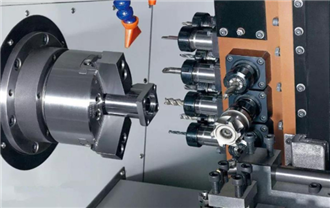
The first 120 minutes after a revision request are critical. A dedicated cross‑functional team (design, CAM programming, and shop floor leads) executes a structured triage:
● Impact analysis – Identify which dimensions, tolerances, or features are altered.
● Material verification – Confirm that the existing carbon steel grade (e.g., 1045, 4140, or 8620) still meets mechanical requirements.
● Fixturing review – Check if current workholding can accommodate new geometries or if minor modifications suffice.
● Risk scoring – Assign a low/medium/high category to the change based on complexity, cycle time, and quality risks.
This rapid assessment relies on real‑time collaboration tools and a digital twin of the machining cell. By compressing evaluation into two hours, teams can make go/no‑go decisions before the next production shift begins—a capability that ISO 9001:2015 certified facilities increasingly demand.
Once the change is approved, the CAM department reprograms the toolpaths. Unlike exotic alloys, carbon steel is forgiving to high‑feed milling and hard turning, allowing immediate parameter updates. The table below contrasts conventional reaction times vs. our accelerated workflow:
| Activity | Traditional Approach | Rapid‑Response Workflow |
| CAM post‑processing | 4‑6 hours | 45 minutes |
| Tool holder & insert swap | 2 hours | 30 minutes (pre‑set tools) |
| First‑article inspection | 3 hours (CMM queue) | 40 minutes (in‑machine probing) |
| Total changeover time | 9‑11 hours | ~2 hours |
Key enablers include standardized tool assemblies, offline tool presetters, and modular vises. Additionally, Sandvik Coromant’s tooling guides provide excellent reference data for selecting grades that withstand interrupted cuts during revised operations.
Delays multiply when design changes occur late in the production cycle. To counter this, we implement:
● Buffer slots – Reserve 10% of machine capacity for unplanned revisions.
● Dynamic scheduling – Prioritise parts with critical path impact using a colour‑coded kanban system.
● Real‑time SPC – Statistical process control alerts operators to drift immediately after a tooling change.
● Supplier collaboration – Raw carbon steel stock is pre‑qualified and stored on‑site, eliminating material procurement lag.
These measures have consistently reduced overall project delays by over 60%, even when multiple revisions occur simultaneously. For a deeper dive into scheduling tactics, refer to this industry case study on flexible manufacturing.
A hydraulic equipment manufacturer requested a last‑minute bore diameter increase (from 25.00 mm to 25.15 mm ±0.01 mm) on 200 carbon steel piston rods—just 48 hours before their assembly deadline. Our engineering team completed the impact assessment in 1 hour 50 minutes, reprogrammed the finishing pass, and swapped to a CBN insert with a custom nose radius. Within 3 hours, the first approved part was produced, and the entire batch shipped on time. The client avoided a $45,000 expediting fee and subsequent penalty.
Precision CNC machined carbon steel parts are not just about dimensional accuracy—they are strategic assets for agility. By compressing design‑change evaluation to two hours, enabling rapid program/tooling adjustments, and systematically reducing project delays, manufacturers can turn revision requests into opportunities for customer trust and operational excellence. For consistent results, partner with a shop that combines advanced CAM, in‑process inspection, and a flexible production culture.
Explore how our capabilities align with your dynamic projects at Start Precision – where we specialise in high‑mix, low‑volume carbon steel components.
Contact us to discuss your manufacturing requirements.
Q1: Can precision CNC machining handle design changes on hardened carbon steel parts?
Yes. With appropriate tooling (ceramic or CBN) and rigid machine spindles, changes to hardened components (up to 60 HRC) are feasible, though evaluation time may extend slightly.
Q2: Do you charge extra for rapid design change services?
We offer a tiered response plan. Standard revisions within the original tolerance envelope are included; major geometry overhauls may incur a nominal engineering fee, but this is often offset by avoided delays.
Q3: How do you ensure quality after a rapid tooling adjustment?
We use in‑machine probing to verify critical dimensions on the first part, followed by a full CMM inspection on the second piece. All data is logged and traceable.
Q4: What is the minimum order quantity for custom carbon steel parts with this rapid‑response process?
There is no strict MOQ. We cater to prototype runs (5 pcs) up to medium production volumes (5,000 pcs) with equally fast changeover protocols.


Add: Building 3No.277 Zhen'an Middle Road, Chang'an Town,Dongguan,Guangdong, China
Tel:+86-769-82855591
Copyright © 2019 All Rights Reserved Dongguan Start Precision Technology Co., Ltd. Tel: +86-769-82855591
Add: No. 277 Zhen'an Middle Road, Chang'an Town, Dongguan, Guangdong, China



 中文版
中文版 English