Humanoid Robot CNC Parts Precision Custom Machining: A Technical Overview
Date:2026-09-08Article editor:Starting Point PrecisionViews:150The evolution of humanoid robotics places extreme demands on mechanical components—each joint, actuator housing, and structural frame must achieve near-perfect geometric fidelity. Humanoid Robot CNC Parts are not standard milled pieces; they are high‑stakes precision elements where a 10‑micron deviation can alter gait dynamics or reduce payload capacity. This article outlines the machining strategies, equipment capabilities, and quality frameworks that transform raw alloys into reliable robotic skeletons.
Critical Considerations for Humanoid Robot CNC Parts
| Factor | Requirement | Impact on Performance |
| Material | Ti-6Al-4V, 7075‑T6, or 17‑4PH stainless | Strength‑to‑weight ratio and fatigue life |
| Tolerance | ±0.01 mm for mating surfaces | Smooth articulation and reduced backlash |
| Surface Finish | Ra ≤ 0.4 µm for bearing journals | Friction control and wear resistance |
| Complex Geometry | Undercuts, deep cavities, thin walls | Weight reduction without stiffness loss |
| Batch Size | 50–2,000 units (prototype to production) | Process repeatability and cost efficiency |
To meet these benchmarks, shops must combine multi‑axis simultaneity, in‑process probing, and adaptive temperature compensation.
Core Equipment & Parameter Matrix
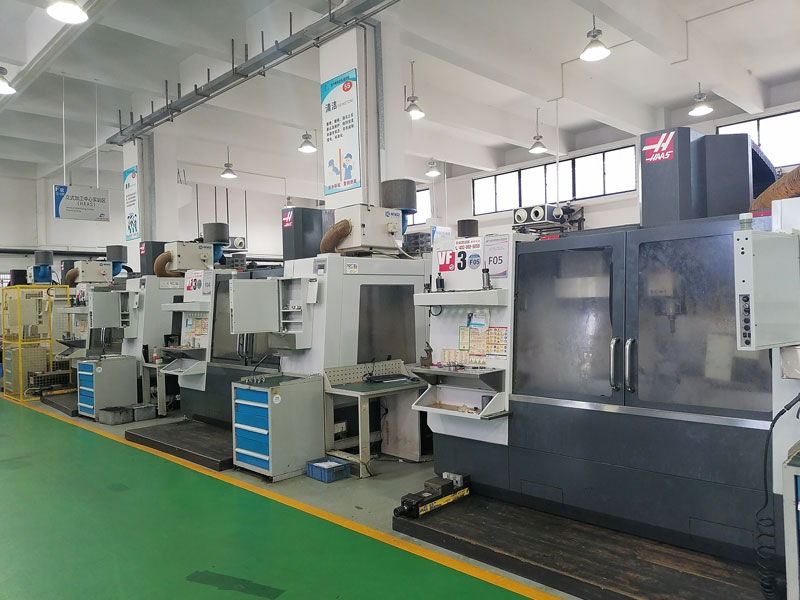
Based on industry‑standard practice (and equipment lists commonly found in advanced precision facilities), the following machine types form the backbone of humanoid‑grade production. For a full Precision equipment list, refer to the machine inventory page.
| Machine Model | Axes | Travel (X/Y/Z mm) | Spindle Speed | Typical Application |
| 5‑Axis Machining Center | 5 (simultaneous) | 800 × 700 × 600 | 18,000 rpm | Hip joints, skull frames |
| Turn‑Mill Center | 5 (plus C‑axis) | Ø500 × 800 | 12,000 rpm | Actuator shafts, gear blanks |
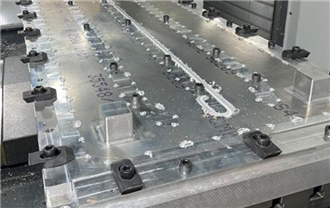
| High‑Speed 3‑Axis VMC | 3 | 1200 × 600 × 550 | 24,000 rpm | Battery housings, cover plates |
| Wire EDM | – | 600 × 400 × 400 | – | Spline profiles, sensor slots |
All machines are integrated with automated tool setters and Renishaw touch probes, enabling real‑time offset corrections.
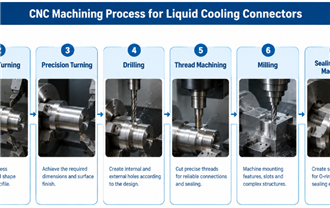
Process Flow for Precision Custom Machining
1. Design for Manufacturability (DFM) – Collaborate with robotics engineers to modify fillets and draft angles while retaining structural integrity.
2. Stock Preparation – Use forged or extruded near‑net shapes to reduce roughing time and internal stress.
3. Roughing – High‑feed milling with carbide insert tools, leaving 0.3 mm stock for semi‑finishing.
4. Heat Treatment (if required) – Solution annealing for aluminium alloys or precipitation hardening for stainless.
5. Semi‑finishing & Finishing – Employ trochoidal milling and barrel finishing tools to achieve Ra 0.2 µm on critical bores.
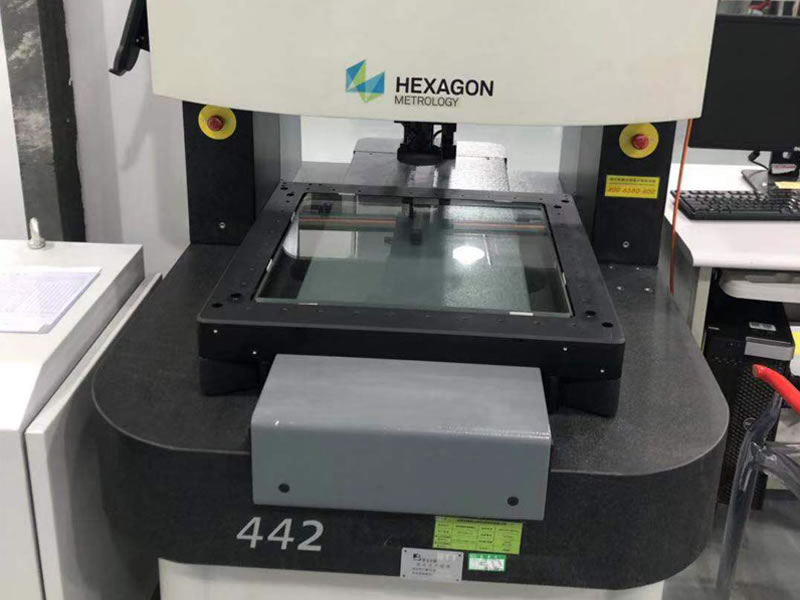
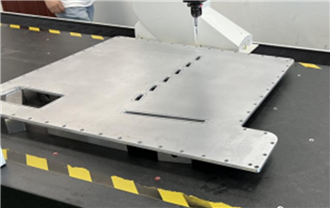
6. In‑process Inspection – Every 10th part undergoes CMM verification (ISO 10360‑2).
7. Deburring & Passivation – Electrochemical deburring for internal cross‑holes, followed by nitric acid passivation.
8. Final QC – Full dimensional report with statistical process control (SPC) charts.
External reference: Material certifications follow ASTM F3001 for additive‑grade Ti‑6Al‑4V, ensuring traceability.
Real‑world Application Example
A leading European humanoid project required 120 hip‑rotation housings in 7075‑T6. The challenge: a 0.5‑mm wall thickness around a 40‑mm bearing bore, with six M3 helicoil threads on compound angles. Using a 5‑axis simultaneous strategy (tool axis tilting to avoid collision), we achieved 98% first‑part acceptance. Cycle time dropped from 47 to 32 minutes per piece after optimising feed‑rate scheduling. The customer’s validation test reported zero dimensional drift across three production batches—proof that disciplined CNC execution delivers robotics‑ready reliability.
Quality Certifications & Shop Environment
Precision is not only about machines; it is about environmental stability and proven management systems. Our workshops are maintained at 20 °C ±1 °C with continuous coolant filtration. We hold:
● ISO 9001:2015
● IATF 16949
● ISO 13485

For additional process videos and certification copies, visit our precision machining service page.
Conclusion
Machining Humanoid Robot CNC Parts is a convergence of material science, advanced kinematics, and disciplined quality culture. By selecting appropriate 5‑axis and turn‑mill equipment (as detailed in the table above), following a structured process from DFM to final CMM, and adhering to international standards, manufacturers can deliver components that empower fluid, safe human‑robot interaction. The example of the hip‑housing project confirms that with the right strategy, even ultra‑thin‑walled geometries become repeatable.
We invite you to contact us to discuss your manufacturing requirements — whether you are prototyping a new bipedal design or scaling production for commercial service robots. Our engineering team is ready to propose tailored solutions backed by verified data.
Frequently Asked Questions (FAQ)
Q1: What is the typical lead time for prototype Humanoid Robot CNC Parts?
A: For 5‑10 pieces with moderate complexity, lead time ranges from 10 to 15 business days, including programming and first‑article inspection.
Q2: Can you machine non‑metallic materials like PEEK or carbon‑fibre composites for weight reduction?
A: Yes. We regularly machine PEEK, Torlon, and carbon‑fibre laminates using diamond‑coated tools and dust‑extraction systems. Please specify your material when enquiring.
Q3: How do you ensure geometric consistency across multiple batches?
A: We employ fixture‑specific offset records, periodic machine calibration (Renishaw ballbar every 200 hours), and SPC monitoring of critical dimensions. Each batch includes a retained sample from the first run.
Q4: Do you provide full dimensional inspection reports?
A: Absolutely. Every shipment includes a CMM report with section analysis, surface roughness profile, and thread gauge records, all traceable to ISO standards.
Q5: Is there a minimum order quantity?
A: No minimum for development projects. We support quantities from 1 piece (rapid prototyping) to 2,000+ for production.
Add: Building 3No.277 Zhen'an Middle Road, Chang'an Town,Dongguan,Guangdong, China
Tel:+86-769-82855591
Copyright © 2019 All Rights Reserved Dongguan Start Precision Technology Co., Ltd. Tel: +86-769-82855591
Add: No. 277 Zhen'an Middle Road, Chang'an Town, Dongguan, Guangdong, China



 中文版
中文版 English