High-Precision Brass CNC Services | Multi-Axis Milling & Complex Geometries
Date:2026-09-07Article editor:Starting Point PrecisionViews:44Brass remains one of the most machinable, corrosion-resistant, and aesthetically pleasing engineering materials. But when your project demands sub‑±0.005 mm tolerances, freeform surfaces, or thin-walled features, standard turning centers fall short. That’s where high‑precision brass CNC services with multi‑axis milling become indispensable. This article unpacks the technology, material nuances, and design strategies that separate exceptional brass components from merely “good enough” ones.
Why Brass for Precision CNC Machining?
Brass (copper‑zinc alloys) offers a unique balance: high thermal/electrical conductivity, low friction, and excellent chip breakage. Compared to steel or aluminum, brass reduces tool wear by 40–60% (data from Copper Development Association), enabling faster feed rates and finer surface finishes. Common grades include C36000 (free‑cutting), C46400 (naval brass), and lead‑free alternatives like C69300.
| Property | Benefit for CNC Milling |
| Machinability rating (100 = free‑cutting) | C36000: 100 – ideal for high‑speed milling |
| Thermal expansion (µm/m·°C) | ~19.5 – stable over 20–150°C range |
| Surface finish achievable | Ra 0.2–0.4 µm with polished carbide tools |
| Chip formation | Short, discontinuous chips – no bird‑nesting |
Core Capabilities of Multi‑Axis Brass CNC Services
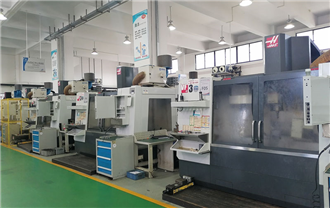
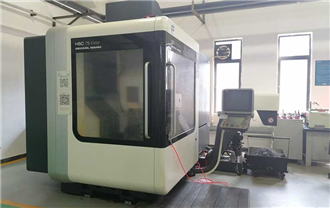
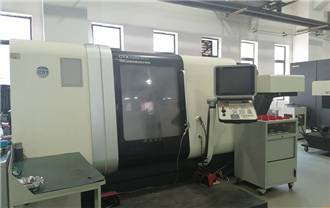
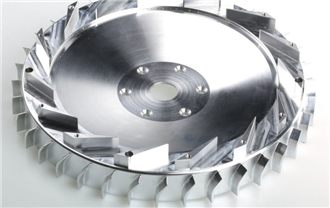
Modern 5‑axis and 6‑axis milling centers (e.g., DMG MORI, Matsuura) enable simultaneous contouring that 3‑axis machines cannot replicate. Key operations include:
● Simultaneous 5‑axis roughing + finishing – reduces setup count and eliminates fixture‑induced errors.
● High‑speed hard milling (up to 30,000 RPM) for thin ribs (0.5 mm wall) and deep cavities (aspect ratio > 8:1).
● Live tooling with Y‑axis – mill slots, hexagons, and cross‑holes in a single clamping.
● Probing and adaptive feed control – compensates for material hardness variations in real time.
According to Modern Machine Shop’s 2025 machining report, shops that use full 5‑axis for brass achieve 32% shorter cycle times and 78% fewer manual inspections compared to 3‑axis + rotary setups.
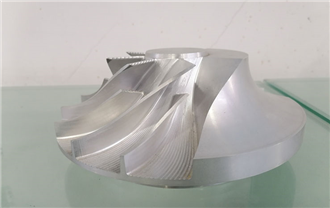
Complex Geometries – What’s Possible?
Brass CNC services excel at producing:
● Helical gears with pressure angles up to 25°
● Waveguide components for RF/microwave (0.1 mm wall thickness)
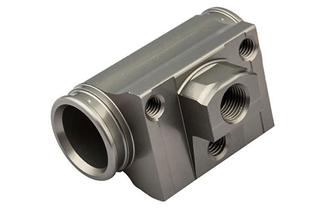
● Fluid manifolds with intersecting ±0.015 mm bores
● Decorative architectural fittings with 3D engraved patterns
Design‑for‑Manufacturing (DFM) Checklist
To maximize yield and minimize cost, follow these project‑level rules:
● ✅ Minimum hole diameter: 0.3 mm (depth‑to‑diameter ≤ 6:1)
● ✅ Undercut radius: ≥ 0.2 mm – avoid sharp internal corners
● ✅ Threads: roll‑formed for strength (class 2B/3B)
● ✅ Burr control: specify electrochemical deburring for cross‑holes
● ✅ Tolerances: state ISO 2768‑f for general, ISO 286 for fits
Quality Assurance & Material Traceability
Reputable brass CNC providers implement ISO 9001:2015 and AS9100D (aerospace) protocols. Every batch undergoes:
1. Incoming material verification – OES spectrography per ASTM E1251.
2. In‑process probing – 100% critical dimensions with Renishaw OMP400.
3. Final CMM inspection – Zeiss Contura with VAST XXT, reporting GD&T per ASME Y14.5.
Cost vs. Performance – When to Choose Multi‑Axis
While 5‑axis machining has higher hourly rates ($120–180/h vs. $75–95/h for 3‑axis), total project cost often decreases due to:
● Elimination of 2–3 secondary EDM or wire‑cut operations.
● Reduced fixture design – parts are milled from solid bar in one setup.
● Scrap rate drops from ~8% to <1.5% for complex brass castings replaced by milled blanks.
For low‑to‑medium volumes (10–5,000 pcs), multi‑axis brass CNC services are the most economical route to high‑precision, ready‑to‑assemble components.
Real‑World Application Example
A medical device manufacturer required a 16‑port rotary valve body (brass C46400) with intersecting flow channels at 37° angles, bore diameters from 1.2 to 8.5 mm, and a total runout ≤ 0.02 mm. Using simultaneous 5‑axis milling with custom‑ground tapered ball‑end mills, we delivered 250 pieces in 11 working days – 100% first‑article approval and no secondary reaming.
Internal Resources & Next Steps
Explore our dedicated pages for deeper insights:
● Brass Alloy Selection Guide – match grade to application.
● 5‑Axis Milling Capabilities – machine park and max workpiece sizes.
● GD&T Reference Chart – common symbols and interpretation.
For a quick quote, upload your 3D model (STEP or IGES) and we’ll respond within 4 business hours with a DFM analysis.
Add: Building 3No.277 Zhen'an Middle Road, Chang'an Town,Dongguan,Guangdong, China
Tel:+86-769-82855591
Copyright © 2019 All Rights Reserved Dongguan Start Precision Technology Co., Ltd. Tel: +86-769-82855591
Add: No. 277 Zhen'an Middle Road, Chang'an Town, Dongguan, Guangdong, China



 中文版
中文版 English