CNC Milling Parts Machining: The Future of Hybrid Manufacturing
Date:2026-05-30Article editor:Starting Point PrecisionViews:335The manufacturing industry is undergoing a significant transformation as digital technologies and advanced production methods continue to evolve. Among these innovations, CNC Milling Parts Machining has emerged as a critical component of hybrid manufacturing, a process that combines additive manufacturing and precision machining to achieve superior results. By integrating these technologies, manufacturers can produce highly complex parts while maintaining exceptional accuracy, efficiency, and quality.
As industries demand faster production cycles and customized solutions, hybrid manufacturing is becoming a strategic advantage for companies seeking to remain competitive.
Understanding Hybrid Manufacturing
Hybrid manufacturing combines the strengths of additive manufacturing and subtractive machining into a single workflow. While additive processes create near-net-shape components with intricate geometries, CNC Milling Parts Machining refines these parts to meet strict dimensional and surface finish requirements.
Companies investing in CNC milling services can leverage hybrid manufacturing to reduce lead times, minimize material waste, and improve production flexibility. This approach is especially valuable for industries that require high-performance components with complex designs.
Why CNC Milling Remains Essential
Although 3D printing has expanded manufacturing possibilities, CNC milling remains indispensable for achieving precision and consistency.
Modern CNC machines can produce parts with extremely tight tolerances, making them ideal for aerospace, medical, and automotive applications. Manufacturers often rely on precision machining solutions to ensure critical components meet exact specifications.
Many additively manufactured parts require post-processing before they can be used in demanding applications. CNC milling delivers smooth finishes and accurate dimensions that improve both functionality and aesthetics.
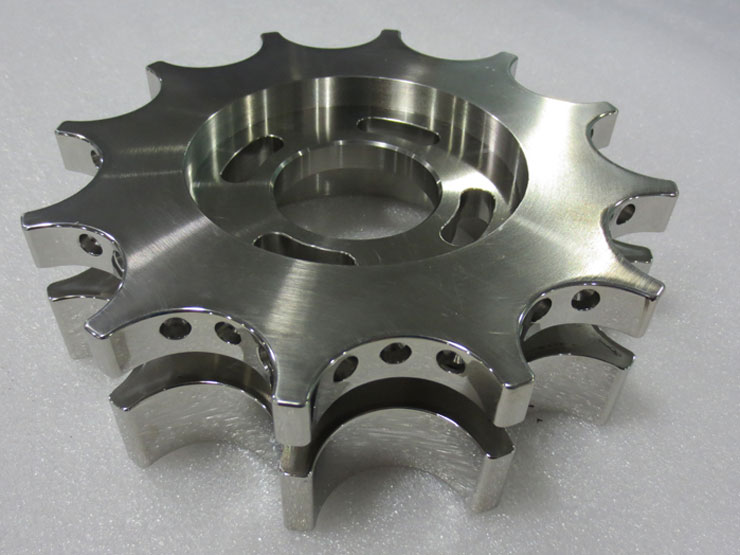
CNC Milling Parts Machining supports a wide range of materials, including:
This versatility allows manufacturers to select materials that best match performance requirements.
The Synergy Between CNC Milling and Additive Manufacturing
Hybrid manufacturing utilizes additive processes to build complex structures while CNC milling performs precision finishing operations. This combination enables manufacturers to optimize both design freedom and production quality.
For example, a component may be partially produced using metal 3D printing and then finished through custom metal parts manufacturing processes to achieve the required tolerance and surface integrity.
The result is a faster, more cost-effective workflow capable of producing advanced components that would be difficult or expensive to manufacture using traditional methods alone.
Key Industry Applications
Aerospace manufacturers increasingly use hybrid manufacturing to create lightweight structures with internal channels and optimized geometries. CNC milling ensures critical surfaces meet stringent engineering standards.
Customized implants and surgical tools benefit from additive manufacturing's flexibility, while CNC Milling Parts Machining guarantees the precision necessary for patient safety and regulatory compliance.
Automotive companies use hybrid production techniques to accelerate prototyping, reduce vehicle weight, and improve overall performance.
Complex tooling and specialized machine components can be produced more efficiently through the integration of additive and subtractive manufacturing technologies.
Future Trends Shaping Hybrid Manufacturing
Several emerging technologies are accelerating the adoption of hybrid manufacturing:
According to research published by NIST, advanced manufacturing technologies continue to improve production efficiency and product consistency across multiple industries. Similarly, organizations such as SME highlight the growing role of hybrid manufacturing in next-generation industrial production.
Conclusion
The future of manufacturing will increasingly depend on the integration of additive and subtractive technologies. CNC Milling Parts Machining remains a fundamental element of this transformation, providing the precision, reliability, and surface quality required for high-performance applications. As hybrid manufacturing continues to evolve, businesses that embrace this approach will be better positioned to improve efficiency, reduce costs, and meet the growing demand for innovative products.
Add: Building 3No.277 Zhen'an Middle Road, Chang'an Town,Dongguan,Guangdong, China
Tel:+86-769-82855591
Copyright © 2019 All Rights Reserved Dongguan Start Precision Technology Co., Ltd. Tel: +86-769-82855591
Add: No. 277 Zhen'an Middle Road, Chang'an Town, Dongguan, Guangdong, China



 中文版
中文版 English