Custom Liquid Cooling Plates | Fast Quote
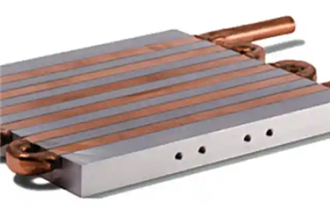
Date:2026-09-12Article editor:Starting Point PrecisionViews:95Modern electronics, EV power systems, industrial equipment, and data centers increasingly require efficient heat removal in compact spaces. Custom Liquid Cooling Plates Machining provides a practical way to create application-specific cooling channels, mounting features, and fluid ports while maintaining accurate thermal contact surfaces.
Unlike standard cooling components, custom plates can be designed around the exact heat source, coolant path, installation space, and mechanical interface. The U.S. Department of Energy notes that direct liquid cooling transfers heat from IT equipment into a circulating liquid loop, making efficient cold-plate design an important part of modern thermal management.
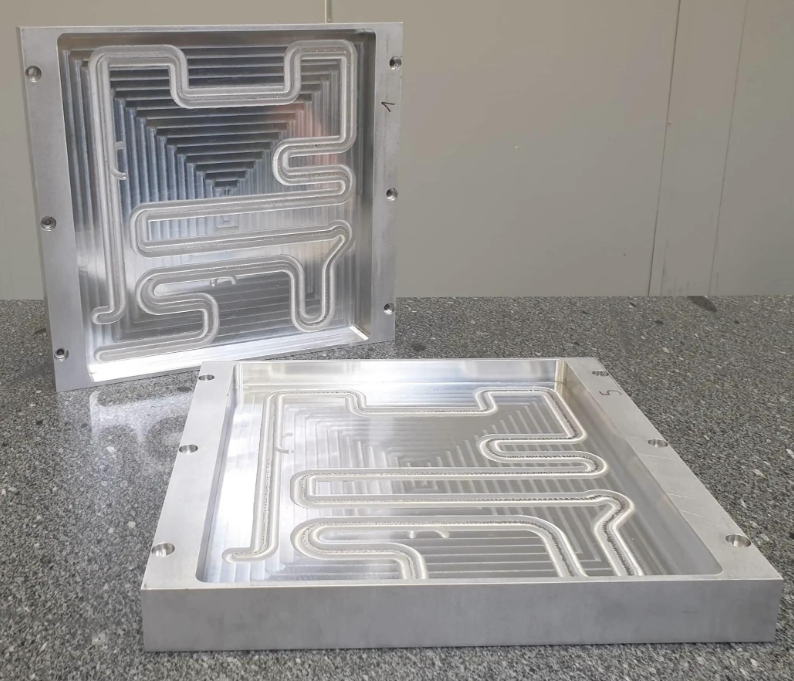
Why Choose Custom Liquid Cooling Plates?
A properly machined cold plate can combine thermal performance with mechanical reliability. Common design considerations include:
● Cooling-channel geometry: serpentine, parallel, pin-fin, or custom flow paths
● Material selection: aluminum and copper are common choices for thermal applications
● Port configuration: threaded, tapped, or custom inlet/outlet interfaces
● Mounting features: precision holes, counterbores, slots, and reference surfaces
● Sealing areas: controlled surface finish and dimensional accuracy around O-ring grooves
● Prototype-to-production flexibility: suitable for development samples and repeat production
For engineers comparing surface requirements, Start Precision's CNC surface-finish guide explains how Ra and Rz specifications influence machining processes and functional performance.
Typical Equipment Parameters
| Parameter | Typical Capability |
| CNC process | 3-axis / multi-axis milling |
| Typical material | Aluminum, copper, stainless steel |
| Cooling channels | Custom milled internal geometry |
| Critical features | Ports, holes, sealing grooves |
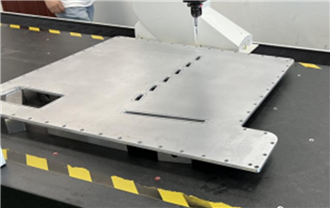
| Inspection | CMM, gauges, visual inspection |
| Surface finish | According to drawing requirements |
Actual capability depends on part geometry, material, tolerance, and production requirements.
Equipment photo: View CNC machining equipment and production capabilities
Custom Liquid Cooling Plates Machining Process
A controlled manufacturing process helps reduce dimensional variation and leakage risks.
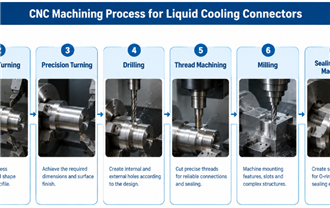
1. Drawing and CAD review – Check thermal zones, channel geometry, ports, mounting points, and critical tolerances.
2. Material verification – Confirm alloy grade, stock dimensions, and material certification.
3. Datum planning – Establish reliable machining references for multi-face operations.
4. Rough machining – Remove excess material while maintaining sufficient finishing allowance.
5. Channel machining – Produce the specified cooling passages and internal features.
6. Precision finishing – Finish thermal contact surfaces, sealing grooves, and mounting interfaces.
7. Port machining – Machine threaded or custom coolant connections.
8. Deburring and cleaning – Remove burrs and machining contamination from fluid passages.
9. Inspection and testing – Verify dimensions, surface finish, and sealing-related features.
For quality-control planning, this CNC machining inspection checklist provides an overview of material verification, first-article inspection, CMM measurement, and final dimensional inspection.
Fast Quotes Without Sacrificing Engineering Review
A fast quotation should not mean skipping technical evaluation. Providing a complete STEP, STP, IGES, or DWG file, material specification, quantity, tolerance requirements, surface treatment, and testing requirements allows engineers to evaluate the project more efficiently.
For prototype and low-volume orders, setup and programming can significantly influence unit cost. Clear drawings and production quantities help manufacturers select an appropriate machining strategy and avoid unnecessary processing.
Workshop photo: View the machining workshop and production environment
Certification and quality documentation: View quality and manufacturing information
Application Example
A power-electronics customer requires a compact aluminum cold plate for a high-heat-load module. The design includes a custom internal channel, multiple mounting holes, threaded coolant ports, and a flat thermal interface.
The machining strategy can combine rough milling, channel machining, precision finishing, port machining, deburring, dimensional inspection, and leak-related verification. Controlling the thermal contact surface and channel dimensions helps the finished plate maintain reliable mechanical and thermal performance.
For advanced thermal-management applications, NASA technical research also demonstrates the use of customized cold-plate designs for high-power electronic systems.
Conclusion
Custom Liquid Cooling Plates Machining enables engineers to develop cooling hardware around specific thermal, mechanical, and installation requirements. Accurate channel machining, controlled sealing surfaces, suitable materials, and documented inspection are essential for dependable performance.
For custom prototypes, low-volume production, or repeat manufacturing, Start Precision provides a direct manufacturing resource for precision CNC components.
Contact us to discuss your manufacturing needs and request a detailed quotation for your custom liquid cooling plate project.
FAQs
1. What materials are commonly used for custom liquid cooling plates?
Aluminum and copper are widely used because of their thermal conductivity, machinability, and relatively low weight. The final choice depends on thermal, mechanical, corrosion, and coolant requirements.
2. Can you machine custom cooling channels?
Yes. Channel geometry can be customized according to the CAD model, thermal requirements, flow path, and available machining method.
A 3D CAD file such as STEP or STP is preferred. Drawings showing tolerances, material, surface finish, quantity, and special inspection requirements are also useful.
Yes. CNC machining is suitable for prototypes, engineering samples, low-volume production, and larger repeat orders.
Inspection may include dimensional measurement, CMM inspection, surface-finish verification, visual inspection, and application-specific sealing or leak testing.
Add: Building 3No.277 Zhen'an Middle Road, Chang'an Town,Dongguan,Guangdong, China
Tel:+86-769-82855591
Copyright © 2019 All Rights Reserved Dongguan Start Precision Technology Co., Ltd. Tel: +86-769-82855591
Add: No. 277 Zhen'an Middle Road, Chang'an Town, Dongguan, Guangdong, China



 中文版
中文版 English