Custom Liquid Cooling Connectors for Medical
Date:2026-09-14Article editor:Starting Point PrecisionViews:75Medical equipment increasingly requires compact and reliable thermal management. Imaging systems, laboratory instruments, diagnostic equipment, laser systems, and high-performance medical electronics can generate significant heat during continuous operation. Custom Liquid Cooling Connectors provide a controlled interface between cooling circuits, helping transfer coolant efficiently while maintaining dimensional accuracy, sealing reliability, and assembly consistency.
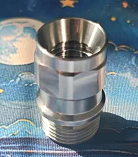
Why Custom Liquid Cooling Connectors Matter
Medical cooling systems often operate in confined spaces where standard connectors may not provide the required geometry or flow performance. Custom designs can be optimized for:
● Compact installation spaces and customized port positions
● Stable coolant flow and reduced pressure loss
● Reliable sealing for long-term operation
● Tight dimensional tolerances for repeatable assembly
● Compatibility with aluminum, stainless steel, copper, or engineering plastics
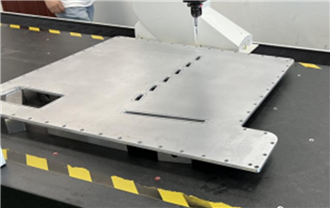
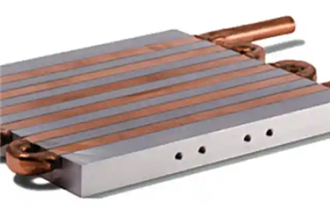
● Integration with cold plates, tubing, manifolds, and heat exchangers
For medical applications, connector design should also consider material compatibility, cleanliness, corrosion resistance, and traceability.
Precision CNC Manufacturing Process
The production of Custom Liquid Cooling Connectors starts with the customer's CAD model, drawings, material requirements, and critical tolerances.
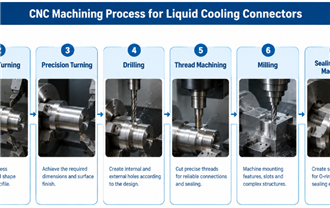
Typical process:
1. CAD and drawing review
2. Material and stock verification
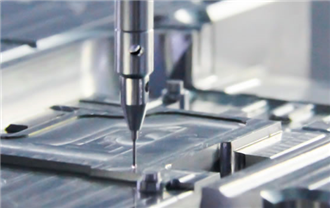
3. CNC turning or milling
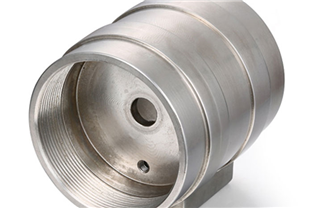
4. Precision port and thread machining
5. Internal channel and sealing-surface machining
6. Deburring and cleaning
7. Dimensional inspection
8. Leak or pressure testing when specified
9. Surface treatment and final packaging
For complex geometries, multi-axis CNC machining can reduce setups and improve positional consistency. Critical sealing areas require particular attention because even a small machining defect can affect connector performance.
Equipment & Quality Parameters
| Parameter | Typical Requirement |
| Manufacturing | CNC Turning / CNC Milling |
| Geometry | Ports, threads, channels, mounting features |
| Tolerance | According to drawing and GD&T |
| Inspection | CMM, gauges, optical inspection |
| Testing | Leak/pressure testing when required |
| Documentation | Inspection report, material traceability |
For equipment references, see the Start Precision precision machining capabilities, including its Precision Equipment List.
Materials for Medical Cooling Connectors
Material selection depends on coolant chemistry, operating temperature, mechanical loading, and the surrounding medical equipment.
Common choices include:
● 316L stainless steel: excellent corrosion resistance and suitable for demanding environments.
● Aluminum alloys: lightweight and useful where weight reduction is important.
● Copper alloys: suitable for applications requiring high thermal conductivity.
● Engineering plastics: useful when electrical insulation or lightweight construction is required.
Material certification and traceability should be maintained when required by the customer's quality system.
Quality and Compliance
Medical-device suppliers need controlled manufacturing processes and documented quality procedures. ISO 13485:2016 is the internationally recognized quality-management standard specifically developed for medical devices.
For U.S. medical-device manufacturing, the FDA's QMSR became effective on February 2, 2026, incorporating ISO 13485:2016 by reference.
Therefore, a professional machining workflow should emphasize:
● Material traceability
● Process consistency
● First Article Inspection
● Dimensional verification
● Surface-quality control
● Inspection documentation
● Controlled handling and packaging
Medical CNC machining reference
Workshop and Equipment Images
Suggested image placement: CNC machining center processing precision medical connectors — view Start Precision machining resources.
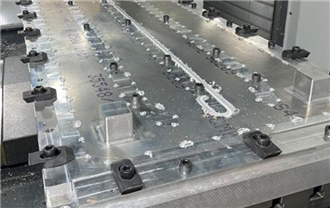
Suggested workshop image: Precision CNC production and inspection area — view the manufacturer's machining facility.
Suggested certification image: ISO 13485 and quality documentation — ISO 13485 official information.
Application Example
A medical diagnostic equipment manufacturer required a compact liquid cooling connector with customized ports and a controlled sealing interface. The connector was produced from corrosion-resistant material using CNC machining. The process included precision port machining, thread finishing, sealing-surface control, deburring, dimensional inspection, and leak testing.
By matching the connector geometry to the equipment's cooling circuit, the customized component helped simplify installation while maintaining consistent coolant connections during repeated assembly.
Conclusion
Custom Liquid Cooling Connectors can provide medical equipment manufacturers with greater flexibility than standard components. Precision machining allows connector geometry, material, sealing surfaces, ports, and tolerances to be adapted to specific thermal-management requirements.
For custom medical cooling components, Start Precision provides CNC machining support from drawing review and material selection through precision production and inspection.
Contact us to discuss your manufacturing requirements and develop a precision cooling connector solution for your medical equipment.
1. What are Custom Liquid Cooling Connectors used for in medical equipment?
They connect cooling circuits in equipment such as imaging systems, diagnostic instruments, laboratory equipment, laser systems, and other electronics requiring controlled thermal management.
2. Which materials are suitable for medical cooling connectors?
Common choices include 316L stainless steel, aluminum alloys, copper alloys, and selected engineering plastics. The final material should match the coolant, temperature, corrosion, and application requirements.
3. Can liquid cooling connectors be manufactured to custom drawings?
Yes. CNC machining can produce customized ports, threads, channels, sealing surfaces, mounting features, and other geometry according to CAD models and engineering drawings.
4. How are medical cooling connectors inspected?
Depending on the project, inspection may include CMM measurement, dimensional gauges, visual inspection, surface-finish verification, and leak or pressure testing.
5. Is ISO 13485 relevant to medical connector manufacturing?
Yes. ISO 13485 establishes quality-management requirements specifically for organizations involved in medical devices and related services.
6. Can Start Precision support prototype and production quantities?
The machining workflow can be adapted to project requirements, including prototype development, low-volume production, and repeat manufacturing.
Add: Building 3No.277 Zhen'an Middle Road, Chang'an Town,Dongguan,Guangdong, China
Tel:+86-769-82855591
Copyright © 2019 All Rights Reserved Dongguan Start Precision Technology Co., Ltd. Tel: +86-769-82855591
Add: No. 277 Zhen'an Middle Road, Chang'an Town, Dongguan, Guangdong, China



 中文版
中文版 English