Robotic Parts Manufacturer for Low Volume Runs
Date:2026-10-28Article editor:Starting Point PrecisionViews:381. Why Low-Volume Manufacturing Matters for Humanoid Robots
A Robotic Parts Manufacturer serving low volume projects must balance dimensional accuracy, design flexibility, and production cost. For humanoid robots, this balance is especially important because joint housings, structural brackets, sensor mounts, and transmission components often change during prototype testing and early product development.
Ordering thousands of parts before a design is validated can tie up capital and create unnecessary inventory. Small production runs allow engineering teams to evaluate fit, movement, structural stiffness, and assembly access before committing to larger quantities.
2. Our Approach to Low-MOQ Production
We organize manufacturing around the actual requirements of each part rather than applying the same production setup to every order.
● Low MOQ: Produce prototype quantities and small batches according to project requirements, subject to part complexity and manufacturing feasibility.
● Rapid changeover: Reuse suitable fixtures, standardize tool setups, and revise CNC programs when compatible with the next design.
● Cost control: Review machining allowances, material utilization, tool access, and inspection requirements before production.
● Design flexibility: Accommodate engineering revisions to mounting holes, joint interfaces, pockets, and cable-routing features.
● Scalable production: Establish a repeatable process that can support additional quantities after design validation.
The objective is to avoid unnecessary tooling investment while maintaining a clear path from prototype parts to repeat orders.
3. CNC Processes for Humanoid Robot Components
Different parts require different machining strategies. Our process planning considers geometry, material, tolerance, surface finish, and the relationship between mating features.
| Component | Recommended process | Manufacturing focus |
| Joint housings | CNC milling and drilling | Bearing seats, bore alignment, mounting interfaces |
| Structural brackets | CNC milling | Weight reduction, rigidity, accurate hole patterns |
| Transmission shafts | CNC turning and milling | Concentricity, stepped diameters, keyways |
| Sensor mounts | CNC milling and drilling | Position accuracy and assembly clearance |
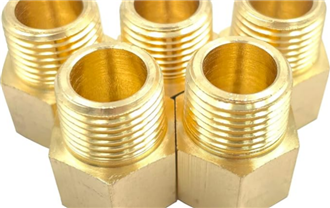
| Compact connectors | CNC turning and threading | Thread quality and interface dimensions |
4.How We Manage the Manufacturing Process
1. Drawing and DFM review: Examine 3D models, drawings, tolerances, datum references, and assembly interfaces. Identify features that may increase machining time without improving function.
2. Material preparation: Select the specified aluminum alloy, stainless steel, titanium alloy, or other suitable engineering material based on strength, mass, wear, and environmental requirements.
3. CNC machining: Use milling for pockets, mounting faces, and complex profiles; turning for rotational features; and drilling or tapping for fastener connections. Multi-axis machining may reduce repositioning when the geometry and equipment permit.
4. Finishing and deburring: Remove harmful burrs, protect functional edges, and apply specified surface treatments when required.
5. Inspection: Verify critical dimensions, hole positions, bore sizes, and mating interfaces using suitable measuring equipment. Inspection records can be arranged according to project requirements.
For further technical background on machining and measurement, consult the National Institute of Standards and Technology (NIST).
5. How We Reduce Costs in Small Batches
Low-volume manufacturing does not automatically mean low unit cost. Programming, setup, workholding, machining, and inspection all contribute to the final price.
We evaluate several practical opportunities:
● Combine compatible features into fewer setups where this does not compromise accuracy.
● Avoid unnecessarily tight tolerances on non-critical surfaces.
● Use standard cutter sizes and accessible internal radii where the design allows.
● Arrange repeat orders around approved programs and existing fixtures.
● Review batch quantity and material stock dimensions to reduce avoidable waste.
These measures help control manufacturing expenses without sacrificing the features essential to humanoid robot movement and assembly.
6. A Flexible Manufacturing Partner for Robot Development
Low volume production works best when engineering changes can be translated into clear manufacturing instructions. Start with the required geometry, functional tolerances, material specifications, and expected order quantity.
Visit Start Precision to learn more about its precision manufacturing services. For equipment information, refer to the precision machining page.
Contact us to discuss your manufacturing needs. Share your drawings, material requirements, target quantity, and delivery expectations to evaluate a suitable manufacturing approach for your humanoid robot components.
Frequently Asked Questions
1. Can you manufacture humanoid robot parts in low quantities?
Low-volume orders can be evaluated according to part geometry, material availability, machining requirements, and inspection needs. Confirm the minimum order quantity for your specific components before placing an order.
2. How can small-batch CNC machining reduce development costs?
It allows teams to test components before committing to large inventories. Design adjustments can be made between batches, helping reduce the risk of producing parts that no longer match the latest assembly.
3. Which files are needed for a quotation?
Provide a 2D engineering drawing and a 3D CAD model when available, together with material specifications, critical tolerances, surface treatment requirements, quantity, and target delivery date.
4. Can the same parts be produced again after prototype validation?
Yes, repeat production can use approved CNC programs, documented inspection requirements, and compatible fixtures where applicable. Any design or material changes should be reviewed before the next batch.
Add: Building 3No.277 Zhen'an Middle Road, Chang'an Town,Dongguan,Guangdong, China
Tel:+86-769-82855591
Copyright © 2019 All Rights Reserved Dongguan Start Precision Technology Co., Ltd. Tel: +86-769-82855591
Add: No. 277 Zhen'an Middle Road, Chang'an Town, Dongguan, Guangdong, China



 中文版
 English