Custom Liquid Cooling Plates for EV Charging Piles
Date:2026-10-30Article editor:Starting Point PrecisionViews:311. Why EV Charging Piles Need Custom Liquid Cooling Plates
Custom Liquid Cooling Plates are important components in high-power EV charging piles, where power conversion modules and other heat-generating components require effective thermal management. As charging power increases, controlling operating temperatures becomes essential for equipment stability, service life, and consistent performance.
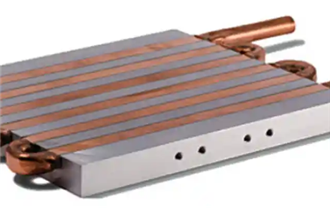
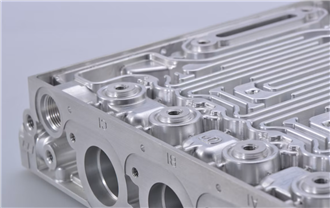
A properly designed cooling plate transfers heat from electronic components to circulating coolant. Its internal channel layout, contact surface flatness, material selection, and sealing structure all influence cooling performance.
For charging equipment manufacturers, customized plates offer greater flexibility than standard cooling components because dimensions, mounting positions, and flow paths can be developed around specific equipment layouts.
2. Material Selection and Structural Design
Aluminum alloys are commonly considered for EV charging pile cooling plates because they combine relatively low weight, good thermal conductivity, and convenient CNC machinability.
Before production, we review the customer's 2D drawings or 3D models and evaluate several important features:
● Channel geometry: Select channel widths, depths, and flow paths according to the design requirements.
● Wall thickness: Maintain sufficient structural strength around internal passages.
● Mounting features: Position threaded holes and installation surfaces accurately.
● Sealing structure: Check gasket grooves, joining surfaces, and coolant port locations.
● Thermal contact surface: Control flatness and surface finish where electronic modules contact the plate.
The final design should be evaluated together with coolant flow, pressure drop, operating temperature, and system pressure requirements.
3. How We Manufacture Custom Liquid Cooling Plates
Our manufacturing approach combines drawing review, CNC machining, and dimensional inspection. Each stage focuses on features that affect assembly accuracy and coolant containment.
|
Manufacturing stage |
Our production approach |
Key consideration |
|
Drawing review |
Examine 2D drawings and 3D models |
Dimensions and channel layout |
|
Material preparation |
Confirm aluminum alloy and stock size |
Material consistency |
|
CNC rough machining |
Establish reference surfaces and main dimensions |
Workpiece stability |
|
Channel milling |
Machine internal cooling passages |
Channel geometry |
|
Precision finishing |
Finish contact surfaces and mounting features |
Flatness and tolerances |
|
Port machining |
Drill and machine coolant connections |
Position and thread quality |
|
Deburring and cleaning |
Remove machining burrs and residual chips |
Passage cleanliness |
|
Final inspection |
Check dimensions and specified leak-test requirements |
Product conformity |
For complex geometries, five-axis machining can help access multiple surfaces and angled features. Our equipment list includes the Germany DMG HSC 75 linear five-axis machining center, DMG DMC 835V vertical machining centers, and HAAS EC400 horizontal machining centers.
4. Critical Quality Control for Cooling Plates
Machining accuracy alone does not guarantee a reliable liquid cooling plate. Internal passages and sealing interfaces must also meet the application requirements.
Our inspection considerations include:
● Channel dimensions and machining consistency.
● Mounting-hole positions and thread quality.
● Contact surface flatness and surface roughness.
● Sealing groove dimensions and surface condition.
● Internal passage cleanliness.
● Leak testing according to the customer's specified test pressure and method.
For production projects, inspection requirements should be agreed upon before machining begins. This helps establish consistent acceptance criteria between the manufacturer and equipment supplier.
The IEEE guide project for DC fast-charging cables with thermal management provides additional industry context for thermal management in high-power charging applications.
5. Example: A Cooling Plate for a High-Power Charging Module
Consider a customized aluminum cooling plate designed for a charging pile power conversion module.
The customer supplies a 3D model showing the component mounting area, coolant inlet and outlet positions, and required channel arrangement. We first review the geometry and identify critical contact and sealing surfaces.
After confirming the material and machining references, we mill the cooling passages, finish the mounting interface, and machine the connection ports. Burr removal and internal cleaning follow before dimensional inspection.
If required by the project, the finished component undergoes a specified leak test before shipment.
This manufacturing sequence helps the customer obtain a component that matches the intended assembly structure and verification requirements.
6. Custom Manufacturing Support from Start Precision
Start Precision provides CNC milling, five-axis machining, turning, and precision manufacturing services for customized metal components.
Our capabilities support prototype development and production projects requiring different geometries, materials, and machining processes. We review customer drawings to assess manufacturability and identify important machining considerations before production.
Visit Start Precision to learn more about our manufacturing services.
For EV charging equipment manufacturers, selecting a suitable machining partner is an important step toward achieving reliable component integration and consistent product quality.
Add: Building 3No.277 Zhen'an Middle Road, Chang'an Town,Dongguan,Guangdong, China
Tel:+86-769-82855591
Copyright © 2019 All Rights Reserved Dongguan Start Precision Technology Co., Ltd. Tel: +86-769-82855591
Add: No. 277 Zhen'an Middle Road, Chang'an Town, Dongguan, Guangdong, China



 中文版
 English