CNC Machined Copper Parts with Anodizing: Precision Manufacturing and Surface Protection
Date:2026-10-12Article editor:Starting Point PrecisionViews:127Copper is widely used in electrical, thermal, and industrial applications because of its excellent conductivity and heat transfer capability. However, copper surfaces are relatively soft and can be affected by oxidation, scratches, and environmental exposure. Combining CNC machining with anodizing or suitable surface finishing methods helps manufacturers produce reliable copper components with improved appearance and functional performance.
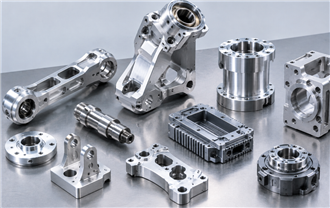
For complex copper components requiring tight dimensional control, machining strategy, tool selection, and surface treatment coordination are critical. Professional CNC manufacturing solutions from Start Precision focus on controlling every production stage from raw material preparation to final inspection.
Why Choose CNC Machined Copper Parts with Anodizing?
Copper CNC machining requires careful process control because the material has high thermal conductivity and strong ductility. Improper cutting conditions may cause burrs, deformation, or poor surface quality.
Anodizing is commonly applied to aluminum materials, while copper parts usually require alternative protective treatments such as:
• Protective coating for oxidation resistance
• Electroplating for improved surface performance
• Passivation or chemical treatment for specific applications
• Decorative finishing for product appearance
The correct finishing method depends on the copper alloy, application environment, and functional requirements.
CNC Copper Parts Manufacturing Process
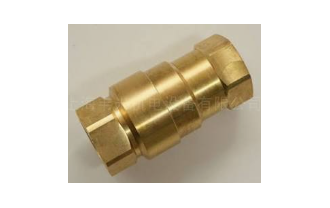
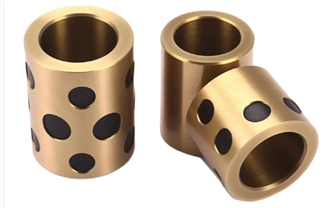
To produce high-quality CNC Copper Parts, the manufacturing workflow includes:
• Engineering Review
Customer drawings, 3D models, tolerance requirements, and surface specifications are evaluated before production.
• Material Preparation
Copper alloys such as C101, C110, or custom copper grades are selected according to conductivity and mechanical requirements.
• CNC Machining Operation
High-speed cutting tools and optimized parameters are used to reduce burr formation and maintain dimensional stability.
• Surface Treatment Process
After machining, copper components receive selected finishing processes to improve corrosion resistance, appearance, or functional performance.
• Precision Inspection
Critical dimensions, flatness, hole positions, and surface quality are verified before shipment.
CNC Machining Equipment Parameters
| Equipment | Capability | Application |
| CNC Milling Center | Multi-axis precision machining | Complex copper housings and plates |
| CNC Turning Machine | High accuracy cylindrical machining | Copper shafts, connectors, rings |
| 5-Axis Machining Center | Multiple-angle processing | Complex copper components |
| CMM Inspection Equipment | Micron-level measurement | Dimensional verification |
Start Precision utilizes professional precision machining equipment and inspection systems to support customized metal part production requirements. Detailed equipment capability information can be viewed through the company’s precision machining resources.
Start Precision Precision Equipment List
How We Control Copper Machining Quality
Copper machining requires more than simply removing material. The process must balance cutting speed, tool wear, heat generation, and surface finish.
Our quality control approach includes:
• Reviewing machining feasibility before production
• Selecting suitable cutting tools for copper materials
• Optimizing spindle speed and feed rates
• Checking critical tolerances during machining
• Performing final dimensional inspection before delivery
Quality inspection equipment such as coordinate measuring machines (CMM), optical inspection systems, and precision measuring tools are commonly used in modern CNC manufacturing environments.
Typical Applications of CNC Copper Parts
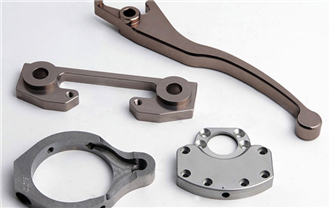
CNC machined copper components with protective finishing are widely used in:
• Electrical connectors and terminals
• Heat transfer components
• Semiconductor equipment parts
• Vacuum system components
• Medical and laboratory equipment
• Industrial power systems
For additional information about copper properties and applications, engineers can refer to technical resources from Copper Development Association.
Conclusion
CNC Machined Copper Parts with anodizing alternatives require close coordination between machining technology and surface finishing processes.
With professional machining experience, advanced equipment, and strict quality management, Start Precision provides customized CNC manufacturing solutions for copper components and other precision metal parts.
Contact us to discuss your manufacturing needs.
Traditional anodizing is mainly used for aluminum. Copper usually requires other surface treatments such as plating, coating, or chemical protection depending on the application.
Common CNC copper materials include C101 pure copper, C110 electrolytic copper, and various copper alloys selected according to conductivity and mechanical requirements.
The achievable tolerance depends on part geometry, material condition, machining equipment, and inspection requirements. Precision CNC processes can achieve tight tolerances for demanding applications.
Manufacturers control cutting parameters, select suitable tooling, and apply proper finishing processes to reduce burr formation and improve surface quality.

Add: Building 3No.277 Zhen'an Middle Road, Chang'an Town,Dongguan,Guangdong, China
Tel:+86-769-82855591
Copyright © 2019 All Rights Reserved Dongguan Start Precision Technology Co., Ltd. Tel: +86-769-82855591
Add: No. 277 Zhen'an Middle Road, Chang'an Town, Dongguan, Guangdong, China



 中文版
 English