Custom Copper Parts for Unique Engineering Requirements
Date:2026-10-12Article editor:Starting Point PrecisionViews:105Standard copper materials are easy to purchase, but producing copper components with unusual dimensions, special structures, or strict tolerances requires advanced manufacturing experience. Many industries need copper parts that cannot be replaced by off-the-shelf products, especially when electrical conductivity, heat transfer efficiency, and dimensional stability are important.
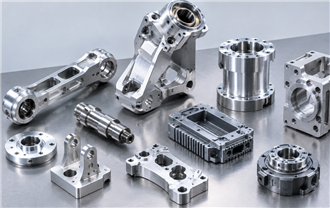
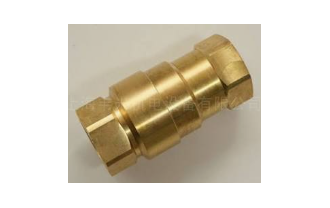
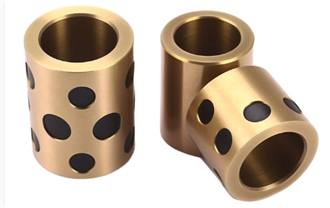
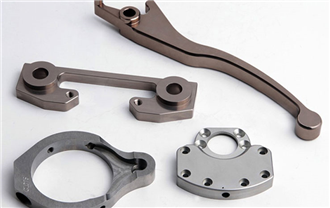
Non-standard copper components are commonly found in power equipment, semiconductor systems, thermal solutions, and precision industrial devices. Instead of modifying existing products, engineers can provide drawings or 3D models to create parts designed specifically for their applications.
Manufacturing Process for Custom Copper Parts
Manufacturing copper partswith special dimensions requires careful process planning.Each project starts with a detailed review of the customer's drawings, models, and functional requirements, allowing engineers to develop a machining solution that matches the part structure, tolerance targets, and delivery expectations.
● Drawing and Model Evaluation
Customers can provide 2D drawings, 3D CAD files, samples, or technical specifications. Engineers review dimensions, tolerance requirements, machining difficulty, and application conditions before production.
● Machining Strategy Development
For non-standard sizes, the machining sequence is planned according to the copper grade, part structure, and critical features. The goal is to maintain accuracy while reducing unnecessary material stress.
● Precision CNC Processing
Depending on geometry, the component may require CNC milling, CNC turning, drilling, tapping, or EDM machining. Complex copper parts with deep cavities or narrow slots require optimized cutting parameters.
● Inspection and Delivery Preparation
After machining, important dimensions, hole positions, flatness, and surface quality are checked before packaging and shipment.
More information about CNC manufacturing capabilities and customized machining solutions can be found on the Start Precision website: https://www.startprecision.com/
Custom Copper Machining Capability and Equipment
Non-standard copper parts require flexible equipment combinations rather than a single machining method. Precision machining suppliers commonly use CNC milling, turning, multi-axis machining, and inspection systems to handle complex metal components.
| Equipment Type | Typical Capability | Suitable Copper Applications |
| CNC Milling Center | Multi-axis machining, complex profiles | Copper blocks, housings, plates |
| CNC Turning Machine | Accurate cylindrical processing | Copper shafts, rings, connectors |
| Wire EDM Equipment | Fine contour cutting | Thin walls, slots, precision shapes |
| Coordinate Measuring Equipment | Dimensional verification | Tight tolerance inspection |
Typical Process Parameters
⚙ Material Range: C101, C110 copper and copper alloys
⚙ Machining Methods: Milling, turning, drilling, tapping, EDM
⚙ Surface Requirement: Smooth finishing and burr control
⚙ Production Type: Prototype, low-volume, repeat production
⚙ Inspection Focus: Size accuracy, flatness, hole location, surface condition
For professional copper material information, engineers can also refer to technical resources from the Copper Development Association:https://copper.org/
Supporting Different Sizes and Production Volumes
The main advantage of custom copper manufacturing is flexibility. Whether the requirement involves a small precision component or a large copper structure, production can be adjusted according to project needs.
Typical customer requirements include:
● Small Precision Copper Parts
Used for electrical contacts, connectors, sensors, and laboratory equipment.
● Large Non-Standard Copper Components
Used for thermal plates, industrial equipment, and power applications.
● Customized Repeat Orders
Stable machining processes help maintain consistency when customers move from prototypes to regular production.
How We Manage Custom Orders from Design to Delivery
A successful project depends not only on machining capability but also on communication and production planning.
The workflow includes:
1. Reviewing customer drawings and confirming technical requirements.
2. Checking material availability and selecting suitable copper specifications.
3. Creating machining plans based on size, structure, and tolerance requirements.
4. Producing samples when validation is required.
5. Moving into batch manufacturing after approval.
6. Completing inspection and arranging shipment according to the agreed schedule.
Delivery time depends on part complexity, quantity, material preparation, and inspection requirements. Early engineering communication helps shorten production cycles and avoid unnecessary modifications.
Example: Customized Copper Electrical Housing
A customer required a copper housing with an irregular external profile and several non-standard mounting positions. The original design could not be produced using standard copper components.
The solution included:
● Reviewing the customer's CAD model and functional requirements
● Adjusting machining methods for the thin-wall copper structure
● Using CNC milling to create the external profile and internal features
● Controlling burrs around precision mounting areas
● Performing final dimensional checks before shipment
The finished part achieved the required conductivity performance and mechanical fit for the customer's electrical system.
Applications of Custom Copper Parts
Custom copper components are widely used in:
● Semiconductor manufacturing equipment
● Electrical connectors and power systems
● Heat transfer devices
● Vacuum equipment
● Medical instruments
● Industrial automation systems
With engineering support, CNC machining capability, and quality control procedures, Start Precision provides customized solutions for complex copper component requirements.
Contact us to discuss your manufacturing needs.
Frequently Asked Questions
Q1: Can you manufacture copper parts based on customer drawings?
Yes. Customers can provide 2D drawings, 3D CAD models, or samples. The engineering team evaluates the design and develops a suitable machining plan.
Custom copper machining supports both miniature precision components and larger non-standard copper structures. The achievable size depends on equipment capability and part geometry.
Common materials include C101 oxygen-free copper, C110 copper, and selected copper alloys based on electrical, thermal, and mechanical requirements.
Quality control includes dimensional inspection, tolerance verification, surface checking, and final production review before delivery.
Delivery depends on design complexity, order quantity, material preparation, and inspection requirements. Early drawing review helps create a more accurate production schedule.

Add: Building 3No.277 Zhen'an Middle Road, Chang'an Town,Dongguan,Guangdong, China
Tel:+86-769-82855591
Copyright © 2019 All Rights Reserved Dongguan Start Precision Technology Co., Ltd. Tel: +86-769-82855591
Add: No. 277 Zhen'an Middle Road, Chang'an Town, Dongguan, Guangdong, China



 中文版
中文版 English