Humanoid Robot Parts Enabling Smooth Motion
Date:2026-10-15Article editor:Starting Point PrecisionViews:50Humanoid Robot Parts are the mechanical foundation behind stable walking, precise hand operations, and coordinated body movement in human-shaped robots. Unlike industrial robotic arms that mainly repeat programmed actions, humanoid robots must continuously adjust posture, balance weight distribution, and respond to changing environments. This creates higher requirements for every structural and motion-related component inside the robot.
A humanoid robot contains many interconnected parts, including joint supports, actuator brackets, sensor mounts, transmission components, and lightweight structural sections. The accuracy and consistency of these parts directly influence how smoothly the robot performs daily movements.

Critical Components in Humanoid Robot Structures
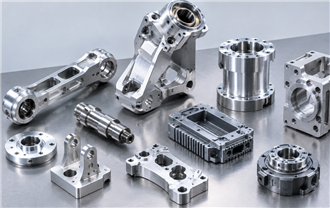
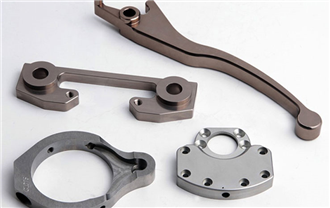
Each humanoid robot design has unique mechanical requirements. Common CNC machined components include:
• Joint connection parts – Maintain alignment between moving sections such as shoulders, elbows, hips, knees, and ankles.
• Actuator mounting brackets – Provide stable positioning for motors and drive systems.
• Precision shafts and bearing seats – Support rotational movement while reducing unwanted clearance.
• Lightweight frame components – Reduce overall robot weight while maintaining structural strength.
• Sensor installation parts – Keep cameras, force sensors, and electronic modules accurately positioned.
Because humanoid robots combine mobility with compact internal space, manufacturers must carefully control machining strategy, material usage, and assembly compatibility.
How We Manufacture Humanoid Robot Parts
Producing reliable robotic components requires more than machining a CAD model. A controlled manufacturing approach helps prevent problems during assembly and testing.
1. Drawing Analysis and Manufacturing Planning
Before machining begins, engineers review 3D models and technical drawings to understand:
• Functional surfaces
• Assembly reference points
• Required tolerances
• Material requirements
• Potential machining difficulties
This step helps determine the most suitable production method before material is cut.
2. Material Preparation
Different robot structures require different material characteristics.
Common choices include:
• Aluminum alloys for lightweight supporting structures
• Titanium alloys for high-load connection areas
• Stainless steel for wear-resistant precision components
Material selection depends on the expected load, movement frequency, and environmental conditions.
3. CNC Machining and Precision Processing
During machining, cutting strategies are adjusted according to part geometry.
Typical operations include:
• CNC milling for structural shapes and mounting features
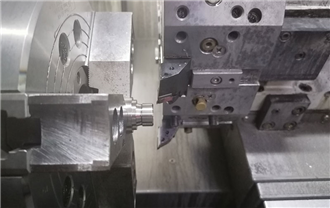
• CNC turning for shafts and cylindrical components
• Multi-axis machining for complex angled surfaces
• Fine finishing for assembly contact areas
Start Precision provides customized CNC machining solutions for precision components. More information about manufacturing capabilities can be found at: https://www.startprecision.com/
4. Inspection and Final Verification
Before shipment, each component is checked according to drawing requirements.
Inspection focuses on:
• Key dimensions
• Hole positions
• Surface conditions
• Assembly compatibility
This ensures that individual parts can work together correctly inside a humanoid robot system.
Smooth movement depends on the cooperation of many mechanical elements. A small machining difference in one component may influence the alignment of connected parts.
Important considerations include:
• Geometric accuracy: Mounting surfaces and rotating interfaces require stable dimensions to maintain correct positioning.
• Weight control: Removing unnecessary material helps reduce the energy demand of repeated movements.
• Reliable surface quality: Proper finishing reduces friction risks in moving assemblies.
• Consistent production control: Stable machining methods help maintain performance when producing multiple units.
CNC machining is widely used in advanced robotics because it allows engineers to create customized metal parts directly from digital designs. General CNC manufacturing principles and material information can also be referenced through technical resources from organizations such as: https://www.engineersedge.com/
A robotics development company required a customized aluminum support component for a humanoid robot prototype. The part needed to connect a motor assembly with a moving joint mechanism while maintaining low weight.
The manufacturing solution included:
• Reviewing the 3D design to identify critical mounting areas
• Selecting aluminum alloy according to structural requirements
• Machining complex pockets to reduce unnecessary mass
• Refining connection surfaces for accurate assembly
• Performing dimensional inspection before delivery
After installation, the component helped improve joint consistency during repeated movement testing and supported further prototype development.
Humanoid robot technology continues to evolve, and mechanical components must keep pace with new requirements for flexibility, durability, and compact design.
A capable manufacturing partner can support engineers by transforming complex designs into accurate physical components while maintaining production consistency.Through precision machining experience and controlled manufacturing processes, Start Precision supports customized robotic component development from early concepts to production requirements.
Contact us to discuss your manufacturing needs.
Q1: What are Humanoid Robot Parts?
Humanoid Robot Parts are customized mechanical components used in human-shaped robots, including joints, structural supports, actuator mounts, shafts, and sensor-related parts.
Q2: Why are CNC machined parts important for humanoid robots?
CNC machining provides accurate dimensions and flexible design options, allowing engineers to create customized components for complex robotic systems.
Aluminum alloys, titanium alloys, stainless steel, and engineering plastics are commonly selected according to strength, weight, and application requirements.
Yes. CNC machining is suitable for prototype parts, testing components, and small-volume production during robot development.

Add: Building 3No.277 Zhen'an Middle Road, Chang'an Town,Dongguan,Guangdong, China
Tel:+86-769-82855591
Copyright © 2019 All Rights Reserved Dongguan Start Precision Technology Co., Ltd. Tel: +86-769-82855591
Add: No. 277 Zhen'an Middle Road, Chang'an Town, Dongguan, Guangdong, China



 中文版
中文版 English