Custom Robotic Components for Lightweight Frames
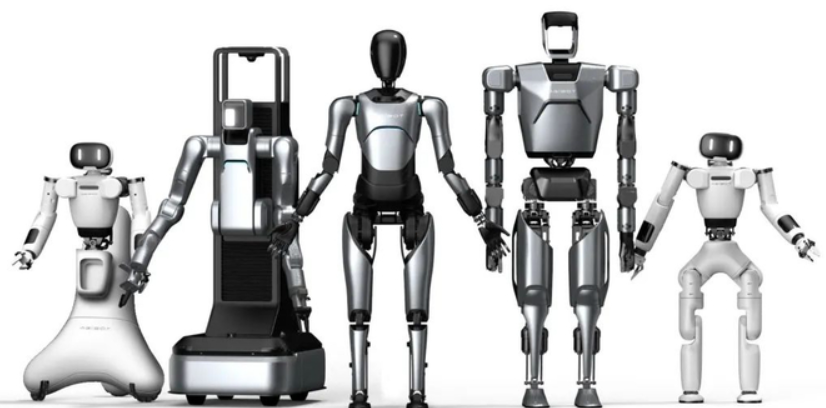
Date:2026-10-10Article editor:Starting Point PrecisionViews:168Building a humanoid robot involves fitting numerous mechanical and electronic systems into a body with limited internal space. The frame must accommodate joint drives, wiring, sensors, and fastening hardware without becoming unnecessarily bulky. Structural parts therefore need to be designed around their individual functions rather than treated as interchangeable metal supports.
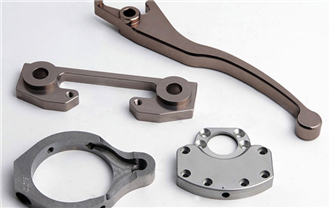
For example, the pelvis may require rigid interfaces for hip mechanisms, while the torso needs attachment points for upper-body assemblies. Shoulder supports and limb connectors have different packaging and loading demands. Custom Robotic Components make it possible to address these differences through application-specific dimensions, profiles, and mounting arrangements.
Material Choices for Compact Robot Structures
The material used for a frame component influences its mass, rigidity, fabrication cost, and service life. Engineers should compare these factors against the purpose of each part.
● Aluminum: Suitable for many machined support plates and structural housings where weight, machinability, and cost must be balanced.
● Titanium: An option for selected components with demanding mechanical requirements, particularly when space is limited and material performance warrants the additional expense.
● Engineering polymers: Useful for cable-management features, protective elements, and lightweight accessories that do not carry major structural forces.
Engineers researching manufacturing materials can consult the National Institute of Standards and Technology for broader technical resources.
Manufacturing Complex Frame Components with CNC Machining
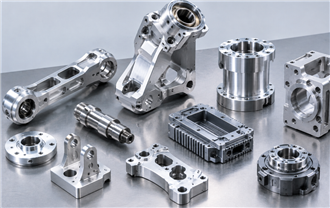
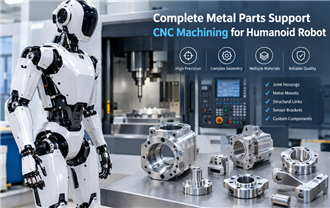
CNC is useful for producing parts with custom contours, stepped surfaces, mounting patterns, and integrated fastening features. It also allows engineers to revise individual components as a humanoid platform develops.
At the manufacturing stage, several decisions deserve particular attention:
1. Translate the drawing into machining requirements. Identify the surfaces that determine assembly position and distinguish them from features with less demanding tolerances.
2. Choose a workable part orientation. Plan how the component will be held during machining and whether additional setups are needed to reach recessed features.
3. Account for material behavior. Thin webs and narrow projections may respond differently to cutting forces than solid sections, so the machining strategy should suit the geometry.
4. Finish functional interfaces carefully. Bearing seats, actuator mounting faces, and locating holes may require closer control than decorative or non-contact surfaces.
5. Verify the completed part. Use suitable measuring equipment to confirm critical dimensions and inspect areas that influence assembly.
These decisions help connect the original design intent with a part that can be manufactured consistently. More information about available manufacturing services can be found on the Start Precision website.
Geometry Decisions That Make a Difference
Lightweight design is most effective when the shape of a component reflects how it will be used.
● Shape around the mechanism: Contours and recesses can provide clearance for neighboring parts, but they should not interfere with fasteners or maintenance access.
● Reinforce connection zones: Areas around bolts and actuator interfaces may need additional section thickness to resist local deformation.
● Avoid unnecessary machining complexity: Features that offer little functional value can increase tool changes, setup time, and inspection effort.
● Define interfaces early: Consistent reference surfaces and clear dimensional requirements make it easier to coordinate parts produced separately.
● Consider the assembled structure: The performance of one bracket depends partly on the stiffness and fit of the components attached to it.
A successful design is not simply the part with the smallest mass. It is the part that satisfies structural and packaging requirements without introducing avoidable manufacturing or assembly difficulties.
Design Example: A Humanoid Robot Shoulder Support
Imagine a development team creating a shoulder support that connects the upper torso to a shoulder-drive assembly. The available space is restricted by nearby wiring and sensor hardware, so a conventional rectangular plate would obstruct the planned layout.The team develops a shaped aluminum component with offset mounting points and clearance features tailored to the surrounding equipment. Before production, the drawing is reviewed for tool access, fastening clearance, and the relationship between the actuator interface and the torso attachment points.
After CNC machining, the support is checked against its critical dimensions and trial-fitted with mating parts. The engineering team can then assess assembly access and conduct appropriate structural tests before approving the design.
From Prototype Parts to Repeatable Manufacturing
During humanoid robot development, mounting positions and component outlines may change as the team integrates new motors, sensors, or transmission hardware. A custom manufacturing approach allows these updates to be made at the component level.
For repeat orders, maintaining current drawings, revision records, inspection criteria, and material specifications helps reduce discrepancies between batches. These controls are especially valuable when several custom parts must fit together within one compact frame.
Start Precision provides a point of contact for discussing machining requirements and potential production needs through its official website.
Humanoid robot frames demand more than lightweight materials. Their individual components must fit restricted spaces, connect accurately with motion systems, and remain practical to manufacture. A design-led CNC machining strategy helps turn these requirements into structural parts tailored to the robot's architecture.
Contact us to discuss your manufacturing needs and evaluate suitable machining options for custom humanoid robot frame components.
1. Which humanoid robot parts can be made using CNC machining?
Examples include shoulder supports, pelvic connectors, torso brackets, actuator mounts, structural plates, and custom interfaces between mechanical assemblies.
2. Is aluminum always the best choice for lightweight robot frames?
No. Aluminum offers useful weight and machining characteristics, but the best material depends on loading, stiffness, fatigue requirements, available space, and budget.
3. What should be considered before machining a custom frame part?
Review the component's mounting interfaces, critical dimensions, material, tool accessibility, workholding strategy, and inspection requirements before production.
4. Why are mounting interfaces important in humanoid robots?
Their dimensions and positions influence how accurately actuators, bearings, and connected structural members fit together. Poorly coordinated interfaces can complicate assembly and affect mechanical performance.
5. Can custom CNC components support future robot design changes?
Yes. Updated CAD models and controlled drawing revisions allow individual parts to be redesigned as the robot's packaging and mechanical architecture evolve.

Add: Building 3No.277 Zhen'an Middle Road, Chang'an Town,Dongguan,Guangdong, China
Tel:+86-769-82855591
Copyright © 2019 All Rights Reserved Dongguan Start Precision Technology Co., Ltd. Tel: +86-769-82855591
Add: No. 277 Zhen'an Middle Road, Chang'an Town, Dongguan, Guangdong, China



 中文版
 English