Titanium Precision Components for Biocompatible Implants
Date:2026-08-24Article editor:Starting Point PrecisionViews:126In modern medicine, implant success hinges on micron-level precision. Titanium, valued for its biocompatibility and strength, is the material of choice. Yet its true potential emerges only through Titanium Precision Components that meet exacting standards. This article examines the manufacturing processes, quality controls, and material decisions behind these life-saving parts.
Producing titanium components for permanent implants demands more than standard machining. Key factors include:
● Biocompatibility: Titanium’s oxide layer promotes osseointegration; processes must preserve this surface.
● Tight Tolerances: Dimensional accuracy (commonly ±0.01 mm) ensures proper fit within biological structures.
● Superior Surface Finish: Smooth surfaces (Ra < 0.4 µm) reduce bacterial adhesion.
● Absolute Cleanliness: Parts must be free from contaminants and residues.
Meeting these requirements requires a well-equipped facility. A partner like Dongguan Start Precision Technology Co., Ltd. offers comprehensive CNC machining, turning, grinding, and EDM services to handle the entire production cycle.
Key Equipment & Medical Applications:
| Capability | Equipment | Application |
| Complex geometries | 5-Axis CNC | Patient-specific implants, spinal cages |
| Cylindrical features | CNC Turning & Lathe | Bone screws, dental posts |
| Ultra-smooth finishing | Surface/Cylindrical Grinding | Articulating surfaces (hip/knee joints) |
| Intricate details | Wire EDM | Locking holes, porous bone-in-growth structures |
This diverse machinery enables Titanium Precision Components with tolerances down to ±0.01 mm, faithfully translating 3D CAD designs into physical products.
The choice of titanium alloy critically impacts implant performance. Industry standards, such as ASTM F136, define requirements for surgical-grade alloys.
| Titanium Grade | Key Properties | Typical Applications |
| Grade 2 (CP) | High ductility, corrosion resistance | Dental implants, temporary fixation |
| Grade 5 (Ti-6Al-4V) | High strength, fatigue resistance | Hip/knee replacements, spinal rods |
| Grade 23 (ELI) | Improved ductility, fracture toughness | Long-term high-stress implants |
Selecting the correct grade ensures implant longevity and patient safety.
Maintaining quality from first cut to final inspection is non-negotiable. Modern suppliers embrace Industry 4.0 with:
● In-Process Monitoring: Real-time sensors track tool wear and dimensions, minimizing defects.
● Advanced Inspection: CMMs and optical comparators verify every critical feature.
● Full Traceability: Digital records ensure material and process transparency, aligning with ISO 13485 for medical device quality management.
Consider a custom dental abutment—the connector between the implant post and the crown. It requires a precise internal hexagon (within ±0.01 mm) and a tapered external shape. CNC milling and turning achieve this geometry, followed by meticulous inspection for fit and soft-tissue compatibility. Such precision is possible only in a specialized factory with advanced capabilities.
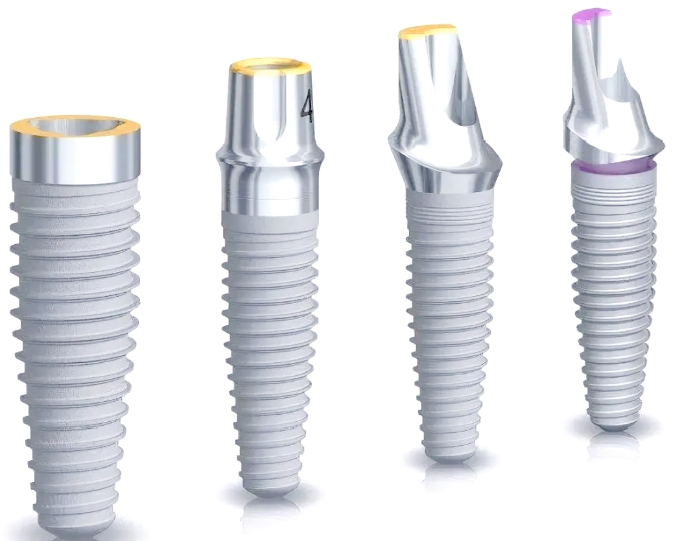
From raw titanium to a functional implant, the journey demands advanced equipment, material expertise, and rigorous quality control. The production of Titanium Precision Components exemplifies modern engineering excellence. With smart manufacturing and experienced teams, suppliers deliver solutions that improve countless lives.
For businesses seeking a reliable manufacturing partner, we invite you to explore our capabilities. Contact us to discuss your manufacturing needs.
1. Why is titanium preferred for implants?
Titanium offers excellent biocompatibility, corrosion resistance, and a strength-to-weight ratio similar to bone, promoting osseointegration.
2. What tolerance is typical for medical titanium parts?
For critical components, ±0.01 mm is common to ensure proper fit and function.
3. How does surface finish affect implant success?
A smooth finish (Ra < 0.4 µm) minimizes bacterial adhesion, reducing infection risk.
4. How does Start Precision ensure quality?
Through in-process monitoring, advanced CMM inspection, and full traceability—all essential for medical-grade components.


Add: Building 3No.277 Zhen'an Middle Road, Chang'an Town,Dongguan,Guangdong, China
Tel:+86-769-82855591
Copyright © 2019 All Rights Reserved Dongguan Start Precision Technology Co., Ltd. Tel: +86-769-82855591
Add: No. 277 Zhen'an Middle Road, Chang'an Town, Dongguan, Guangdong, China



 中文版
中文版 English