Stainless Steel Turning Parts with Anti-Galling Threads
Date:2026-08-25Article editor:Starting Point PrecisionViews:128Thread galling—a cold-welding phenomenon that seizes stainless steel fasteners—remains a persistent challenge in precision engineering. When stainless steel turning parts incorporate threaded features, the risk of galling increases due to the material’s high ductility and work-hardening tendency. This article outlines practical methods to produce turning parts with threads that resist galling, ensuring consistent torque, repeated assembly, and extended service life.
Galling occurs when pressure and friction break the passive oxide layer on stainless steel, allowing metal-to-metal contact and adhesion. For turned components used in automotive, aerospace, medical, or marine environments, a seized thread can lead to costly downtime or catastrophic failure. By optimizing design, material selection, and post-processing, manufacturers can deliver turning parts that perform reliably even under high load or vibration. Standardized testing, such as that described in ASTM G98, provides a benchmark for evaluating galling resistance, helping engineers quantify material and coating performance before production.
The following table summarizes the most effective countermeasures for anti-galling threads in stainless steel turning operations:
| Strategy | Implementation | Benefit |
| Material Grade Selection | Use austenitic grades with added sulfur (e.g., 303) or duplex grades (e.g., 2205) for improved machinability and lower friction. Reference ISO 16048 for passive film integrity assessment. | Reduces adhesive wear; 303 offers excellent chip breaking. |
| Thread Form Optimization | Specify a larger root radius and modified flank angle (e.g., UNJ or aerospace threads). | Distributes contact stress, minimizes local plastic deformation. |
| Surface Coating | Apply dry-film lubricants (MoS₂, PTFE) or thin hard coatings (CrN, DLC) after turning. | Creates a barrier layer that prevents metal-to-metal contact. |
| Surface Finish Control | Achieve Ra ≤ 0.8 μm on thread flanks via fine turning or roller burnishing. | Smooth surfaces reduce initial friction and galling propensity. |
| Lubrication & Assembly | Use anti-seize compounds during first assembly, and specify controlled torque protocols. | Breaks in the thread surfaces without scoring. |
Producing stainless steel turning parts with anti-galling threads demands strict process control:
● Tooling Geometry: Use inserts with positive rake angles and chip breakers designed for stainless. Sharp edges reduce cutting forces and heat generation.
● Cutting Parameters: Moderate cutting speeds (70–120 m/min) with steady feed rates prevent work-hardening. Interrupted cuts should be avoided. For a deeper dive into parameter optimization, you may refer to Sandvik stainless steel turning, which offers practical shop-floor tips.
● Coolant Strategy: High-pressure, water-soluble coolant (≥ 60 bar) directed at the cutting zone flushes chips and lubricates the tool-work interface.
● In-process Inspection: Thread gauges and optical profilometers verify flank form and surface roughness after every critical batch. Regular passivation testing per ISO 16048 ensures the protective oxide layer remains intact after machining.
A hydraulic component manufacturer experienced repeated galling on 316L stainless steel turning parts used in quick-connect couplings. After switching to duplex 2205 material, optimizing the thread root radius from 0.108P to 0.150P, and adding a PTFE-based dry coating, field failure rates dropped by 92% over 18 months. Torque consistency improved from ±18% to ±4%, enabling automated assembly lines to run without rework. The company also adopted ASTM G98 as an incoming material screening test, further reducing variability.
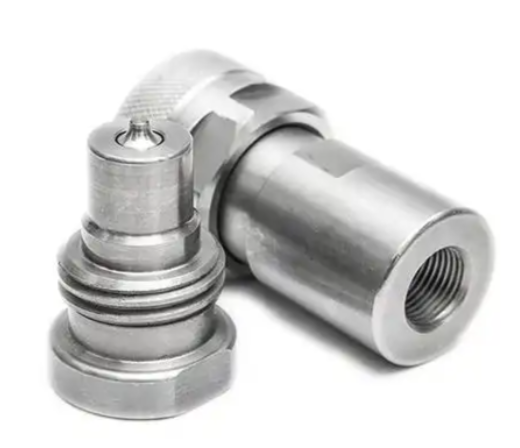
Creating stainless steel turning parts with genuine anti-galling threads is not a single-step fix—it requires a holistic approach that blends alloy selection, thread geometry refinement, surface engineering, and disciplined machining parameters. When these elements are harmonized, manufacturers gain parts that withstand repeated assembly, harsh environments, and high dynamic loads without seizing. Leveraging recognized standards like ASTM G98 and ISO 16048 during design and quality control provides an additional layer of assurance, while external resources such as the aforementioned machining guide can help fine-tune production practices.
At Start Precision, we integrate these principles into every project, from prototype to production runs. Our in-house coating lines and CMM inspection ensure each thread meets your exact specifications.
Contact us today to discuss your manufacturing requirements – we are ready to engineer turning parts that perform when it counts.
Q1: Which stainless steel grade is best for anti-galling threads?
A1: While 303 offers excellent machinability, 2205 duplex provides higher galling resistance due to its higher strength and different microstructure. For cost-sensitive applications, 304 with a dry-film lubricant is also effective.
Q2: Can anti-galling threads be achieved without coatings?
A2: Yes. Optimized thread geometry (larger root radius) and very fine surface finishes (Ra < 0.4 μm) can significantly reduce galling, though coatings add an extra safety margin.
Q3: How do I test galling resistance in my own parts?
A3: The ASTM G98 test uses a button-on-block method to simulate sliding contact. For threaded components, a practical approach is repeated torque-to-tighten tests with a prescribed number of cycles (e.g., 10 assemblies) while monitoring peak torque increase.
Q4: Does turning speed affect galling tendency?
A4: Indirectly. Excessive speed generates heat, which softens the surface and promotes adhesion. However, proper coolant and sharp tooling mitigate this. Maintain speeds within the tool manufacturer’s recommended range for stainless.
Q5: Are anti-galling threads more expensive to produce?
A5: The added cost from coatings, tighter finishing, and inspection is typically 10–20% higher than standard threads. However, this is often offset by reduced field failures and extended product lifetime, offering a strong return on investment.


Add: Building 3No.277 Zhen'an Middle Road, Chang'an Town,Dongguan,Guangdong, China
Tel:+86-769-82855591
Copyright © 2019 All Rights Reserved Dongguan Start Precision Technology Co., Ltd. Tel: +86-769-82855591
Add: No. 277 Zhen'an Middle Road, Chang'an Town, Dongguan, Guangdong, China



 中文版
中文版 English