Low Carbon Precision CNC Machining Services: The Sustainable Manufacturing Edge
Date:2026-05-08Article editor:Starting Point PrecisionViews:449Manufacturing is evolving. Today, Low Carbon Precision CNC Machining Services deliver both micrometer accuracy and a drastically reduced environmental footprint. By combining energy‑efficient machine tools, smart process controls, and renewable energy, these services help industries meet net‑zero targets without compromising quality or lead times.
Why I Wrote This Article
As a manufacturing engineer who has spent over a decade on the shop floor, I have witnessed firsthand how much energy and coolant conventional CNC machining wastes. I wrote this article because I believe that sustainability and precision are not opposites—they are partners. Too many decision‑makers assume that “low carbon” means slower, less accurate, or more expensive machining. My goal is to show that the opposite is true: with optimized toolpaths, regenerative drives, and smart lubrication, low carbon CNC often improves efficiency and part quality. By sharing these insights, I hope to help procurement teams, shop owners, and designers make informed choices that benefit both their bottom line and the planet.
What Makes CNC Machining “Low Carbon”?
A low carbon CNC operation focuses on three pillars: energy efficiency, material conservation, and clean power. Modern machining centers use regenerative drives that capture braking energy and feed it back to the grid. Minimum Quantity Lubrication (MQL) replaces flood coolant, cutting fluid consumption by over 90% and eliminating the energy needed to pump and filter coolants. Furthermore, machine shops increasingly power their spindles with on‑site solar arrays or purchased renewable electricity.
Switching to low carbon precision CNC services offers tangible advantages:
◆ Lower carbon footprint – Verified reductions of 30‑50% CO₂ per machined part.
◆ Energy cost savings – Optimized toolpaths reduce machine run time and electricity use.
◆ Regulatory readiness – Comply with ISO 14001 and emerging carbon border taxes.
◆ Stronger brand value – Win tenders that require sustainability reporting.
An independent study by the Advanced Manufacturing Office shows that implementing these practices can cut total machining energy by up to 40%.
Key enabling technologies include:
◆ AI‑driven toolpath optimization – Algorithms eliminate unnecessary air cuts and rapid movements.
◆ High‑efficiency spindle motors (IE4/IE5 class) – Up to 20% less energy than conventional spindles.
◆ Closed‑loop chip recycling – Aluminum and steel chips are compacted and returned to smelters, saving embodied carbon.
◆ Smart compressed air systems – Leak detection and variable speed drives reduce auxiliary energy waste.
For an external resource on certified low carbon machining standards, visit the ISO 50001 Energy Management page. Our facility proudly follows those guidelines.
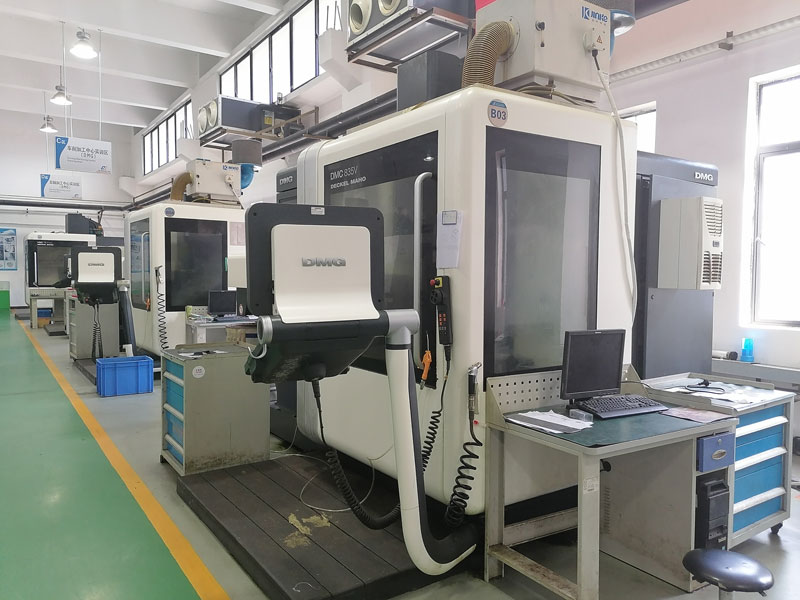
our low‑carbon workshop layout
When evaluating suppliers, ask for:
1.Carbon footprint data per part – Verified by third parties like Carbon Trust.
2.Renewable energy contracts – Does the shop use 100% wind or solar?
3.Coolant and waste management plan – MQL implementation and chip recycling rates.
4.Certifications – Look for ISO 14001 and ISO 50001.
You can also request a low carbon quote through our contact page.
The shift to low carbon manufacturing is no longer optional—it is a competitive necessity. By adopting Low Carbon Precision CNC Machining Services, companies future‑proof their operations against carbon pricing and build resilience.
Add: Building 3No.277 Zhen'an Middle Road, Chang'an Town,Dongguan,Guangdong, China
Tel:+86-769-82855591
Copyright © 2019 All Rights Reserved Dongguan Start Precision Technology Co., Ltd. Tel: +86-769-82855591
Add: No. 277 Zhen'an Middle Road, Chang'an Town, Dongguan, Guangdong, China



 中文版
中文版 English