Custom CNC Lathe Parts Machining: Choosing Cutting Tools
Date:2026-04-01Article editor:Starting Point PrecisionViews:453Precision machining of custom CNC lathe parts demands more than just a capable machine—it requires a strategic approach to cutting tool selection. The right tool determines surface finish, dimensional accuracy, cycle time, and tool longevity. This guide walks through the key factors for selecting cutting tools in CNC turning, helping manufacturers strike the right balance between operational performance and total cost efficiency.
Types of Cutting Tools for CNC Lathes
CNC lathes primarily use single-point cutting tools. Based on construction and application, they fall into three main categories:
● Indexable Insert Tools – The industry standard for turning, facing, and boring. Carbide inserts with various grades, chipbreakers, and coatings allow quick changes without resetting tool offsets.
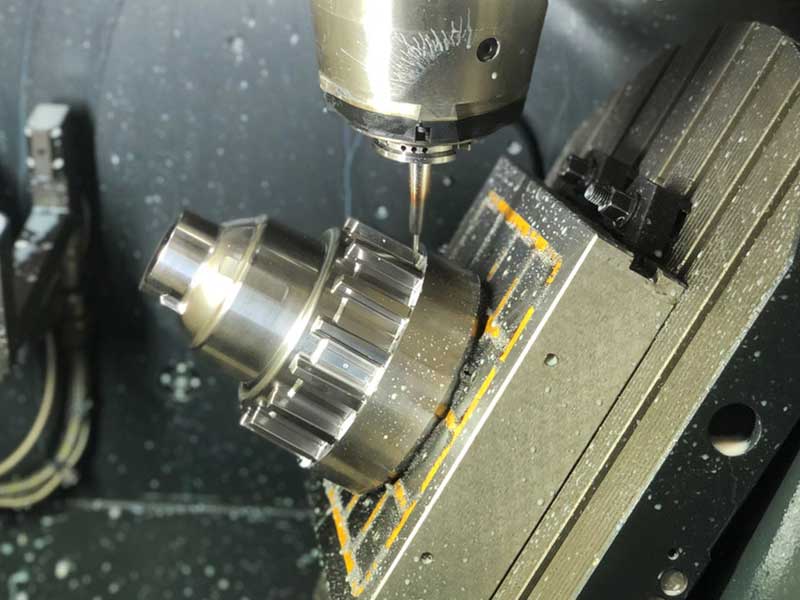
● Solid Carbide Tools – Used for high-precision work, grooving, and threading in small diameters. Solid carbide offers superior rigidity and wear resistance, ideal for tight tolerances and hard-to-machine materials.
● High‑Speed Steel (HSS) Tools – Less common in production today, but still valuable for custom forms, prototype work, or when a tougher, less brittle edge is needed for interrupted cuts.
Key Factors in Tool Selection
1. Workpiece Material
The material being machined dictates the tool substrate and coating. For example:
● Aluminum and non-ferrous metals: Polished uncoated carbide or DLC coatings help avoid built-up edge.
● Stainless steel and superalloys: Tough, wear-resistant tools with AlTiN or TiAlN coatings resist heat and work hardening.
● Hardened steel (>45 HRC): Demand CBN (cubic boron nitride) or ceramic inserts for efficient hard turning.
2. Tool Geometry
Insert geometry affects chip control and cutting forces. Positive rake inserts reduce cutting pressure and are suitable for gummy materials and low‑power machines. Negative rake inserts offer stronger edges and multiple cutting corners, making them cost‑effective for high‑volume steel machining.
3. Coatings
Advanced coatings extend tool life significantly. Common options include:
● TiN (titanium nitride): General purpose, reduces friction.
● TiCN (titanium carbonitride): Higher hardness, good for cast iron and steel.
● AlTiN / TiAlN: Excellent heat resistance, ideal for dry machining and difficult materials.
4. Tool Holding & Stability
Rigidity is crucial in turning. Use the shortest possible tool overhang and high‑quality tool holders (e.g., VDI, quick‑change systems) to minimize vibration and ensure repeatability. For boring bars, choose steel for general use or solid carbide bars for deep bores and vibration‑prone setups.
Best Practices for Optimized Machining
● Match cutting parameters to tool recommendations – Speed, feed, and depth of cut must align with the tool manufacturer’s data to avoid premature failure.
● Implement tool wear monitoring – Regularly inspect inserts and replace them at the right time to maintain part quality.
● Use specialized tools for complex features – For custom parts requiring intricate profiles, consider form tools or custom ground inserts to reduce cycle times.
● Leverage tool management software – Digital tool libraries help maintain consistency across production runs and simplify setup.
Conclusion
Selecting the right cutting tools for custom CNC lathe parts machining is a balance between material compatibility, tool geometry, coating technology, and application requirements. By systematically evaluating these factors, machinists can achieve higher productivity, tighter tolerances, and lower cost per part.
For detailed technical data on insert grades and coatings, refer to Sandvik Coromant Knowledge Center.
Add: Building 3No.277 Zhen'an Middle Road, Chang'an Town,Dongguan,Guangdong, China
Tel:+86-769-82855591
Copyright © 2019 All Rights Reserved Dongguan Start Precision Technology Co., Ltd. Tel: +86-769-82855591
Add: No. 277 Zhen'an Middle Road, Chang'an Town, Dongguan, Guangdong, China



 中文版
中文版 English