Five-Axis Machining Parts Customization Guide
Date:2026-06-23Article editor:Starting Point PrecisionViews:331In precision manufacturing, standard off-the-shelf components rarely satisfy every engineering demand. Five-axis machining bridges this gap, enabling fully customized parts with complex geometries, tight tolerances, and superior surface finishes. Whether you need a single functional prototype or a low-volume production run, understanding how to tailor the process to your specifications is the key to success. This guide explores how to turn your unique requirements into high-performance machined reality.
Unlike traditional 3‑axis milling, a 5‑axis CNC machine moves the cutting tool (or the part) across five axes simultaneously. This allows machining of intricate undercuts, deep cavities, and sculpted surfaces in a single setup. As detailed by multiaxis machining principles, eliminating multiple setups drastically reduces cumulative error and cycle time. The result: you receive components with exceptional accuracy, often ±0.005 mm or better, while saving on assembly and fixture costs. Explore our precision machining solutions to see typical tolerances.
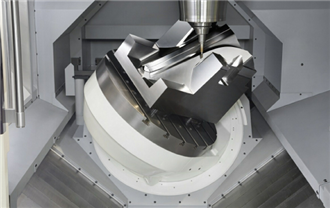
Your part’s function dictates the material—aluminum for lightweight strength, stainless steel for corrosion resistance, titanium for medical implants, or engineering plastics like PEEK for chemical resistance. Every material machines differently; five-axis centers handle hard metals and delicate polymers with equal finesse.
While 5‑axis offers immense freedom, intelligent design multiplies the benefits. Features like contoured walls, angled holes, and blended radii that would be impossible or require complex fixturing on a 3‑axis machine become routine. Use CAD software such as Autodesk Fusion 360 to simulate tool paths and avoid overly thin sections. When you design with simultaneous 5‑axis motion in mind, you often reduce part weight and improve structural integrity without additional cost.
Clearly specify functional tolerances and desired finishes early. Five-axis customization can hold tight geometric tolerances (e.g., profile, true position) across multiple faces without repositioning errors. Post-processing options—anodizing, passivation, bead blasting—are integral to tailoring the part’s performance and appearance.
Client: MedTech Innovations, a startup developing next‑generation orthopedic implants.
Challenge: They required a customized acetabular cup (hip implant) made from biocompatible Ti‑6Al‑4V ELI titanium. The design incorporated a complex lattice porous structure on the back surface for bone ingrowth and a mirror‑polished articulating inner surface. Tolerances of ±0.010 mm and a surface roughness Ra ≤ 0.4 µm were mandatory according to ISO 2768‑1 fine grade.
Solution: Using simultaneous 5‑axis machining, we produced the entire implant from a solid titanium blank in two operations: roughing and finishing. The lattice was machined with micro‑diameter ball end mills, while the polished cup was achieved through programmed high‑speed tool paths. No manual blending was required.
Result: The parts met all dimensional and surface specifications, passed FDA submission benchmarks, and cut the client’s time‑to‑market by 30% compared to traditional multi‑process methods.
Five-axis machining parts customization empowers you to break free from standard catalog limits. By marrying the right material, optimized design, and precise tolerances, you get parts that perform exactly as needed—no compromises. Read more case studies or request a quote to start your tailored manufacturing journey.
Frequently Asked Questions
Q1:What is the maximum part size for five-axis machining parts customization?
Typical work envelopes range from 400 mm to 800 mm in diameter, but larger parts can be accommodated on gantry-style or trunnion-table five-axis machines. Always consult your machining partner with your specific dimensions and weight constraints to find the best fit.
Q2:How does five-axis machining improve part accuracy over 3-axis?
In 3‑axis machining, the part often requires multiple repositioning setups, each introducing alignment errors. Five-axis machines can access almost all features in one or two setups, eliminating stack-up tolerances and improving true position accuracy by up to 70% for complex geometries.
Q3:Can five-axis machining parts be produced in high volumes as well as prototypes?
Absolutely. While five-axis is ideal for complex prototypes and short runs, many shops integrate pallet changers and automation for lights-out production. The reduction in setups often outweighs the slightly higher machine hourly rate, making it cost-competitive for medium-to-high volumes of intricate parts.
Q4:What design files are required for a custom five-axis machining parts quote?
A detailed 3D CAD model (STEP, IGES, or native format) is essential. Accompany it with a 2D drawing that clearly denotes critical dimensions, tolerances, threads, and surface finish callouts. If you need design-for-manufacturability feedback, share your initial concept early.
Add: Building 3No.277 Zhen'an Middle Road, Chang'an Town,Dongguan,Guangdong, China
Tel:+86-769-82855591
Copyright © 2019 All Rights Reserved Dongguan Start Precision Technology Co., Ltd. Tel: +86-769-82855591
Add: No. 277 Zhen'an Middle Road, Chang'an Town, Dongguan, Guangdong, China



 中文版
中文版 English