Complex Geometry Low Volume Precision Machining: Solutions for Intricate Designs
Date:2026-03-02Article editor:Starting Point PrecisionViews:530As product designs become more sophisticated, manufacturers face increasing demands for parts with intricate features, tight internal cavities, and non-standard contours. Complex geometry low volume precision machining addresses these challenges by leveraging advanced CNC technology to produce components that would be impossible or prohibitively expensive with traditional methods. This article explores how modern machining techniques handle complexity while maintaining precision in small batch production.
Defining Complex Geometry in Machining
What constitutes complex geometry in machining? Typically, it includes features that require specialized strategies:
Deep internal cavities with limited tool access
Thin walls requiring vibration control
Undercuts needing specialized tooling or multi-axis approaches
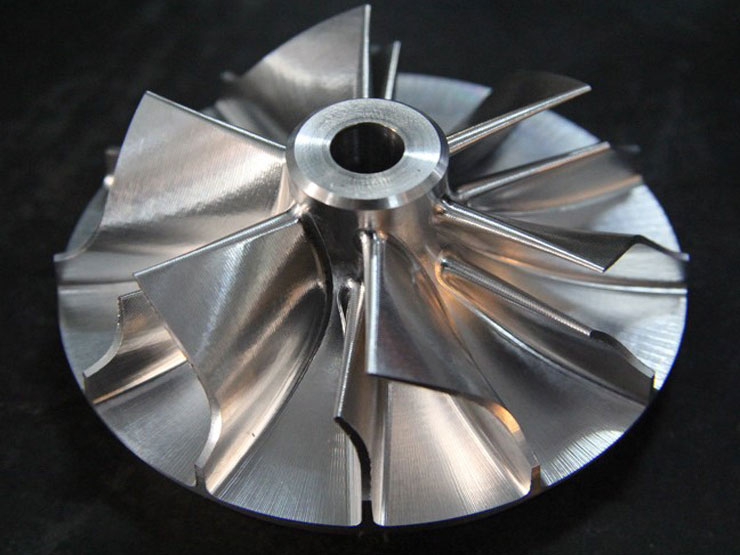
Organic shapes like turbine blades or medical implants
Tight tolerance intersections where multiple features meet
Complex geometry low volume precision machining excels at producing these challenging features without the need for expensive custom tooling or multi-step processes.
The Technology Enabling Complex Machining
Multi-Axis CNC Machining
Traditional 3-axis machines approach parts from a single direction, limiting their ability to create complex features. Complex geometry low volume precision machining often employs:
4-axis machines that add rotary motion for cylindrical features
5-axis machines that enable tool access from any direction
Mill-turn centers combining milling and turning operations
These machines allow tools to reach undercuts, machine angled features in a single setup, and maintain tight tolerances across complex surfaces.
Advanced CAM Software
Creating tool paths for complex geometries requires sophisticated programming. CAM software for complex geometry low volume precision machining offers:
Simultaneous multi-axis tool path generation
Collision detection between tool, holder, and workpiece
Optimized tool orientation to maintain cutting efficiency
Simulation capabilities to verify programs before cutting
Material Considerations for Complex Parts
Different materials respond differently to complex machining operations:
Aluminum machines easily but thin walls may deflect
Titanium maintains strength but requires careful heat management
Stainless steel offers durability but work-hardens
PEEK and other engineering plastics require sharp tools and controlled feeds
Complex geometry low volume precision machining must account for material behavior when planning operations. Experienced machinists select appropriate speeds, feeds, and tooling for each material to achieve desired results.
Applications Across Industries
Aerospace Components
Turbine blades, impellers, and structural brackets often feature organic curves and thin walls. Complex geometry low volume precision machining produces these parts from high-temperature alloys with the reliability aerospace demands.
Medical Devices
Implants require biocompatible materials and patient-specific geometries. Surgical instruments need ergonomic handles and precision working ends. Complex geometry low volume precision machining delivers both with the traceability medical applications require.
Automotive Performance
Custom intake manifolds, turbocharger components, and lightweight suspension parts benefit from complex geometries that optimize flow and reduce weight.
Mold and Die Making
Even when the final product will be molded, the molds themselves often require complex geometry low volume precision machining to create intricate cavity details.
Strategies for Successful Complex Machining
Fixturing and Workholding
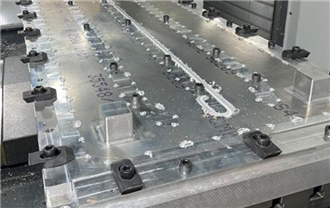
Complex parts require secure, accessible fixturing. Custom soft jaws, vacuum chucks, and modular fixturing systems allow complex geometry low volume precision machining to access all features while maintaining rigidity.
Tool Selection and Path Strategy
Specialized cutters like lollipop tools for undercuts
Variable flute designs to reduce harmonics
Trochoidal milling for efficient material removal
Rest machining to clear material from previous operations
In-Process Verification
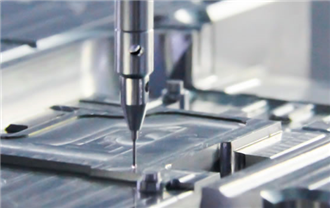
Complex parts demand frequent verification. In-process probing ensures that complex geometry low volume precision machining stays on track, allowing adjustments before errors compound.
Quality Assurance for Complex Parts
Verifying complex geometries requires advanced inspection methods:
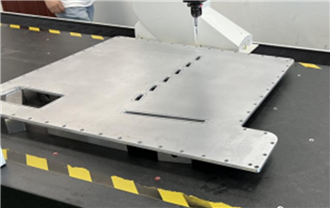
CMM with scanning probes captures complex surfaces
Optical comparators check profile accuracy
White light scanning creates full 3D comparisons to CAD models
Surface roughness testers verify finish requirements
The Low Volume Advantage
For complex parts, low volume production offers distinct benefits:
Iterative development allows design refinement without tooling costs
Process optimization for each unique geometry
Reduced risk when proving out challenging designs
Faster time-to-market for innovative products
Conclusion
Complex geometry low volume precision machining represents the cutting edge of manufacturing capability. By combining advanced multi-axis technology, sophisticated CAM programming, and skilled craftsmanship, it enables the production of parts that push the boundaries of design. Whether for aerospace, medical, or custom applications, this approach delivers precision where it matters most.
Add: Building 3No.277 Zhen'an Middle Road, Chang'an Town,Dongguan,Guangdong, China
Tel:+86-769-82855591
Copyright © 2019 All Rights Reserved Dongguan Start Precision Technology Co., Ltd. Tel: +86-769-82855591
Add: No. 277 Zhen'an Middle Road, Chang'an Town, Dongguan, Guangdong, China



 中文版
中文版 English