Low Volume Precision Lathe Parts Machining for Automotive Components
Date:2026-03-03Article editor:Starting Point PrecisionViews:539The automotive industry is undergoing a profound transformation. With the rise of electric vehicles, autonomous driving technologies, and performance customization, the demand for low volume precision lathe parts has never been higher. Unlike traditional high-volume production runs, today's automotive manufacturers often require small batches of specialized components—from prototype validation to limited-edition performance parts and aftermarket upgrades. This article explores tailored machining solutions that deliver automotive-grade precision, material traceability, and rapid turnaround for low-volume production.
The Growing Need for Automotive Small-Batch Production
Several factors are driving the shift toward low volume precision machining in the automotive sector:
Prototyping & R&D:In the automotive industry, components are produced in small batches before mass production. Only those that meet safety and performance requirements are mass-produced and used in new vehicle manufacturing.
Electric Vehicle Transition: EV architectures demand entirely new families of precision-turned parts.
Motorsport & Performance: In high-performance and off-road vehicles, due to their stringent demands for speed and complex, rugged terrain, the requirements for components differ significantly from those of ordinary vehicles. These components are typically custom-made through small-batch precision machining.
Legacy Parts: Maintaining classic and vintage vehicles requires reproduction of obsolete parts in small quantities.
Supply Chain Flexibility: Automakers seek agile suppliers who can respond quickly to changing demands.
Each of these scenarios requires components that meet strict automotive standards—often with full material certification and dimensional traceability.
1.Multi-Axis CNC Turning for Complex Geometries
Modern automotive components increasingly feature complex geometries that cannot be produced on conventional lathes. Advanced CNC turning centers with live tooling, Y-axis capability, and subspindles enable complete machining of intricate parts in a single setup. This is particularly valuable for components like:
Sensor housings requiring cross-drilled holes and milled flats
Fuel system components with precise internal contours
Transmission shafts needing keyways and splines
Leading machine tool manufacturers such as DMG MORI and Mazak offer platforms specifically designed for the precision demands of automotive manufacturing. These machines maintain tight tolerances while minimizing handling time—critical for economical low volume runs.
2. Material Expertise for Automotive Applications
Automotive components must withstand extreme conditions: high temperatures, corrosive environments, and significant mechanical stress. Low volume machining requires deep understanding of automotive materials:
Steel alloys: 4140, 4340, and 8620 for strength and durability
Stainless steels: 303 offers the best machinability, designed specifically for cutting operations; 304 provides a perfect balance between corrosion resistance and workability; 316 delivers the strongest rust and corrosion resistance, reigning supreme in marine and chemical environments.
Aluminum: 6061 and 7075 for lightweight applications
Exotic alloys: Titanium and Inconel for high-performance and racing applications
Each material presents unique machining challenges. Proper tool selection, speeds, and feeds are essential for achieving the required surface finishes and dimensional accuracy. Our material selection guide provides detailed recommendations for common automotive applications.
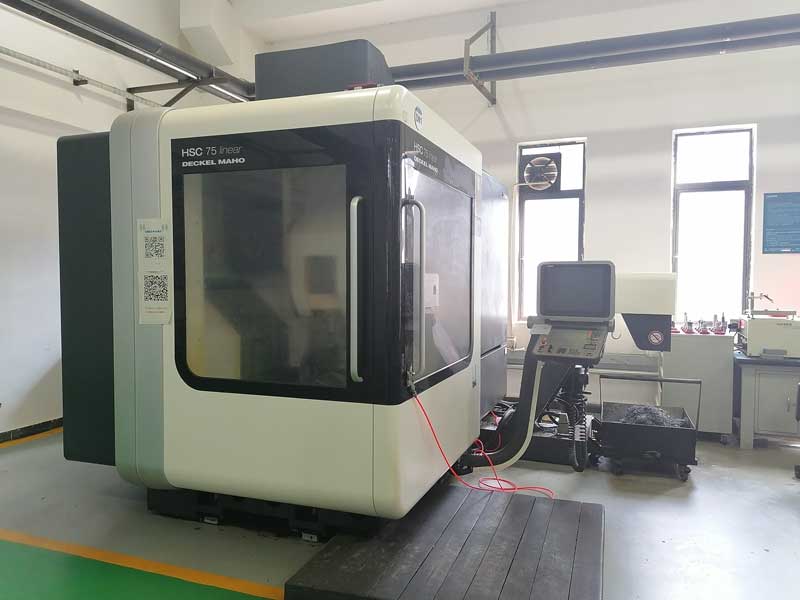
A typical automotive CNC machining cell configured for small-batch production is shown here :
3. Agile Workholding for Quick Changeover
Traditional dedicated fixtures are impractical for low volumes where part configurations change frequently. Modern automotive machining relies on modular workholding systems that enable rapid transitions between different components. Quick-change collet systems, self-centering vises, and magnetic chucks dramatically reduce setup times.
4. CAM Programming Optimized for Small Batches
Efficient programming is perhaps the most critical factor in low volume success. Modern CAM software with automotive-specific toolpaths accelerates code generation. Features like:
Feature recognition automatically identifies machining operations
Template-based programming applies proven strategies to new parts
Toolpath simulation verifies programs before cutting
These capabilities reduce programming time from hours to minutes. For complex automotive components, simulation also prevents costly crashes and ensures first-part correctness.
5. Quality Systems for Automotive Requirements
The automotive industry demands rigorous quality assurance, even for low volume production. Key requirements include:
First article inspection reports with full dimensional data
Material certifications and traceability
Process documentation for ISO/TS 16949 compliance
Statistical process control adapted for small batches
Modern inspection equipment—including CMMs, optical comparators, and surface roughness testers—provides the necessary measurement capability.
By implementing these quality systems, manufacturers can deliver components that meet or exceed OEM specifications, whether for prototype validation or production parts.
6. Supply Chain Integration for Automotive Customers
Successful low volume machining for automotive applications requires close collaboration between supplier and customer. Key elements include:
Early design involvement to optimize parts for manufacturability
Flexible scheduling to accommodate urgent requirements
Kanban or consignment inventory for regularly ordered parts
Digital connectivity for real-time order tracking
This partnership approach ensures that low volume runs—whether 10 pieces or 500—are delivered on time and to specification. For a complete overview of our automotive capabilities, visit our machining page .
Common Automotive Components Produced in Low Volumes
Precision lathe machining supports a wide range of automotive applications:
Component Type Typical Materials Applications
Engine components Steel alloys, aluminum Pistons, valves, lifters
Transmission parts Case-hardened steels Shafts, gears, synchronizers
Braking system Stainless steel, cast iron Caliper pistons, fittings
Fuel system Brass, stainless steel Injector bodies, connectors
Steering components Alloy steels Rack ends, tie rods
Suspension Heat-treated steels Ball joints, bushings
Turbocharger parts Inconel, titanium Shafts, compressor wheels
EV powertrain Aluminum, copper alloys Rotor shafts, busbars
Each of these components requires specific machining strategies to achieve the necessary tolerances and surface finishes.
Conclusion
Low volume precision lathe parts machining for automotive components represents a specialized capability that combines advanced technology with deep industry knowledge. By leveraging multi-axis CNC turning, material expertise, agile workholding, efficient programming, and robust quality systems, manufacturers can deliver automotive-grade components in any quantity—from single prototypes to bridge production runs.
Whether you need validation parts for a new electric vehicle platform, limited-run performance components, or reproduction parts for classic cars, the right machining partner can provide the precision, quality, and speed required. Contact our team today to discuss your project requirements.
Add: Building 3No.277 Zhen'an Middle Road, Chang'an Town,Dongguan,Guangdong, China
Tel:+86-769-82855591
Copyright © 2019 All Rights Reserved Dongguan Start Precision Technology Co., Ltd. Tel: +86-769-82855591
Add: No. 277 Zhen'an Middle Road, Chang'an Town, Dongguan, Guangdong, China



 中文版
中文版 English