Five-Axis Cnc Precision Parts: Mild Steel Components for General Applications
Date:2026-03-17Article editor:Starting Point PrecisionViews:461In the modern landscape of manufacturing, precision and versatility are paramount. Among the various manufacturing technologies available, five-axis machining stands out as a pinnacle of efficiency and complexity. When applied to mild steel—a material prized for its affordability and weldability—it opens the door for high-quality components suitable for a vast array of general applications.
This article explores the synergy between five-axis CNC technology and mild steel, detailing the benefits, common applications, and considerations for engineers and procurement specialists.
What is Five-Axis Machining?
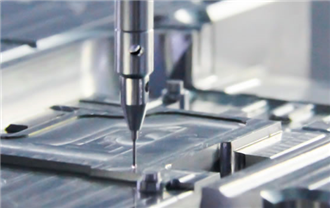
Unlike traditional three-axis machining (which operates on the X, Y, and Z linear axes), five-axis machining adds two rotational axes (A and B). This allows the cutting tool to approach the workpiece from any direction. Instead of requiring multiple setups to machine different faces of a part, the machine can rotate the table or the tool head to access five sides of a part in a single operation.
This capability is particularly beneficial for mild steel components, which often require complex geometries or precise contours.
Why Mild Steel?
Mild steel, also known as low carbon steel, is a staple in the manufacturing industry. Its popularity stems from:
Machinability: It is relatively easy to cut, drill, and mill, which reduces tool wear compared to harder alloys.
Cost-Effectiveness: It is one of the most affordable metals available, making it ideal for high-volume production runs of general-purpose parts.
Versatility: It can be welded, painted, and galvanized easily, allowing for secondary finishing operations.
When combined with five-axis machining, the material's innate flexibility is fully realized.
Key Applications in General Industry
The combination of five-axis precision and mild steel robustness serves a wide range of "general applications." These are not necessarily aerospace-grade titanium parts, but rather the unsung heroes of industrial machinery and infrastructure.
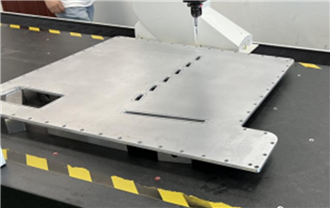
Automated Machinery Components: Many custom brackets, bases, and frames for conveyor systems or robotic arms are machined from mild steel. Five-axis technology ensures that mounting points are perfectly aligned on multiple planes, which is crucial for assembly line reliability.
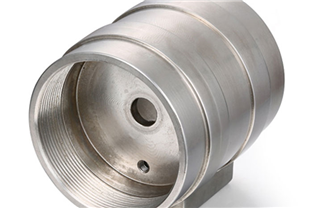
Pump and Valve Housings: While some applications require stainless steel, many standard pump housings and valve bodies are made from mild steel. Five-axis machining allows for the complex internal passageways and flange surfaces to be cut in a single setup, ensuring a leak-proof seal.
Structural Joints and Connectors: For architectural metalwork or heavy equipment, custom connectors often feature compound angles. Five-axis machining turns complex engineering blueprints into reality with precise, repeatable results.
Prototyping and Tooling: Before committing to expensive die-casting, engineers often use five-axis machined mild steel to create functional prototypes. It is also the material of choice for creating durable jigs and fixtures used on the factory floor.
Advantages of the Five-Axis Approach for Mild Steel
Reduced Setup Time: By machining a part in one setup, you eliminate errors caused by re-fixturing. This drastically improves the accuracy of your mild steel components.
Superior Surface Finish: The ability to tilt the tool keeps the cutting tip at an optimal angle, reducing vibration and chatter, even on softer materials like mild steel.
Complex Geometries: Features that would be impossible to create on a manual mill—such as twisted surfaces or undercuts—become routine operations.
Design Considerations
When designing mild steel parts for five-axis machining, keep the following in mind:
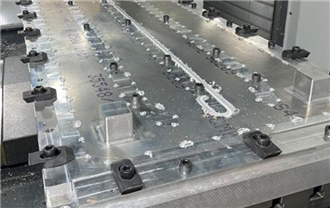
Workholding: The machine must grip the part securely, even as it rotates. Custom soft jaws or vacuum chucks are often required.
Tool Access: While five-axis machines are versatile, ensure your design allows for sufficient tool clearance to reach deep cavities.
Burr Management: Mild steel can form burrs. The programming must account for finishing passes to remove these without damaging the part.
Conclusion
Five-axis machining of mild steel components represents the perfect balance between advanced technology and practical material science. It allows manufacturers to produce intricate, durable parts for general applications with unmatched speed and accuracy. Whether you are designing a one-off prototype or a production run of industrial brackets, leveraging five-axis capabilities ensures that your mild steel components are built to the highest standard of precision.
Add: Building 3No.277 Zhen'an Middle Road, Chang'an Town,Dongguan,Guangdong, China
Tel:+86-769-82855591
Copyright © 2019 All Rights Reserved Dongguan Start Precision Technology Co., Ltd. Tel: +86-769-82855591
Add: No. 277 Zhen'an Middle Road, Chang'an Town, Dongguan, Guangdong, China



 中文版
中文版 English