Custom Liquid Cooling Plates Design & Build: A Complete Engineering Guide
Date:2026-09-19Article editor:Starting Point PrecisionViews:16As power densities in data centers, laser systems, and electric vehicle battery packs continue to rise, air cooling is rapidly reaching its physical limits. Custom liquid cooling plates have become the definitive thermal management solution for high-heat-flux applications. This guide walks through the design, materials, manufacturing, and validation of custom cold plates—and how a precision manufacturing partner can turn your thermal concept into a production-ready component.
Standard off-the-shelf cold plates rarely match the geometric, thermal, or pressure-drop requirements of modern high-power systems. Custom liquid cooling plates offer:
● Optimized thermal resistance tailored to your heat source layout
● Integrated mounting features that reduce assembly time
● Material compatibility with coolants such as deionized water, glycol, or dielectric fluids
● Leak-free reliability validated through helium leak and burst testing
Before machining begins, every project requires a clear thermal and mechanical specification. The table below summarizes the critical inputs our engineers review during the DFM (Design for Manufacturing) stage.
| Design Parameter | Typical Specification | Why It Matters |
| Heat load | 500 W – 5 kW+ | Determines channel geometry and flow rate |
| Coolant type | DI water, PG25, dielectric | Affects material selection and corrosion risk |
| Maximum pressure drop | < 0.5 bar | Impacts pump sizing and system efficiency |
| Base flatness | < 0.02 mm | Ensures proper TIM contact and heat transfer |
| Leak rate | < 1×10⁻⁶ mbar·L/s | Critical for electronics and medical safety |
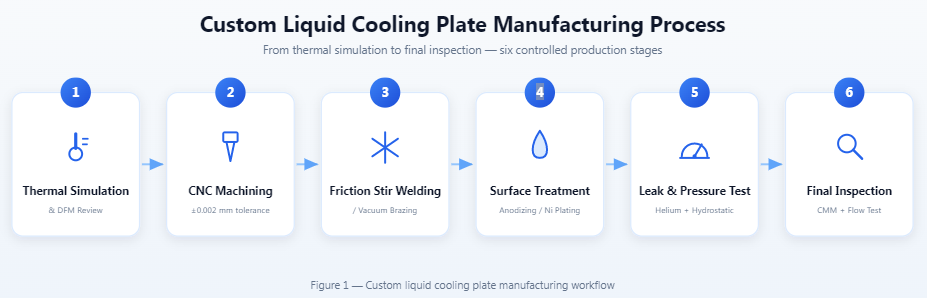
Every custom liquid cooling plate follows a disciplined production workflow:
1. Thermal simulation & DFM review – We validate channel design, wall thickness, and flow distribution before cutting metal.
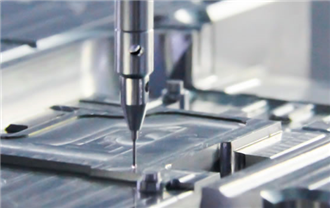
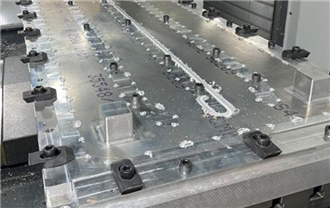
2. CNC machining – Micro-channel grooves, sealing grooves, and mounting holes are machined with tolerances within ±0.01mm.
3. Friction stir welding or vacuum brazing – Creates a hermetic, high-strength bond between the base and cover plate.
4. Surface treatment – Anodizing, nickel plating, or passivation depending on coolant compatibility.
5. Leak & pressure testing – 100% helium leak testing and hydrostatic burst testing on every unit.
6. Final inspection – CMM verification, flow testing, and thermal performance sampling.
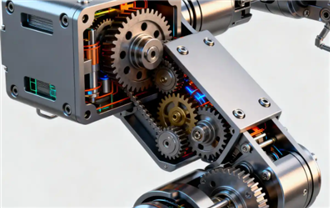
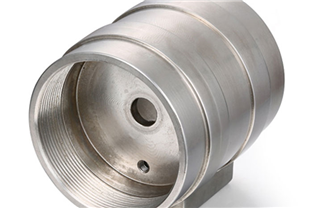
For projects requiring tight integration with existing hardware, we also provide precision mechanical parts that complement the cold plate assembly, such as mounting brackets, manifolds, and connector housings.
| Material | Thermal Conductivity | Best For | Notes |
| Copper C1100 | ~390 W/m·K | High-performance CPUs/GPUs | Excellent heat spreading; heavier |
| Aluminum 6061-T6 | ~167 W/m·K | EV battery, laser diodes | Lightweight; requires anti-corrosion coating |
| Stainless Steel 316L | ~16 W/m·K | Medical, chemical | Corrosion-resistant; lower thermal performance |
| Aluminum 3003 | ~155 W/m·K | Brazed cold plates | Ideal for vacuum brazing processes |
Custom liquid cooling plates are now mission-critical in:
● Data center servers – Direct-to-chip cooling for AI accelerators exceeding 100 kW per rack
● Laser systems – Stabilizing diode bars and optic mounts
● Electric vehicles – Battery module and inverter cooling
● Medical imaging – MRI gradient coils and CT detectors
● Aerospace – Avionics and radar power electronics
External resources such as the Electronics Cooling journal and ASME thermal engineering standards provide additional technical depth on cold plate performance modeling.
Every custom cold plate project at Start Precision includes:
● First article inspection (FAI) with full dimensional report
● Thermal cycling from -40°C to +125°C
● Pressure hold testing at 1.5× working pressure
● Flow rate verification against CFD predictions
Our engineering team works directly from your 3D CAD models and thermal requirements, ensuring the finished cold plate performs exactly as simulated.
Contact us to discuss your manufacturing requirements. Whether you need a single prototype or full production of custom liquid cooling plates, our engineering and machining teams are ready to support your thermal project from concept to delivery.
Q1: What is the typical lead time for custom liquid cooling plates?
A: Prototype units ship in 10–15 business days; production volumes depend on brazing or welding requirements.
Q2: Can you machine cold plates with micro-channels smaller than 1 mm?
A: Yes. Our CNC capabilities support channel widths down to 0.5 mm with aspect ratios up to 5:1.
Q3: What coolants are compatible with your aluminum cold plates?
A: We recommend inhibited glycol solutions or DI water with corrosion inhibitors. Copper and stainless options are available for aggressive fluids.
Q4: Do you provide thermal simulation support?
A: Yes. We can review your CFD results or run simplified thermal models to optimize channel layout before machining.
Q5: How do you ensure leak-free operation?
A: Every unit undergoes helium mass spectrometry leak testing and hydrostatic pressure testing before shipment.

Add: Building 3No.277 Zhen'an Middle Road, Chang'an Town,Dongguan,Guangdong, China
Tel:+86-769-82855591
Copyright © 2019 All Rights Reserved Dongguan Start Precision Technology Co., Ltd. Tel: +86-769-82855591
Add: No. 277 Zhen'an Middle Road, Chang'an Town, Dongguan, Guangdong, China



 中文版
中文版 English