Carbon Steel CNC Machined Parts for Cut Costs
Date:2026-08-26Article editor:Starting Point PrecisionViews:98In the competitive world of precision manufacturing, reducing production costs without sacrificing quality is a constant challenge. For workshops machining Carbon Steel CNC Machined Parts, the most effective lever for cost reduction isn't always a new machine—it's the intelligent optimization of existing processes. This article explores a data-driven approach to significant savings through parameter tuning, toolpath refinement, and smart production planning.

The foundation of cost reduction for carbon steel parts lies in the scientific optimization of cutting parameters: cutting speed (Vc), feed rate (f), and depth of cut (ap) . Balancing these three elements minimizes single-piece machining time.
A key resource for this is the tooling manufacturer's recommended parameters, which provide a baseline for specific carbide grades and carbon steel alloys (e.g., AISI 1045, 4140). Our approach starts from these baselines and pushes boundaries. For a deeper understanding of the science behind these parameters, the Machining Doctor offers comprehensive reference data on cutting speeds and feeds for various materials.
| Parameter | Impact on Single-Piece Time | Optimization Strategy for Carbon Steel |
| Cutting Speed (Vc) | Directly proportional; higher speed = faster cycle. | Increase Vc by 10-20% with advanced coated carbide inserts (e.g., TiAlN) to maintain tool life while boosting material removal rate. |
| Feed Rate (f) | Reduces machining pass time. | Adopt a higher feed rate strategy, especially during roughing, but monitor chip formation to avoid built-up edge. |
| Depth of Cut (ap) | Fewer passes needed; directly reduces total time. | Maximize ap based on machine rigidity and insert geometry. For carbon steel, aim for a radial engagement of 10-15% of tool diameter for high-efficiency milling. |
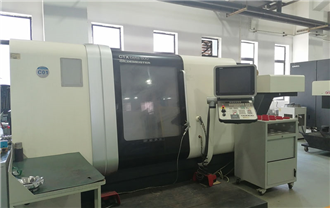
For instance, at Start Precision, we apply these principles across our precision machining services. Our facility is equipped with world-class equipment from the Precision equipment list, including 5-axis machining centers, high-precision CNC lathes, and surface grinders, enabling us to maintain tolerances within ±0.01mm. Our advanced inspection equipment validates that maintaining tolerance while increasing speed does not compromise dimensional integrity.
The second major cost area is tooling. Simplified and efficient toolpaths reduce wear and extend tool life, decreasing the cost per part.
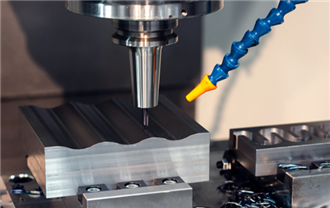
● High-Efficiency Milling (HEM): Instead of traditional slotting, HEM uses a smaller radial engagement and a larger axial depth of cut. This distributes heat across the tool's cutting edge, significantly reducing localized wear. For a detailed technical explanation, refer to Harvey Tool's technical library on High-Efficiency Milling strategies.
● Trochoidal Milling: This toolpath is excellent for carbon steel. Its circular motion ensures a constant chip load, minimizing impact and vibration, which translates to longer insert life.
● Adaptive Clearing: Modern CAM software generates toolpaths that maintain a constant volume of material removal. This eliminates erratic tool loading, a primary cause of premature cutter failure.
By implementing these strategies, we have observed a 15-25% reduction in consumable costs for carbon steel projects, as tool replacements become less frequent.
Every setup change represents non-productive time and material waste. Batch consolidation is the strategic grouping of similar part orders to minimize this "changeover waste." This involves:
● Fixture Standardization: Using modular workholding that accommodates multiple part geometries reduces the time to change setups.
● Material Stock Standardization: Using a consistent diameter or thickness of carbon steel bar stock for multiple jobs can reduce tool-change requirements.
● Order Orchestration: By scheduling similar parts that require the same tools or have compatible workholding, changeover time can be reduced by up to 30-40%.
Our facility, equipped with advanced machining centers, is designed for such efficiency. For complex parts requiring tight tolerances, our 5-axis machining capabilities at Start Point Precision allow for complex parts to be completed in a single setup, epitomizing the principle of "batch of one" to eliminate changeover altogether.
The following table illustrates parameter tuning impact on a typical carbon steel AISI 4140 milling operation.
| Parameter | Baseline/Original | Optimized/Tuned | Improvement |
| Cutting Speed (Vc) | 120 m/min | 160 m/min | +33% |
| Feed per Tooth (fz) | 0.08 mm | 0.12 mm | +50% |
| Depth of Cut (ap) | 1.5 mm | 2.5 mm | +66% |
| Cycle Time (per part) | 8.5 minutes | 5.2 minutes | -38.8% |
| Tool Life (parts per edge) | 45 pcs | 52 pcs | +15.6% |
Note: Results are based on internal machining trials with a robust carbide tool and rigid machine setup.
We recently partnered with an automotive component supplier facing cost pressure on a carbon steel AISI 1045 part. By applying our three-pronged strategy:
1. Parameter Tuning: Increased Vc by 20%, f by 15%, and ap by 50%, reducing cycle time from 12 to 7.5 minutes per piece.
2. Toolpath Refinement: Switched to an HEM toolpath, which increased tool life from 30 to 45 parts per edge.
3. Batch Consolidation: Grouped three similar, but slightly different, parts together. This reduced total setup time from 90 to 55 minutes per batch.
The outcome for the client was a total cost reduction of 22% per part while maintaining a consistent surface finish.
Substantial cost savings for Carbon Steel CNC Machined Parts are not achieved through a single trick, but through a systematic approach. By strategically optimizing the cutting triad, refining toolpaths, and consolidating batch production, manufacturers can dramatically cut costs while enhancing productivity. These practices are central to our mission of delivering high-precision, cost-effective solutions.
Contact us to discuss your manufacturing needs and discover how our expertise can drive efficiency for your next project.
1. What is the most critical parameter for cost reduction in carbon steel machining?
While all three are important, cutting speed (Vc) often has the most immediate impact on cycle time. However, it must be balanced carefully with feed rate and depth of cut to avoid dramatic tool wear. The optimal starting point is a balanced approach, guided by tool manufacturer recommendations.
2. How much can I realistically reduce single-piece machining time for carbon steel parts?
Time reductions of 20-40% are common when moving from conservative, general-use parameters to optimized, application-specific parameters. The exact number depends on your machine's rigidity, the tooling quality, and the specific part complexity.
3. Does toolpath optimization help reduce tool wear for all carbon steel grades?
Yes, but especially for harder grades (like 4140, 4340) or those with high abrasive content (like AISI 1045). High-efficiency milling (HEM) and trochoidal toolpaths are designed to mitigate the thermal and mechanical stress on the tool edge, which is the primary cause of wear in carbon steel.


Add: Building 3No.277 Zhen'an Middle Road, Chang'an Town,Dongguan,Guangdong, China
Tel:+86-769-82855591
Copyright © 2019 All Rights Reserved Dongguan Start Precision Technology Co., Ltd. Tel: +86-769-82855591
Add: No. 277 Zhen'an Middle Road, Chang'an Town, Dongguan, Guangdong, China



 中文版
中文版 English