Custom Metal Parts Machining China for Aluminum 6061 Heat Sinks with Complex Fins
Date:2026-06-01Article editor:Starting Point PrecisionViews:404When thermal management becomes critical for electronics, LED lighting, or power systems, Aluminum 6061 heat sinks with complex fins offer the ideal balance of lightweight structure and excellent heat dissipation. Finding a reliable partner for custom metal parts machining in China ensures high precision, competitive pricing, and fast turnaround. This article explores how advanced CNC techniques master intricate fin geometries using Al6061, and why Start Precision stands out as a trusted manufacturer.
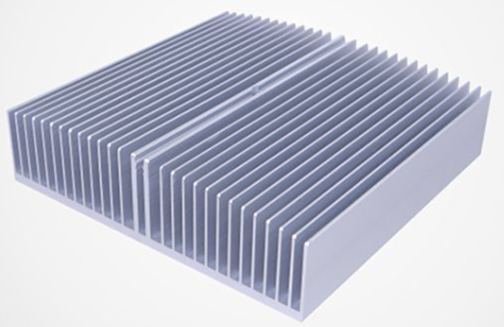
Al6061 is one of the most versatile alloys for machined heat sinks. It provides:
◆ High thermal conductivity (~167 W/m·K) – efficient heat transfer from chips to ambient air.
◆ Good corrosion resistance – ideal for harsh environments.
◆ Excellent machinability – allows tight tolerances on thin walls and deep fins.
◆ Weldability and anodizing capability – post-processing for durability and electrical insulation.
According to MatWeb’s Al6061 datasheet, this alloy maintains strength even after welding, making it a top choice for complex thermal solutions.
Complex fins – such as zigzag, pin-fin, or ultra-thin plate fins – require advanced CNC strategies. Below are the key technical challenges and how experienced Chinese shops overcome them:
◆ High aspect ratios (fin height vs. thickness > 10:1) – Tall, thin fins are prone to vibration (chatter) during milling, which can cause surface ripples or even fin breakage. To mitigate this, shops use specialized tapered end mills, reduced radial engagement, and high-speed machining (HSM) toolpaths that maintain constant chip load.
◆ Extremely tight fin spacing (≤1 mm) – Narrow gaps restrict chip evacuation. Aluminum chips are sticky and can weld to the cutter, leading to built-up edge (BUE) and poor surface finish. High-pressure coolant (≥1000 psi) directed through the spindle and pecking cycles with chip-breaking macros are standard solutions.
◆ Tool deflection and wear – When cutting deep slots for fins, long-reach tools deflect under cutting forces, producing tapered or bowed fin walls. Chinese CNC operators counter this by using rib-stabilized toolholders, trochoidal milling (dynamic toolpaths), and step-down strategies that keep axial engagement low.
◆ Thermal distortion of thin fins – Al6061 expands significantly under localized heat. Milling a dense fin array can cause the workpiece to warp, altering fin spacing and flatness. Shops like Start Precision apply cryogenic cooling or minimum quantity lubrication (MQL) to control temperature, plus stress-relieved material (T651 temper) to minimize residual stress.
◆ Deburring of intricate geometries – After machining, sharp burrs form along fin edges and at intersections. Manual deburring is impractical for hundreds of fins. Advanced techniques include thermal energy deburring, electrochemical deburring, or a secondary tumbling process with ceramic media.
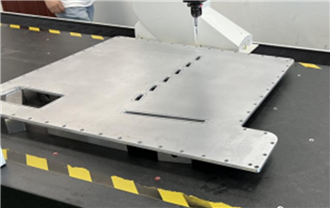
◆ Inspection difficulty – Measuring fin height, perpendicularity, and surface roughness inside narrow channels requires specialized non-contact probes or 3D optical scanners. A capable partner must provide full CMM reports.
By addressing these challenges with proven CNC parameters, tooling, and cooling strategies, Chinese precision shops achieve fin tolerances of ±0.02 mm even on complex designs.
As a leading provider of custom metal parts machining in China, Start Precision specializes in Al6061 heat sinks with complex fin geometries. Their capabilities include:
◆ CNC milling and turning for prototypes to high-volume production.
◆ Tolerances as tight as ±0.01 mm on fin spacing and flatness.
◆ In-house finishing (anodizing, passivation, and thermal coating).
◆ 100% inspection using CMM and optical comparators.
By combining advanced equipment with experienced engineers, Start Precision ensures that even the most intricate fin designs are manufactured without deformation or burrs.
Q1: What is the maximum fin height-to-thickness ratio achievable for Al6061 heat sinks?
A: With advanced CNC and rigid tooling, ratios up to 20:1 are possible for straight fins. For complex shapes like curved fins, 12:1 is typical. Start Precision’s engineers can assess your design.
Q2: Can you machine heat sinks with undercuts or cross-cut fins?
A: Yes, using 5-axis CNC and specialized lollipop cutters. Many Chinese shops, including Start Precision, offer undercut machining for enhanced surface area.
Q3: What surface finishes are recommended for Al6061 heat sinks?
A: Clear or black anodizing improves corrosion resistance and emissivity. For maximum thermal performance, a natural mill finish or nickel plating is also available.
Q4: Do you provide design for manufacturability (DFM) feedback?
A: Absolutely. Start Precision offers free DFM analysis to optimize fin thickness, draft angles, and tool access before production begins.
Q5: How do I request a quote for custom Al6061 heat sink machining?
A: Simply upload your 3D CAD file (STEP/IGS) and drawing to Start Precision’s quote page, and you’ll receive a competitive quote within 24 hours.
For custom metal parts machining in China focused on Aluminum 6061 heat sinks with complex fins, the combination of material benefits and advanced CNC capabilities delivers superior thermal solutions. Whether you need prototypes or mass production, Start Precision offers precision, speed, and reliability. Contact them today to turn your complex fin designs into reality.
Add: Building 3No.277 Zhen'an Middle Road, Chang'an Town,Dongguan,Guangdong, China
Tel:+86-769-82855591
Copyright © 2019 All Rights Reserved Dongguan Start Precision Technology Co., Ltd. Tel: +86-769-82855591
Add: No. 277 Zhen'an Middle Road, Chang'an Town, Dongguan, Guangdong, China



 中文版
中文版 English