Precision Brass Components for Marine Environments
Date:2026-07-27Article editor:Starting Point PrecisionViews:247The marine environment is an aggressive cocktail of high salinity, fluctuating temperatures, and relentless biological activity. For critical shipboard systems—from engine cooling to steering gear—material degradation is a primary risk factor. While exotic superalloys exist, precision brass components, particularly those crafted from brass C46400, offer a compelling balance of strength, machinability, and cost-effectiveness when engineered with the right protective strategies.
C46400, often referred to as naval brass, is the material of choice for many seawater-exposed parts. Its unique metallurgy provides a robust first line of defense against corrosion.
◆ Chemical Composition: Approximately 60% Copper (Cu), 39.2% Zinc (Zn), and 0.8% Tin (Sn).
◆ Key Property: The addition of tin significantly inhibits dezincification—a corrosive process where zinc selectively leaches out, leaving behind a porous, weak copper structure.
◆ Salt Spray Performance: In standardized ASTM B117 salt spray tests, C46400 precision brass components exhibit a corrosion rate that is up to 60% lower than standard 60/40 brass alloys.
This inherent resistance makes C46400 ideal for valve stems, pump shafts, and underwater fasteners that face continuous saltwater immersion.
Even the best brass alloy is vulnerable to biofouling. The accumulation of barnacles, algae, and mollusks creates localized corrosion cells and increases drag on moving parts. To ensure the longevity of precision brass components, we employ a dual-defense strategy:
◆ Base Layer: The machined brass surface is meticulously cleaned and prepared.
◆ Active Coating: A high-bond epoxy primer infused with copper-based biocides is applied. This layer actively releases ions that deter marine organism settlement.
◆ Topcoat (Optional): For high-wear areas like control rod guides, a low-friction, abrasion-resistant PTFE topcoat is added.
This coating system not only protects the component but also preserves its dimensional accuracy over extended service intervals.
Stress Corrosion Cracking (SCC) is a silent threat in marine brass applications. It occurs when a tensile stress (often residual from machining) meets a specific corrosive agent (like ammonia or chlorides). Mitigating SCC requires a holistic approach during the manufacturing of precision brass components. Our prevention strategy involves:
| Prevention Stage | Specific Action | Equipment / Method Used |
| Material Prep | Stress relief annealing after cold working. | Controlled furnace heating/cooling cycles. |
| Machining Process | Optimized cutting parameters to avoid excessive surface work-hardening. | Germany DMG HSC 75 linear (5-axis) for low-stress cuts. |
| Design Geometry | Elimination of sharp notches and abrupt section changes. | CAD/CAM simulation (using 3D & CAD drawings). |
| Post-Processing | Shot peening or compressive stress induction (as required). | Specialized surface finishing units. |
By controlling these variables, we ensure that our components resist SCC for their entire lifecycle.
A major marine engineering firm encountered recurrent failures of their seawater gate valve spindles. The issues were severe galling on the threads and rapid erosion-corrosion on the seating surfaces, causing system bypass leaks every 18 months.
We were tasked with redesigning and remanufacturing these critical precision brass components. The solution involved a multi-step engineering process:
| Equipment / Method Used | Challenge | Our Solution |
| Material | Standard brass dezincified rapidly. | Upgraded to high-grade C46400 naval brass. |
| Thread Machining | Poor surface finish caused thread galling. | Machined on a DMG CTX beta 800 CNC turning center for superior surface finish. |
| Seat Finish | Rough seats accelerated erosion. | Finished using the Japan MAKINO EDGE3 spark machine for precise, micro-smooth contours. |
| Coating | No surface protection. | Applied our proprietary antifouling epoxy-graphite coating system. |
The Result: The new valves were installed and operated flawlessly for over 5 years without any maintenance intervention. This represented a 300% increase in service life, translating to substantial cost savings in dry-docking and downtime for the client.
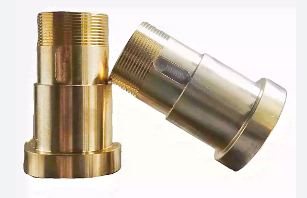
From the high-pressure salt spray of engine rooms to the oxygen-deprived zones of ballast tanks, C46400 precision brass components provide a robust foundation for marine reliability. However, the material alone is not enough. As demonstrated in our case study, success lies in the synergy of correct alloy selection, advanced antifouling coatings, and stringent manufacturing protocols to prevent stress corrosion.
For high-volume production runs of complex components, our facility utilizes state-of-the-art equipment, including Japan LGMazak VCN-510C and United States HAAS VF3 machining centers, ensuring consistency and precision on every batch. We also offer strict quality inspections, referencing global standards to ensure every part meets your exact marine specifications.
To learn more about our technical capabilities, visit our main site Start Precision. For a deeper dive into our material handling and surface finishing technologies, check the official Copper Development Association marine guidelines for foundational material standards.
Contact us to discuss your manufacturing requirements and discover how our engineering expertise can enhance the operational integrity of your marine systems.
Frequently Asked Questions (FAQs)
1. Why is C46400 preferred over standard brass in seawater?
C46400 contains ~0.8% tin, which acts as a stabilizer. This alloying element significantly boosts its resistance to dezincification, preventing the material from turning porous and brittle in high-chloride environments.
2. How does an antifouling coating actually work on brass components?
The coating typically contains biocidal agents (like copper oxide). It slowly releases ions into the surrounding water, creating a micro-environment that is toxic to barnacle larvae and algae, effectively preventing them from attaching to the component's surface.
3. What is the primary cause of stress corrosion cracking in marine brass?
The primary causes are the combination of residual tensile stresses left over from manufacturing (e.g., bending or heavy cutting) and the presence of a specific corrosive agent, such as ammonia (found in some marine coolants) or high-chloride seawater.
4. What machining equipment does Start Precision use for these complex parts?
We utilize a versatile range of high-end machines to ensure precision. This includes the Germany DMG HSC 75 linear for complex 5-axis geometries, the DMG CTX beta 800 for high-precision turning, and Japan MAKINO EDGE3 for intricate spark-eroded features, ensuring tolerances within ±0.01mm.
5. How can I ensure my custom brass component is resistant to galling?
Galling is often prevented by ensuring a very fine surface finish (low Ra value) and using anti-seize lubricants during assembly. We also recommend specifying a hard, dry-film coating on threads and sliding surfaces during the design phase.
Add: Building 3No.277 Zhen'an Middle Road, Chang'an Town,Dongguan,Guangdong, China
Tel:+86-769-82855591
Copyright © 2019 All Rights Reserved Dongguan Start Precision Technology Co., Ltd. Tel: +86-769-82855591
Add: No. 277 Zhen'an Middle Road, Chang'an Town, Dongguan, Guangdong, China



 中文版
中文版 English