CNC vs 3D Printing: Pros, Cons & How to Choose the Right Process
Date:2026-06-27Article editor:Starting Point PrecisionViews:322When deciding between CNC machining and 3D printing, manufacturers face a critical crossroads. Both are cornerstone technologies in modern production, yet they serve fundamentally different purposes. This guide breaks down their strengths, weaknesses, and real-world applications to help you make an informed choice.
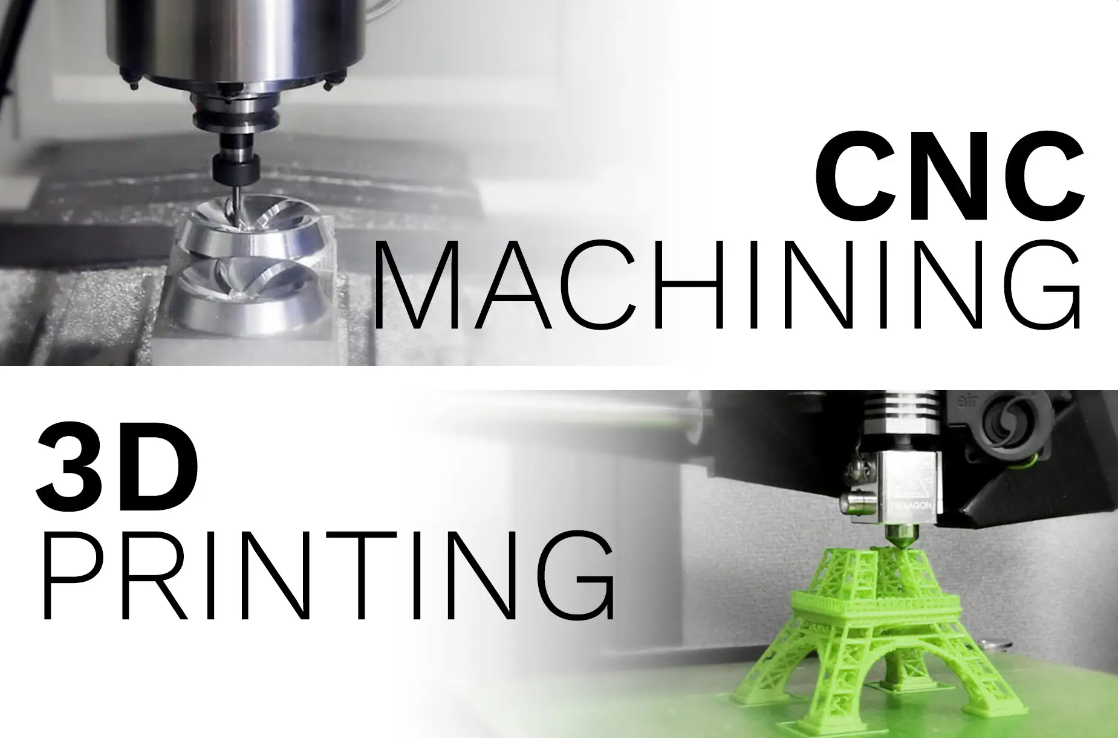
CNC (Computer Numerical Control) machining is a subtractive manufacturing process. It starts with a solid block of material—metal, plastic, or wood—and carves away excess material using rotating cutting tools. Precision is its hallmark, with tolerances as tight as ±0.001 inches. For machining best practices, the Modern Machine Shop's CNC Handbook offers expert guidelines on toolpaths and feeds.
3D printing (additive manufacturing) builds parts layer by layer from a digital file. Materials range from thermoplastics like PLA to metals such as titanium. It excels at creating complex geometries that would be impossible with subtractive methods. According to ASTM International's Additive Manufacturing Committee, standardized test methods ensure repeatability across powder-bed and extrusion systems.
| Factor | CNC Machining | 3D Printing |
| Material Options | Extensive (metals, plastics, wood, composites) | Limited (mainly resins, powders, and filaments) |
| Precision | High (±0.001”) | Moderate (±0.005”–0.020”) |
| Speed | Faster for metal parts | Faster for prototypes and small batches |
| Cost | High tooling/setup, low per-part | Low setup, higher per-part for volume |
| Complexity | Limited by tool access | Unrivaled for internal channels and organic shapes |
| Waste | Significant material waste | Minimal waste |
Choosing the right material is critical—refer to our Guide to CNC Materials for detailed comparisons of aluminum, stainless, PEEK, and more. For additive options, see our 3D Printing Post-Processing Tips to understand curing, sanding, and support removal.
A medical device company needed custom surgical guides for knee replacements. Using 3D printing with biocompatible resin, they produced patient-specific guides in 24 hours—a task that would have taken weeks and cost 5x more with CNC. Conversely, an aerospace supplier used 5-axis CNC machining to produce aluminum turbine housings requiring extreme surface finish and thermal stability, where 3D-printed equivalents failed stress tests.
Ask yourself three questions:
1. What is my batch size? Under 100 units? 3D printing often wins. Over 1,000? CNC's per-part cost drops dramatically.
2. What material is required? For engineering metals (6061 aluminum, stainless steel) or tight-tolerance plastics (PEEK), choose CNC. For flexible TPU or heat-resistant Ultem, 3D printing is viable.
3. What is the part's complexity? If it has undercuts, lattice structures, or conformal cooling channels, 3D printing is the only option.
Pro Tip: Many shops now use hybrid approaches—3D printing near-net shapes and finishing with CNC for critical surfaces. This combines speed with precision. For deeper insights on hybrid workflows, our Guide to CNC Materials includes case studies on combined processes.
There is no universal "best" process. CNC machining remains the gold standard for precision, durability, and high-volume metal production. 3D printing shines for rapid prototyping, custom healthcare solutions, and parts with geometric complexity. Evaluate your priorities—cost, lead time, material, and function—and choose accordingly. When in doubt, prototype with both and compare. Always consult industry references like the ASTM F42 standards and the Modern Machine Shop handbook to align your process with proven practices.
Q1: Can 3D printing replace CNC machining entirely?
No. 3D printing cannot match CNC's surface finish, tolerances, or material properties for load-bearing metal parts. They are complementary, not competitive.
Q2: Which is cheaper for one-off prototypes?
3D printing is almost always cheaper for single parts because there's no tooling cost. CNC requires programming and fixture setup, which adds fixed costs.
Q3: Is CNC faster than 3D printing?
For metal parts, yes—CNC can produce a billet aluminum bracket in 20 minutes, while metal 3D printing may take hours. For plastics, 3D printing is often faster for small runs.
Q4: What industries use both technologies?
Aerospace, automotive, medical devices, and consumer electronics commonly use both—CNC for structural components and 3D printing for prototypes or custom jigs.
Q5: How do I choose between SLA, SLS, and FDM for 3D printing?
Choose SLA for high-detail prototypes, SLS for functional nylon parts without supports, and FDM for low-cost, large-format parts. Match the process to your end-use requirements.
Add: Building 3No.277 Zhen'an Middle Road, Chang'an Town,Dongguan,Guangdong, China
Tel:+86-769-82855591
Copyright © 2019 All Rights Reserved Dongguan Start Precision Technology Co., Ltd. Tel: +86-769-82855591
Add: No. 277 Zhen'an Middle Road, Chang'an Town, Dongguan, Guangdong, China



 中文版
中文版 English