EDM Machining Tungsten Carbide Parts: High‑Precision Guide
Date:2026-05-13Article editor:Starting Point PrecisionViews:501Electrical discharge machining (EDM) has become the standard method for shaping tungsten carbide parts due to the material’s extreme hardness (68–72 HRC). Conventional milling or turning is ineffective, but EDM erodes tungsten carbide accurately using controlled sparks. This article focuses on process advantages, critical parameters, and real‑world applications.
Why EDM Excels for Tungsten Carbide
Unlike grinding, EDM applies no mechanical force, eliminating the risk of micro‑cracks in sintered carbide. The technique also allows complex 3D geometries such as deep slots, small holes (⌀0.1 mm), and sharp internal corners. Because the metal removal rate does not depend on the workpiece hardness, EDM consistently produces tungsten carbide parts with tolerances of ±0.002 mm and excellent surface finishes (Ra < 0.4 µm). For high‑wear applications like stamping dies or nozzle inserts, this precision is indispensable.
Successful EDM of tungsten carbide requires careful selection of electrical and physical parameters:
◆ Electrode material – Copper‑tungsten or high‑density graphite minimizes electrode wear when machining carbide.
◆ Pulse control – Short on‑time (≤ 10 µs) and low peak current reduce cobalt binder leaching and prevent surface defects.
◆ Dielectric fluid – Deionized water for wire EDM; oil‑based fluids for sinker EDM, with optimal flushing to remove eroded debris.
◆ Finishing passes – Multiple skim cuts lower the recast layer thickness, preserving the carbide’s edge toughness.
For detailed technical specifications, refer to the Electrical-Discharge Machining of Tungsten Carbide.
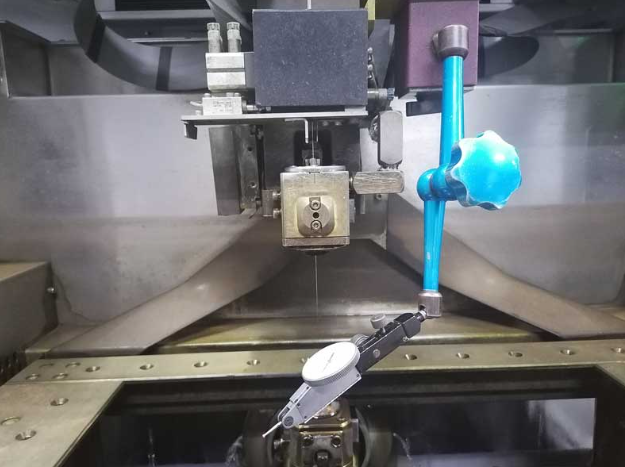
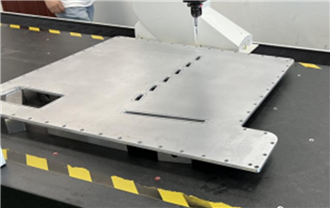
The image below shows a wire EDM machine in operation, capable of slicing through tungsten carbide plates with minimal heat‑affected zones.
EDM‑machined tungsten carbide components are widely used across demanding industries:
◆ Precision nozzles and valve seats – erosion‑resistant orifices for oil & gas equipment.
◆ Stamping and forming dies – complex profiles for high‑volume metal stamping.
◆ Surgical and dental instruments – carbide tips for scalpels and drills.
◆ Mining wear parts – custom‑shaped inserts for drill bits and crushers.
◆ Measuring gauges and masters – long‑lasting calibration tools.
OEMs and job shops rely on advanced EDM facilities such as Start Precisionto produce these parts with consistent quality, whether for prototyping or high‑volume orders.
To avoid common pitfalls when EDM‑machining tungsten carbide, keep these factors in mind:
◆ Recast layer – The spark‑eroded surface may have a thin (1‑5 µm) brittle layer. For fatigue‑critical components, specify light grinding or polishing after EDM.
◆ Cobalt leaching – Aggressive pulse settings can deplete cobalt binder near the surface, reducing edge strength. Use adaptive generator settings.
◆ Electrode wear – Tungsten carbide erodes electrodes faster than steel. Multi‑electrode strategies or CNC compensation are standard solutions.
If you need expert guidance or a quote for custom EDM tungsten carbide parts, Start Precision provides free DFM analysis and fast turnaround.
Yes, all conductive carbide grades (with ≥ 6% cobalt or nickel binder) can be EDM machined. Ultra‑fine grain carbide with very low binder content may need higher voltage and specialized dielectric flushing, but it remains feasible.
When standard EDM parameters are used (moderate current, short pulses), micro‑cracks are not observed. Only extremely aggressive roughing cycles might generate surface fissures. Post‑EDM inspection and finishing passes ensure crack‑free components.
Grinding is efficient for simple flat or round surfaces, but it requires expensive diamond wheels and cannot cut internal geometries (e.g., square holes or complex cavities). EDM handles any conductive shape in a single setup, making it superior for intricate or delicate carbide parts.
Simply visit Start Precision and upload your CAD file. Their engineering team responds within 24 hours with a competitive quote and design optimization advice.
Add: Building 3No.277 Zhen'an Middle Road, Chang'an Town,Dongguan,Guangdong, China
Tel:+86-769-82855591
Copyright © 2019 All Rights Reserved Dongguan Start Precision Technology Co., Ltd. Tel: +86-769-82855591
Add: No. 277 Zhen'an Middle Road, Chang'an Town, Dongguan, Guangdong, China



 中文版
中文版 English