Custom CNC Machining for Compressors & Coil Components
Date:2026-07-01Article editor:Starting Point PrecisionViews:276In HVAC, refrigeration, and industrial fluid systems, compressor and coil components determine overall energy efficiency and service life. Even micron-level deviations can cause gas leakage, noise, or premature bearing failure. That is why custom CNC machining parts for compressors & coil components have become the gold standard for engineers who demand reliability, longevity, and optimal thermal performance.
This article explores how precision CNC machining transforms raw metals into high-performance compressor internals and coil-winding tooling—while meeting strict ISO and AS9100 standards.
Compressors endure extreme cyclic pressures, high temperatures, and continuous friction. Off-the-shelf parts rarely achieve the perfect fitment required for oil-free or high-speed applications. Similarly, coil components—such as winding mandrels and tension guides—need flawless surface finishes to prevent wire insulation abrasion during high-speed winding.
Custom CNC machining addresses these pain points by delivering:
◆ Tolerances as tight as ±0.005 mm for critical sealing faces.
◆ Surface finishes below Ra 0.4 µm to minimize wear and friction.
◆ Full material flexibility—from hardened tool steels and stainless alloys to lightweight aluminum and bronze.
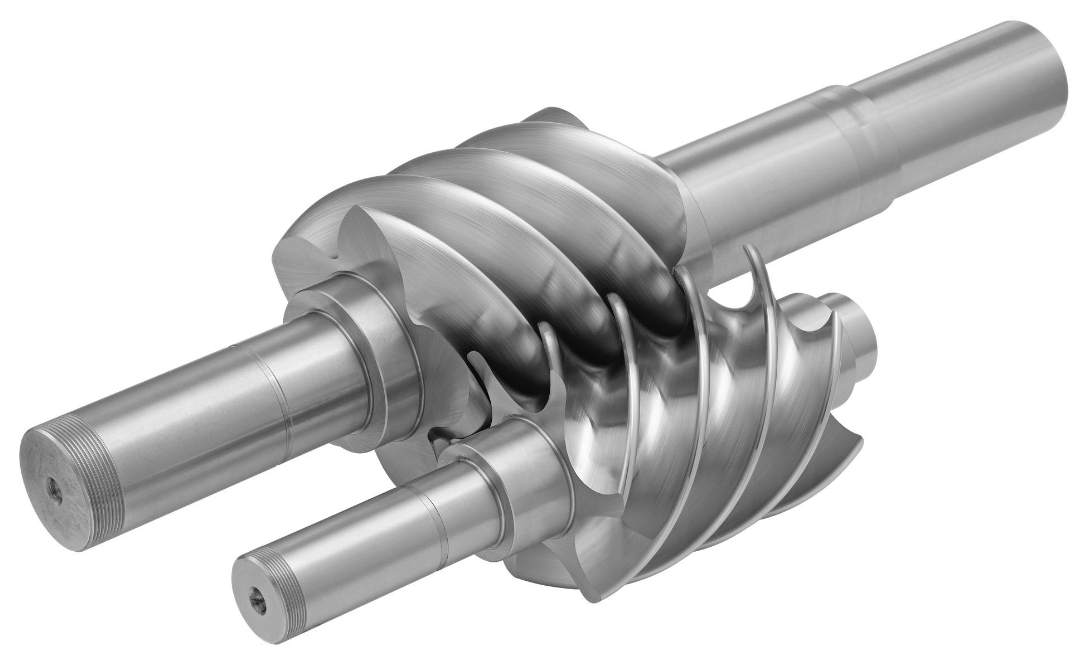
To help you visualize our manufacturing scope, below is a complete breakdown of the custom parts we routinely produce for both compressor assemblies and coil production lines. Every geometry is optimized through our Design for Manufacturability (DFM) review.
| Component Category | Specific Custom Parts | Preferred Materials | Critical Requirements | Typical Application |
| Compressor Core | Pistons, Cylinder Liners, Valve Plates, Suction/Discharge Flanges | Stainless steel (17-4PH), Ductile iron, Nitrided steel | ±0.005 mm tolerance, Ra 0.4 finish, helium leak-tight sealing | Reciprocating & scroll compressors for HVAC |
| Rotary & Screw Elements | Screw Rotors, Scroll Spirals, Eccentric Shafts, Crankshafts | Alloy steel (42CrMo4), Nitrided stainless | Precise helical/scroll profiles, dynamic balancing | Oil-injected screw chillers & automotive A/C |
| Coil Winding Mandrels | Winding Arbors, Bobbins, Expanding Shafts, Core Dies | Hardened aluminum (7075-T6), P20 tool steel | Mirror finish (Ra < 0.2), anti-static edges, tapered grooves | Motor stator winding & transformer coil forming |
| Wire Forming Tooling | Forming Grooves, Straightening Guides, Cut-off Blades, Tension Pulleys | Carbide, D2 tool steel, Beryllium copper | Sharp radii, high wear resistance, scratch-free surface | Shaping copper/aluminum magnet wires |
| Housing & Mounting | End Covers, Bearing Housings, Mounting Brackets, Adapter Plates | Aluminum 6061, Carbon steel (AISI 1045) | Threaded holes, O-ring groove precision, flatness < 0.01 mm | Structural support & assembly sealing |
| Wear & Friction Parts | Thrust Washers, Slide Bushings, Piston Rings, Seal Retainers | Bronze (C93200), Hardened steel, PTFE-coated alloys | Low friction coefficient, high fatigue life (>10⁷ cycles) | High-load friction interfaces & rotary joints |
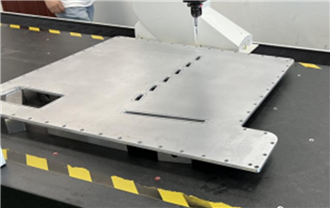
Regardless of the part type, all items undergo 100% dimensional inspection using CMM (coordinate measuring machines) and laser micrometers.
To produce both complex compressor impellers and delicate coil tooling, we employ a hybrid manufacturing approach:
| Technology | Application |
| 5-axis simultaneous milling | Complex scroll profiles and blisks |
| CNC turning with live tooling | Pistons, valve plates with cross-holes |
| Wire EDM (Electrical Discharge Machining) | Narrow slots in coil forming dies |
| Cylindrical ID/OD grinding | Crankshaft journals and rotor shafts |
Our quality management system follows ISO 9001:2015 and AS9100D—you can verify our certifications via the official International Organization for Standardization external reference. We also source all raw materials from traceable mills.
We do not ship parts without rigorous sign-off. Every custom component undergoes:
1. Dimensional inspection—100% of critical features measured.
2. Surface roughness testing using a contact profilometer.
3. Hardness verification (Rockwell or Brinell scales).
4. Helium mass spectrometry leak tests for compressor valve plates.
5. Salt-spray corrosion tests for coil tooling used in outdoor condenser units.
This end-to-end testing guarantees your parts arrive ready for assembly—not just "visually acceptable." Our in-house lab also provides first-article inspection reports (FAIR) per AS9102 standards.
Many engineers ask: "Can you make this complex geometry cost-effectively?" Our DFM team reviews your 3D models (STEP/IGES) and suggests:
◆ Feature modifications to reduce setup times and tooling costs.
◆ Alternative materials that improve machinability without sacrificing strength.
◆ Tolerancing adjustments that balance performance with scrap-rate reduction.
We provide free DFM feedback within 48 hours. Start your project by uploading your CAD file on our instant quote platform.
Custom CNC machining is not a luxury—it is a strategic investment in compressor efficiency and coil winding consistency. From tight-tolerance pistons and screw rotors to mirror-finished winding mandrels and wear-resistant bushing, precision machined parts reduce downtime, cut energy costs, and extend equipment life. Whether you are upgrading an existing design or developing a next-generation refrigeration platform, partnering with a capable CNC shop ensures your components perform exactly as engineered.
Contact our technical sales team today to discuss your drawings and production timeline. We are ready to machine your success.
Q1: What materials are best for compressor valve plates?
Stainless steel (e.g., 17-4PH) and tool steels (like AISI D2) are common due to their high fatigue strength and corrosion resistance. For lower-cost applications, hardened ductile iron is also used.
Q2: Can you machine coil winding mandrels with a mirror finish?
Yes. We achieve Ra 0.1–0.2 µm using diamond polishing and fine grinding. This prevents wire snagging and ensures uniform tension across long production runs.
Q3: What is the typical lead time for custom prototypes?
For simple geometries (pistons, spacers), we offer 5–7 business days. Complex parts (scrolls, rotors) take 10–15 days, including first-article inspection.
Q4: Do you offer coating services for wear resistance?
Absolutely. We subcontract DLC (diamond-like carbon), TiN, and hard chrome plating. We manage the entire process so you receive finished, ready-to-use parts.
Q5: What is the minimum order quantity (MOQ)?
We support flexible volumes—from a single prototype piece to high-volume production runs of 10,000+ units per month, with consistent quality across every batch.
Add: Building 3No.277 Zhen'an Middle Road, Chang'an Town,Dongguan,Guangdong, China
Tel:+86-769-82855591
Copyright © 2019 All Rights Reserved Dongguan Start Precision Technology Co., Ltd. Tel: +86-769-82855591
Add: No. 277 Zhen'an Middle Road, Chang'an Town, Dongguan, Guangdong, China



 中文版
中文版 English