Steel CNC Turning Parts: Precision Turning for High-Performance Components
Date:2026-04-14Article editor:Starting Point PrecisionViews:462In modern manufacturing, steel CNC turning parts produced through precision turning processes form the backbone of countless industrial applications. From automotive shafts to hydraulic fittings, the combination of advanced CNC lathes and high-quality steel delivers components with exceptional dimensional accuracy, surface finish, and mechanical reliability. This article explores the fundamentals, benefits, and best practices of precision turning for steel parts.
What Is Precision Turning in CNC Machining?
Precision turning is a subtractive manufacturing process where a rotating steel workpiece is shaped by a stationary cutting tool under CNC (Computer Numerical Control) guidance. Unlike conventional turning, precision turning achieves tolerances as tight as ±0.005 mm (0.0002 inches) and surface roughness down to Ra 0.4–0.8 μm. Modern CNC lathes with live tooling and sub-spindles enable complex geometries, threads, and hex features in a single setup — reducing lead times and improving part consistency.
Why Choose Steel for CNC Turned Parts?
Steel remains the most widely used material for precision-turned components due to its superior strength-to-weight ratio, wear resistance, and cost-effectiveness. Common steel grades for CNC turning include:
● Carbon steel (1045, 12L14) – excellent machinability, ideal for general mechanical parts.
● Alloy steel (4140, 4340) – high tensile strength and fatigue resistance for gears and shafts.
● Stainless steel (303, 304, 316) – corrosion resistance for medical, food, and marine applications.
● Tool steel (A2, D2) – hardness and edge retention for wear-intensive parts.
Precision turning enhances these inherent properties by maintaining strict heat treatment consistency and minimizing surface defects. For authoritative material specifications, refer to ASTM steelstandards.
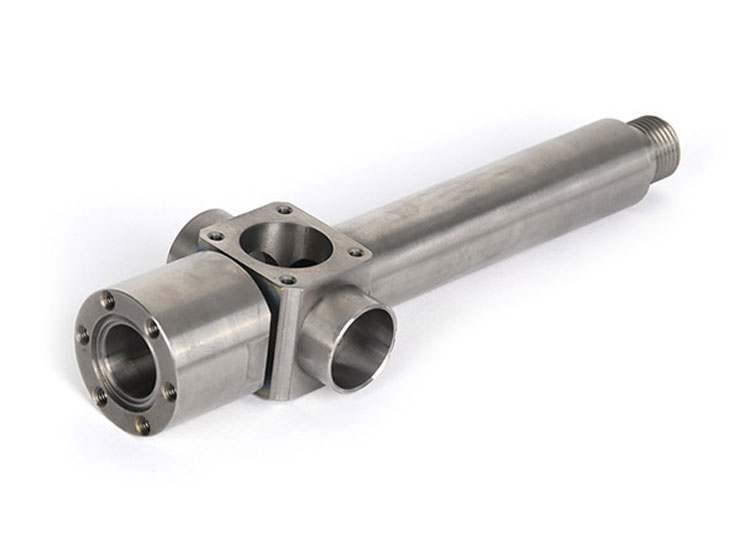
High-precision steel CNC turning part
Key Advantages of Precision Steel Turning
Implementing precision turning for steel components delivers measurable benefits that impact both production efficiency and end-use performance:
● Ultra-tight tolerances – Achieve IT6 grade or better, ensuring interchangeability in assemblies.
● Excellent surface finish – Reduces or eliminates secondary polishing operations.
● High repeatability – CNC automation guarantees identical parts across thousands of cycles.
● Material savings – Minimal waste compared to traditional machining methods.
● Complex geometries – Undercuts, tapers, eccentric turning, and polygon profiles are possible.
Learn about our QA & inspection program.
Critical Parameters for Precision Turning of Steel
To consistently produce high-quality steel CNC turning parts, machinists must optimize several parameters:
● Cutting speed & feed rate – Varies by steel hardness; typical cutting speeds for mild steel: 80–200 SFM.
● Tool material – Carbide inserts with TiAlN or AlTiN coatings excel in high-temp steel alloys.
● Coolant & chip control – High-pressure coolant prevents built-up edge and improves chip evacuation.
● Workholding rigidity – Collet chucks or hydraulic chucks minimize runout during high-speed turning.
Adherence to international standards ensures interoperability,refer to ISO 2768-1:2022 on tolerances.
Applications of Steel CNC Precision Turned Parts
Precision-turned steel components are integral to industries where safety and performance are non-negotiable:
● Automotive – Transmission shafts, steering components, sensor housings.
● Aerospace – Hydraulic fittings, actuator pins, landing gear bushings.
● Oil & gas – Valve stems, pump shafts, drill tool joints.
● Medical devices – Surgical instrument handles, orthopaedic implant trials.
● Robotics & automation – Precision joint pins, motor shafts, bearing spacers.
Why Partner With a Specialized Precision Turning Shop?
Producing high-quality steel CNC turning parts requires not only advanced equipment but also deep knowledge of toolpath optimization, thermal stability, and post-processing (deburring, passivation, or coating). By choosing a dedicated precision turning provider, you gain access to in-house metrology (CMM, optical comparators) and fast prototyping. Leading shops invest in Swiss-type CNC lathes and multi-axis turning centers to handle diameters from 2 mm to 300 mm with unmatched consistency.
Contact our engineering team for DFM feedback and free feasibility analysis.
Add: Building 3No.277 Zhen'an Middle Road, Chang'an Town,Dongguan,Guangdong, China
Tel:+86-769-82855591
Copyright © 2019 All Rights Reserved Dongguan Start Precision Technology Co., Ltd. Tel: +86-769-82855591
Add: No. 277 Zhen'an Middle Road, Chang'an Town, Dongguan, Guangdong, China



 中文版
中文版 English