Stainless Steel Parts Turning with Vibration Control for Finish
Date:2026-08-18Article editor:Starting Point PrecisionViews:161Vibration is the arch‑enemy of surface quality in stainless steel turning. Austenitic grades like 304 and 316L work‑harden quickly, generate high cutting forces, and provoke regenerative chatter that leaves unacceptable ripples. While many shops accept a compromise between speed and finish, we at Start Precision have turned vibration control into a competitive advantage. This article details our proven methodology—from machine setup to adaptive process control—that consistently delivers Ra <0.4 µm surfaces, even on slender or interrupted workpieces.
We do not rely on trial‑and‑error. Instead, we follow a three‑pillar strategy: rigid workholding, optimised tooling, and real‑time parameter adaptation. Here is how we execute each step in our workshop.
1. Machine & Workpiece Rigidity
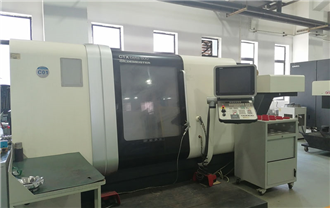
We use high‑mass CNC lathes with hydrostatic spindles and thermally stabilised beds. Every job begins with a thorough check of spindle runout (ensured ≤0.002 mm) and turret alignment. For workholding, we select hydraulic chucks with through‑hole drawbars, and for long parts (L/D > 4), we always employ a steady rest or live centre. Our tool holders are oversized and clamped with minimal overhang—typically <1.5× the shank height—to maximise static stiffness.
2. Tooling Selection Tailored to Stainless
We exclusively use coated carbide inserts with a positive rake angle (12°–15°) and a chip breaker designed for the specific grade. For 316L, we favour an AlCrN‑coated grade with a fine substrate. The nose radius is chosen based on the final finish target: 0.4 mm for fine turning, 0.8 mm for roughing. We also apply a light hone edge preparation to reduce micro‑chipping, which is a common source of high‑frequency vibration.
3. Cutting Parameters – Our Reference Table
The table below shows the typical parameters we employ for external turning of 316L stainless steel (workpiece Ø50 mm). These values are fine‑tuned during the first trial cut using an accelerometer mounted on the tool post.
| Parameter | Unit | Our Standard Range | Impact on Vibration |
| Cutting speed (Vc) | m/min | 130 – 170 | Kept below 180 to avoid excessive work hardening; higher speeds reduce contact time but increase thermal load. |
| Feed rate (f) | mm/rev | 0.12 – 0.22 | We use a variable feed pattern (oscillating ±20% at 0.3–0.5 Hz) to disrupt harmonic resonance. |
| Depth of cut (ap) | mm | 1.0 – 2.5 | We avoid shallow cuts (<0.5 mm) that cause intermittent engagement; a stable chip load dampens chatter. |
| Spindle speed modulation | % | ±8% sinusoidal | Applied via CNC macro to continuously shift excitation frequencies away from the natural resonance. |
| Coolant pressure | bar | 60 – 70 | High‑pressure jet directed at the rake face reduces friction and thermal softening, lowering frictional vibrations. |
4. In‑Process Monitoring & Adaptive Control
Every machine in our facility is equipped with a force‑and‑acceleration monitoring system. When the peak amplitude exceeds 6 µm, the control automatically reduces the feed or applies a speed variation. We also employ active damping for internal turning operations—a piezoelectric actuator behind the boring bar counteracts oscillations in real time. This closed‑loop system has reduced our scrap rate from 4.2% to 0.7% over the past year.
Recently, we received an order for 500 stainless steel (304) valve stems, each 180 mm long with a 32 mm diameter, requiring a surface finish of Ra 0.6 µm and a tolerance of ±0.01 mm. Initial attempts using standard parameters produced chatter marks and Ra values around 1.2 µm. We implemented our variable‑feed strategy, reduced the nose radius to 0.4 mm, and activated spindle speed modulation. After two test pieces, the process stabilised, and we achieved a consistent Ra of 0.32 µm with no visible chatter. The cycle time increased by only 5%, but tool life doubled—proving that vibration control is not a cost, but an investment.
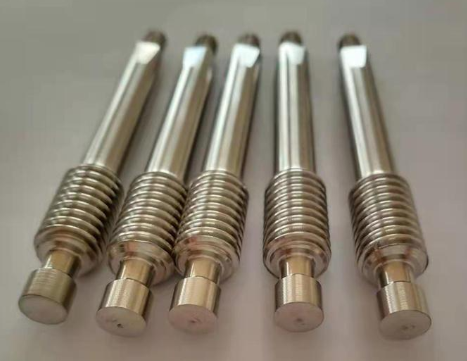
Our expertise in stainless steel parts turning extends beyond parameter tweaking. We maintain a comprehensive precision equipment list that includes advanced CNC lathes with integrated dynamic dampers, high‑torque spindles, and custom‑built steady rests. Every job is reviewed by our engineering team, who simulate the cutting dynamics using finite element analysis before the first chip is cut. This proactive approach ensures that we can handle complex geometries—thin‑walled tubes, threaded shafts, and eccentric parts—with predictable results.
We also offer post‑process inspection using profilometers and coordinate measuring machines, guaranteeing that every delivered component meets your print requirements. For high‑volume runs, we implement statistical process control to maintain stability across thousands of pieces.
Mastering vibration in stainless steel parts turning is not about a single magic setting—it is a holistic discipline that combines machine rigidity, intelligent tooling, and adaptive controls. At Start Precision, we have refined this discipline through years of hands‑on experience and continuous investment in monitoring technology. The result is a reliable process that delivers smooth surfaces, extended tool life, and on‑time delivery.
For more details on our turning services, visit our homepage. We are ready to apply our vibration‑control expertise to your most challenging stainless steel components.
Contact us to discuss your manufacturing requirements. Our technical team will provide a tailored solution that balances quality, cost, and lead time for your specific application.
Q1: Do you apply the same parameters for all stainless steel grades?
A: No. We adjust speed, feed, and modulation patterns for each grade. For example, duplex stainless requires lower cutting speeds and higher feed than 304 due to its higher yield strength. Our process database contains validated recipes for over 20 stainless grades.
Q2: Can you handle parts with interrupted cuts (e.g., cross‑holes)?
A: Yes. We use special insert geometries with a stronger edge and reduce the depth of cut during the entry phase. Our adaptive control also detects the impact and momentarily adjusts the feed to stabilise the tool.
Q3: What surface roughness can you guarantee for production runs?
A: For external turning, we guarantee Ra ≤0.6 µm as a standard, and we can achieve Ra ≤0.3 µm with additional polishing steps or by using wiper inserts. We always provide a first‑article inspection report.
Q4: How do you ensure consistency across large batches?
A: We implement in‑process gauging and tool‑wear monitoring. Our CNC programs include tool‑compensation logic that adjusts offsets based on real‑time force signals, ensuring that every part meets tolerance from start to finish.
Q5: Can you provide a sample test before full production?
A: Absolutely. We offer a trial run of 5–10 pieces at no extra charge for new projects. This allows us to confirm the setup and surface quality before you commit to the full order.

Add: Building 3No.277 Zhen'an Middle Road, Chang'an Town,Dongguan,Guangdong, China
Tel:+86-769-82855591
Copyright © 2019 All Rights Reserved Dongguan Start Precision Technology Co., Ltd. Tel: +86-769-82855591
Add: No. 277 Zhen'an Middle Road, Chang'an Town, Dongguan, Guangdong, China



 中文版
中文版 English