CNC Turning Components from Prototype to Scale-Up
Date:2026-08-05Article editor:Starting Point PrecisionViews:49The journey from a concept to a fully functional part is a critical path in manufacturing. For engineers and procurement specialists, the challenge often lies in finding a partner who can seamlessly navigate the transition from prototyping to high-volume production without compromising quality. This is where mastery over CNC Turning Components becomes the cornerstone of project success. As the demand for complex, high-tolerance parts grows, understanding the capabilities of modern CNC Turning Components manufacturing is vital for any supply chain.
Prototyping is about validation. It requires speed, flexibility, and the ability to make rapid design changes. Production, in contrast, demands repeatability, efficiency, and rigorous process control. Successfully scaling CNC Turning Components from prototype to full-scale manufacturing involves several key steps:
1. Design for Manufacturability (DFM) Review: Optimizing the design for the turning process without sacrificing function.
2. Process Development: Selecting the optimal tooling, cutting parameters, and work-holding strategies.
3. Quality Systems Implementation: Establishing robust inspection protocols to ensure every part meets specifications.
4. Production Ramp-Up: Gradually increasing output while maintaining quality and yield.
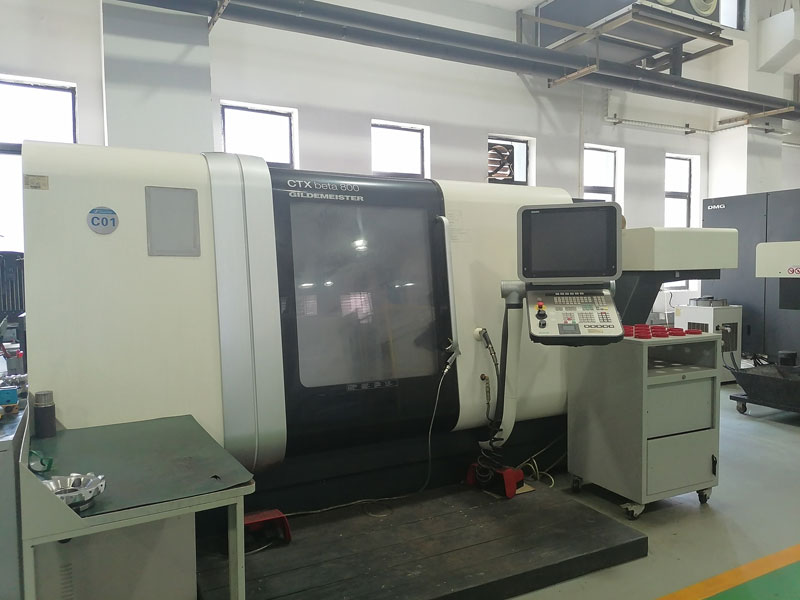
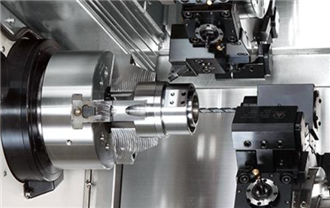
The foundation of precision lies in the machine tool. According to the Precision Equipment List from a leading technology partner, high-end machinery from global leaders is essential. A facility equipped with advanced CNC Turning Components machinery can guarantee the tight tolerances and surface finishes required for demanding industries.
| Equipment Name | Brand | Model | Key Application |
| CNC Turning Center | Germany | DMG CTX beta 800 | Complex turning with milling capability |
| CNC Turning Center | Japan | TAKZSAWA NEX-108 | High-volume, high-rigidity turning |
| CNC Turning Center | China | CK6136 | Versatile general-purpose turning |
| 5-Axis Machining Center | Germany | DMG HSC 75 linear | Complex geometries and undercuts |
| Surface Grinder | China | MICCO 350 | Fine surface finishing post-turning |
Note: A full list of equipment can be found at Start Precision's Equipment List.
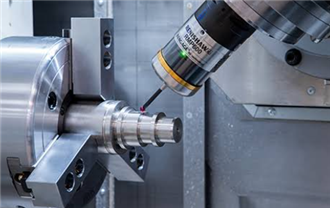
Modern CNC turning is not just about simple cylindrical shapes. Advanced centers like the DMG CTX beta 800 are capable of live tooling, allowing for milling, drilling, and tapping operations to be completed in a single setup. This significantly reduces cycle times and improves accuracy for CNC Turning Components. Furthermore, on-machine probing is a game-changer for quality assurance, allowing for in-process measurement and tool compensation to maintain tolerances as tight as ±0.01mm – a standard that meets the rigorous demands of industries such as aerospace and medical devices, where compliance with ISO 9001 quality management systems is often mandatory.
Example in Practice:▏
A medical device manufacturer needed a complex surgical instrument component that required a specific surface finish and a critical internal thread. The part was initially produced as a prototype using a standard turning center, which required two separate setups. By scaling up production with a DMG CTX beta 800 CNC Turning Center at Start Precision's facility, the process was redesigned to turn and mill the component in a single operation. This reduced the lead time by 40% and improved overall part accuracy, consistently holding the ±0.01mm tolerance across thousands of units.
This capability to handle complex parts efficiently is why many companies turn to experienced manufacturers for their CNC Turning Components.
A robust quality system, including certifications like ISO 9001 and IATF 16949, is a non-negotiable aspect of professional manufacturing. Adherence to these standards ensures that the processes for producing CNC Turning Components are controlled and documented. This commitment to quality is what differentiates a simple machine shop from a strategic supply chain partner.
Navigating the path from prototype to scale-up for CNC Turning Components requires a partner with the right technology, expertise, and quality systems. From the initial DFM analysis to the final inspection, every step must be executed with precision to ensure the success of your project. Whether your focus is on medical, aerospace, automotive, or electronics, choosing a manufacturer with a proven track record in precision engineering is paramount.
Contact us to discuss your manufacturing needs and discover how our expertise in CNC Turning Components can bring your project to life.
Frequently Asked Questions (FAQs)
1. What are the key considerations when scaling up CNC turning from a prototype?
When scaling up, key considerations include optimizing the tool path for cycle time reduction, selecting the most efficient work-holding solution, and establishing a robust in-process inspection plan (e.g., using on-machine probing) to ensure part consistency across large volumes.
2. What tolerances can be achieved with advanced CNC turning?
With state-of-the-art equipment and experienced operators, CNC Turning Components can be manufactured with tolerances as tight as ±0.01mm. This level of precision is often required for critical applications in the aerospace and medical industries.
3. What materials are commonly used in CNC turning for medical and aerospace applications?
Common materials include stainless steel (e.g., 316L, 17-4PH), titanium alloys (e.g., Ti-6Al-4V), aluminum, and high-performance plastics like PEEK. The choice depends on the application's mechanical and chemical requirements.

Add: Building 3No.277 Zhen'an Middle Road, Chang'an Town,Dongguan,Guangdong, China
Tel:+86-769-82855591
Copyright © 2019 All Rights Reserved Dongguan Start Precision Technology Co., Ltd. Tel: +86-769-82855591
Add: No. 277 Zhen'an Middle Road, Chang'an Town, Dongguan, Guangdong, China



 中文版
中文版 English