Aluminum CNC Turning Parts for Micro Medical Devices
Date:2026-08-14Article editor:Starting Point PrecisionViews:135The medical device industry demands components that are not only miniature but also flawless. Aluminum CNC Turning Parts have become indispensable in this field, offering an exceptional strength-to-weight ratio, corrosion resistance, and biocompatibility. Manufacturing these micro components requires navigating a complex landscape of stringent regulatory standards, microscopic tolerances, and advanced machining techniques. This article delves into the critical specifications and processes that define top-tier Aluminum CNC Turning Parts for medical applications.
Producing components for surgical tools, implantable devices, and diagnostic equipment transcends standard machining. It requires a holistic approach where material science, metrology, and cleanroom manufacturing converge. The following table outlines our key technical pillars for high-quality Aluminum CNC Turning Parts in the medical sector.
| Parameter | Specification / Standard | Importance for Micro Medical Devices |
| Material Certification | ASTM B211, AMS 4027, EN 573-3, with 3.1/EN 10204 test reports. | Ensures complete material traceability, verifying the alloy composition (e.g., 6061-T6, 7075-T6) and mechanical properties are suitable for sterile, implant-adjacent applications. |
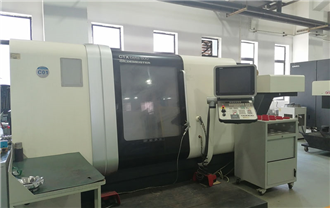
| Tolerance Control | ±0.01mm as standard, achieved on DMG CTX beta 800 and TAKZSAWA NEX-108 turning centers. | Critical for the fit and function of mating parts in devices like drug-delivery injectors or endoscopic tools, where even micron-level deviations can lead to failure. |
| Surface Roughness | Ra 0.4 – 0.8 µm (standard finishing), Ra < 0.2 µm (mirror finish for sealing/sliding surfaces). | Minimizes friction, reduces bacterial adhesion, and ensures the longevity of moving components within the body or in high-wear surgical instruments. |
| Cleanliness Standard | ISO 13485 compliant, post-processing cleaning per ASTM F3127. | Eliminates machining oils, particulates, and cross-contamination, ensuring the parts are safe for use in sterile environments. |
Machining micro-sized features, such as a 0.5mm diameter hole or a thread with a 0.2mm pitch, demands specialized equipment and tooling.
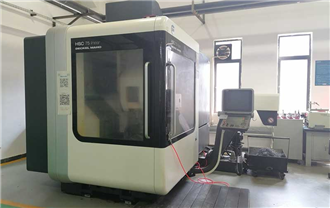
● Machine Platform: For high-precision work, we utilize advanced CNC turning centers like the DMG CTX beta 800 and TAKZSAWA NEX-108. These machines offer spindle speeds up to 12,000 RPM.
● Cutting Tools: We employ custom-ground micro-grain carbide tools. For aluminum, tools are polished with a high rake angle to prevent built-up edge.
◆ Boring Bars: Minimum diameter of Ø0.3mm with a length-to-diameter ratio of up to 4:1.
◆ Threading Tools: capable of producing internal threads as small as M0.5.
◆ Grooving Tools: Widths starting from 0.15mm for creating precise retention features.
● Coolant & Lubrication: High-pressure, through-tool coolant (up to 70 bar) with a micro-filtration system (5µm) is critical to evacuate chips and dissipate heat, preventing work hardening and tool wear on delicate features.
For medical applications, the raw aluminum's pedigree is non-negotiable. Our process begins with certified material from mills with ISO 13485 compliance.
● Certification Requirements: Each batch of material (e.g., Aluminum 6061-T6 or 7075-T6) must be accompanied by a 3.1 Inspection Certificate per EN 10204. This validates the chemical composition and mechanical properties, referencing standards like ASTM B211 for specification.
● Traceability: We maintain full material traceability from the mill to the finished part. Our internal system logs the heat number, batch number, and all processing parameters for every production run. This is vital for FDA and MDR compliance audits.
● Special Processing: For parts requiring anodizing, we use a non-contaminating, sulfuric acid-based process that meets AMS 2471 standards, ensuring a uniform, dielectric coating that is 25–50µm thick without compromising critical dimensions.
Surface finish directly impacts device performance, from fluid dynamics to wear resistance.
● Measurement: We use contact profilometers and non-contact interferometers to verify surface parameters. For critical sealing surfaces, a Ra < 0.2µm is consistently achieved.
● Factors Influencing Finish:
◆ Tool Nose Radius: A larger radius (e.g., 0.8mm) is used for finishing passes to create a "wiper" effect, improving surface finish.
◆ Feed Rate: Feed is meticulously calculated. For a micro-part, a finishing feed rate of 0.02–0.05 mm/rev is typical to achieve the desired Ra value.
◆ Material Condition: Stress-relieved aluminum alloys prevent micro-vibrations that can compromise surface finish. This is often achieved by pre-machining and then aging the material before final turning.
The "last mile" of manufacturing is often the most crucial. Microscopic burrs or residual coolant are unacceptable.
● Process: After CNC turning, parts undergo a multi-stage cleaning process. This typically includes an ultrasonic wash with a saponified alkaline solution, followed by multiple deionized (DI) water rinses and a hot air drying phase.
● Verification: Cleanliness is verified using a particle counter and a microscope inspection to ensure particles larger than 100µm are eliminated. The cleaning validation follows guidelines from ASTM F3127.
● Packaging: Parts are immediately sealed in anti-static, medical-grade packaging within a Class 7 (ISO 14644-1) cleanroom to preserve cleanliness.
Project: Manufacture a batch of Aluminum CNC Turning Parts – specifically, a set of precision turned components for a next-generation drug delivery system.
Challenge: The parts required tight dimensional control with a general tolerance of ±0.01mm on all critical mating surfaces, and a surface finish of Ra 0.4µm to ensure proper sealing and sliding function. High-volume production with zero defects was mandatory.
Solution:
1. Material: 6061-T6 aluminum was chosen for its excellent machinability and corrosion resistance.
2. Process: The components were produced on a DMG CTX beta 800 using a combination of roughing and finishing passes, with live tooling for secondary features.
3. Tooling: Custom PCD-tipped finishing inserts were used to maintain consistent surface quality over long production runs.
4. Outcome: All parts passed 100% dimensional inspection with CMM, achieving tolerances well within ±0.01mm. The process was validated for repeatability, and the first article inspection was approved with zero non-conformances.
Producing Aluminum CNC Turning Parts for micro medical devices requires a precise fusion of advanced equipment, rigorous process control, and strict adherence to quality standards. At Start Precision, we leverage world-class machinery like the DMG CTX beta 800 and TAKZSAWA NEX-108, combined with certified materials and validated cleaning procedures, to deliver components that meet the most exacting medical requirements. From material traceability to final inspection, every step is engineered for reliability and safety.
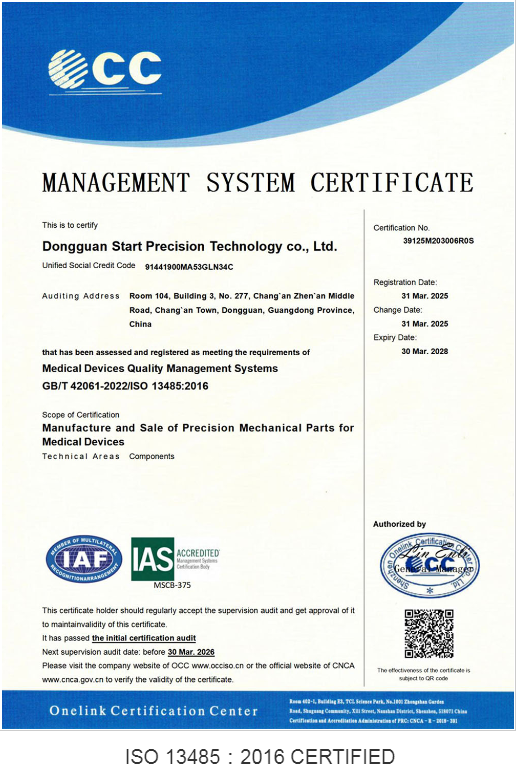
For a complete overview of our machining capabilities, please refer to our comprehensive Precision equipment list . We are committed to upholding international standards, including ISO 13485, ensuring our processes align with the highest industry expectations.
We invite you to explore how our expertise can transform your critical designs into manufacturable realities. Please contact us to discuss your manufacturing requirements.
1. What is the minimum wall thickness you can achieve on aluminum micro-turned parts?
For aluminum alloys like 6061-T6, we can reliably achieve a minimum wall thickness of 0.15mm (0.006") while maintaining structural integrity and dimensional accuracy. This is highly dependent on part geometry and volume, and is verified during our feasibility review.
2. How do you ensure parts are completely free of machining oils for implantable applications?
We employ a multi-stage cleaning process that includes ultrasonic cleaning with medical-grade detergent, followed by multiple hot DI water rinses, a thorough drying cycle, and final verification using a cleanliness test per ASTM F3127. Parts are then handled and packaged in a Class 7 cleanroom.
3. What is the typical lead time for prototyping micro medical components?
For prototypes of Aluminum CNC Turning Parts, our typical lead time is 5–7 working days after design for manufacturability (DFM) approval. This can be expedited for emergency projects. Production lead times are volume-dependent and quoted upon request.
4. What is the primary advantage of using aluminum over stainless steel in these applications?
Aluminum's primary advantage is its high strength-to-weight ratio, making devices lighter and easier for surgeons to handle. Its excellent thermal conductivity also aids in dissipating heat during procedures. For non-implantable devices, its machinability allows for more complex geometries at a lower cost compared to stainless steel.
5. Do you provide a full material certification with each shipment?
Yes. Each shipment of Aluminum CNC Turning Parts includes a 3.1 Inspection Certificate per EN 10204, providing full traceability of the material's heat number, chemical composition, and mechanical properties, ensuring compliance with regulatory requirements.

Add: Building 3No.277 Zhen'an Middle Road, Chang'an Town,Dongguan,Guangdong, China
Tel:+86-769-82855591
Copyright © 2019 All Rights Reserved Dongguan Start Precision Technology Co., Ltd. Tel: +86-769-82855591
Add: No. 277 Zhen'an Middle Road, Chang'an Town, Dongguan, Guangdong, China



 中文版
中文版 English