CNC Precision Turned Parts for PPAP in Automotive
Date:2026-08-13Article editor:Starting Point PrecisionViews:190Achieving Production Part Approval Process (PPAP) approval for CNC precision turned parts is a rigorous milestone in the automotive supply chain. It demands not only high-quality machining but also a systematic, data-driven approach to documentation and process control. This article outlines the core requirements—Level 3 submission, FMEA, MSA, process capability, and common audit pitfalls—and demonstrates how a dedicated precision manufacturer can turn these challenges into a competitive advantage.

For most automotive customers, a Level 3 submission is the standard. According to the AIAG PPAP manual (4th edition), this level requires the supplier to submit a comprehensive package that includes, but is not limited to:
● Design records with all critical dimensions and datums
● Process flow diagram
● Process FMEA (Failure Mode and Effects Analysis)
● Control Plan
● Measurement System Analysis (MSA) studies
● Initial process capability studies (Ppk/Cpk)
● Material and performance test results
● Appearance approval (if applicable)
● Sample parts and master sample
Each element must be meticulously prepared and backed by real production data.
At Dongguan Start Precision Technology Co., Ltd. , we have built our quality management system around the very principles that PPAP demands. Our approach is not reactive but proactive, ensuring that every submission is robust, complete, and audit-ready.
| PPAP Requirement | Start Precision's Implementation |
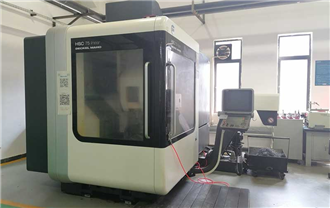
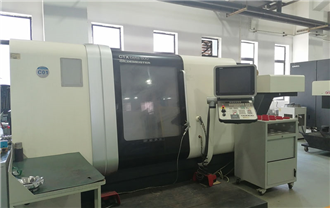
| Advanced Equipment & Tolerances | We operate a comprehensive fleet of CNC turning, milling, surface/cylindrical grinding, wire EDM, and 5-axis machining centers. This allows us to consistently hold tolerances within ±0.01mm—critical for automotive hydraulics and drivetrain components. Our precision equipment list (available on our capabilities page) includes high-end machines from leading global brands. |
| Experienced Technical Team | Our engineers and technicians are recruited from manufacturing plants with decades of hands-on experience. They interpret complex 3D/CAD drawings and design manufacturing processes that minimize variation from the first piece to the millionth. |
| Process FMEA (DFM Integration) | We conduct Process FMEA during the design-for-manufacturability (DFM) phase, following the guidelines of the AIAG FMEA handbook. For example, we analyze potential tool wear, material hardness fluctuations, and coolant pressure changes—then define mitigation strategies (e.g., adaptive tool path compensation, in-process gauging) directly into the Control Plan. |
| MSA and Gauge R&R | We employ advanced inspection equipment (CMM, optical comparators, surface roughness testers) and perform rigorous Gauge R&R studies per AIAG MSA reference manual. This ensures that our measurement data is both accurate and repeatable, directly supporting your PPAP submission. |
| Process Capability (Cpk ≥ 1.33) | For every special characteristic, we collect data from a minimum of 125 consecutive parts (per AIAG guidelines) and calculate Ppk for initial samples and Cpk for ongoing monitoring. Our track record shows that over 95% of our automotive projects achieve Cpk > 1.67, even on complex geometries like internal splines and cross-holes. |
During a supplier quality audit, the assessor will invariably focus on the connection between documentation and shop-floor reality. Here are frequent findings and our countermeasures:
● "Reaction plans are vague." → Our Control Plans specify exact corrective actions (e.g., "If diameter drifts above UCL, stop production, verify tool offset using master gauge, and record adjustment log"). All operators are trained on these plans.
● "SPC charts are not updated." → We implement real-time SPC via our CNC machine monitoring system. Data is automatically charted, and alerts are triggered when trends indicate a potential drift.
● "Gauge calibration records missing." → We maintain a digital calibration management system with traceability to national standards. All instruments are calibrated before every shift.
● "Material certifications not retained." → We archive 3.1 material certificates and test reports for every batch of incoming bar stock, ensuring full traceability from raw material to finished part.
A recent project involved a fuel injector nozzle requiring a critical bore diameter of Ø4.00 ± 0.01 mm and a surface finish of Ra 0.4. Our customer demanded a PPAP Level 3 submission within 4 weeks. We:
1. Mapped the entire process (bar feeding → CNC turning → hard turning → lapping → washing → laser inspection).
2. Conducted a Process FMEA that identified tool wear as the primary risk, so we added an automatic tool compensator and a post-process air gauge.
3. Performed MSA on the air gauge – achieving a Gauge R&R of 8% (well below the 30% threshold).
4. Ran a 300-piece trial, achieving Ppk = 1.82 and Cpk = 1.73 after initial fine-tuning.
The submission was approved with zero non-conformances, and we have since delivered over 500,000 parts with zero customer rejects.
Navigating PPAP for CNC precision turned parts is a systematic process that rewards preparation and technical depth. By integrating robust FMEA, rigorous MSA, and real-time capability monitoring, a skilled partner can transform the approval process from a hurdle into a demonstration of manufacturing excellence.
At Start Precision, our investment in world-class equipment, seasoned engineering staff, and a culture of continuous improvement ensures that your PPAP package is not just compliant, but compelling. We take pride in meeting the most demanding automotive standards—because your success is ours.
We invite you to contact us to discuss your manufacturing needs.
Q1: What is the minimum Cpk required for PPAP submission of critical safety parts?
A: For safety or regulatory-related characteristics, most automotive OEMs require a Cpk of ≥ 1.67 (or even higher) to demonstrate exceptional process capability. Always confirm with your specific customer's CSR (Customer-Specific Requirements), often referenced in the AIAG PPAP manual.
Q2: Can Start Precision handle PPAP for both prototype and mass production runs?
A: Absolutely. We support early supplier involvement (ESI) during prototype development, then seamlessly transition to full-rate production using the same validated processes, ensuring consistent quality from sample to series.
Q3: How does Start Precision handle design changes during the PPAP process?
A: Any change to the design or process requires a re-submission at the appropriate PPAP level. We manage change control strictly, with clear documentation and re-validation (FMEA, capability studies) before new samples are shipped.

Add: Building 3No.277 Zhen'an Middle Road, Chang'an Town,Dongguan,Guangdong, China
Tel:+86-769-82855591
Copyright © 2019 All Rights Reserved Dongguan Start Precision Technology Co., Ltd. Tel: +86-769-82855591
Add: No. 277 Zhen'an Middle Road, Chang'an Town, Dongguan, Guangdong, China



 中文版
中文版 English