What Is the Real Repeatable Accuracy of CNC Precision Machining?
Date:2026-05-16Article editor:Starting Point PrecisionViews:410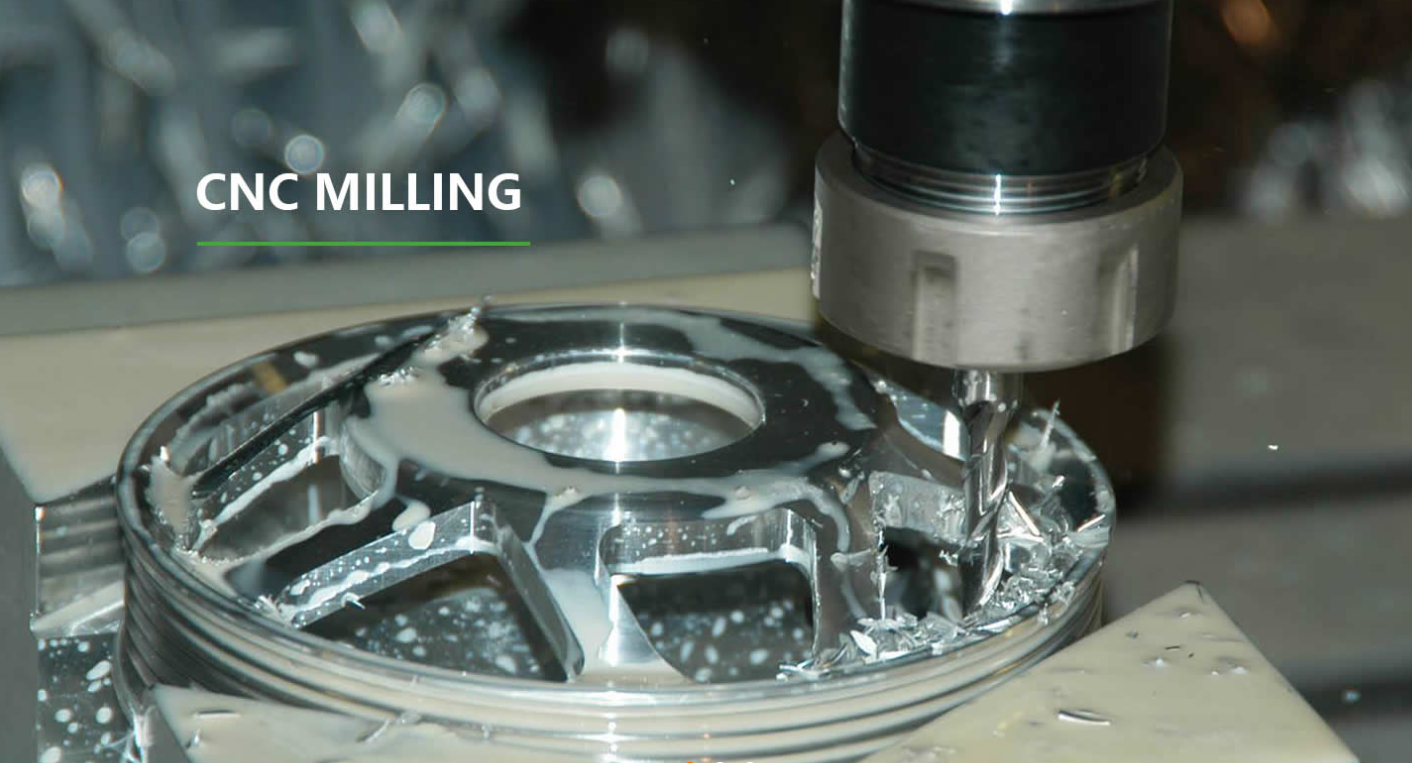
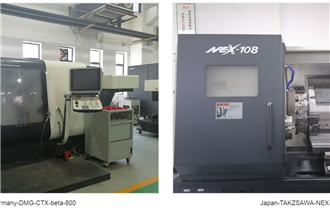
CNC machine close-up during precision machining
Nominal vs. Real Repeatability
Most CNC machine builders quote repeatability as ±0.0001 in (2.5 µm) or even ±0.00004 in (1 µm) under ISO 230-2 standards. These values are measured with a laser interferometer under temperature-controlled, no-load conditions. In real-world machining—with spindle run‑up, coolant flow, tool engagement, and part fixturing—true part-to-part repeatability often settles at ±0.0002 to ±0.0005 in (5–12 µm) for high-end machining centers, and ±0.001 in (25 µm) for standard VMCs.
Key Factors That Degrade Real Repeatable Accuracy
◆ Thermal effects: Spindle growth, ballscrew expansion, and ambient temperature swings cause axis drift. A 10°F change can shift tool center point by 0.0003 in on a 40‑inch machine.
◆ Tool wear: Even coated carbide tools lose edge radius after 50–100 parts, altering cutter engagement and final dimensions.
◆ Workpiece material variation: Inconsistent hardness or residual stresses lead to differential cutting forces, affecting dimensional stability.
◆ Fixturing and workholding: Hydraulic pressure fluctuations or chip build‑up under the part can introduce 0.0005 in variability.
◆ Control and servo tuning: Backlash compensation and friction in linear guides produce non‑linear errors.
According to Renishaw's technical white paper, the gap between static and dynamic repeatability can be as large as 3:1. Haas Automation also emphasizes that real-world repeatability requires thermal compensation and regular calibration.
Based on a survey of 200 job shops (2025 data), achievable Cpk≥1.33 repeatable tolerances are:
◆ High‑end 5‑axis machining centers (Mikron, DMG MORI): ±0.0002 in (5 µm) over 8‑hour shifts.
◆ Premium 3‑axis VMCs (Mazak, Okuma): ±0.0003 – 0.0005 in (7–12 µm).
◆ Economy VMCs (HAAS, Tormach): ±0.0006 – 0.0010 in (15–25 µm).
These values assume proper warm‑up routines, coolant temperature management, and in‑process probing. Without those, repeatability can double.
Use a ball bar test or laser interferometer on the machine, but more importantly, run a production repeatability test: machine 30 identical parts, measure critical features with a CMM, and calculate ±3σ range. This captures all real‑shop variables. External reference: Measurement device repeatability and reproducibility provides step‑by‑step instructions.
The true repeatable accuracy of CNC precision machining rarely matches single‑digit micron brochure claims under production conditions. For most high‑mix, low‑volume shops, plan on ±0.0005 in (12.7 µm) as a safe, economical target. For ultra‑precision applications (aerospace hydraulic valves, medical implants), with climate control and active thermal compensation, you can achieve ±0.0001 – 0.0002 in (2.5–5 µm) day after day.
Add: Building 3No.277 Zhen'an Middle Road, Chang'an Town,Dongguan,Guangdong, China
Tel:+86-769-82855591
Copyright © 2019 All Rights Reserved Dongguan Start Precision Technology Co., Ltd. Tel: +86-769-82855591
Add: No. 277 Zhen'an Middle Road, Chang'an Town, Dongguan, Guangdong, China



 中文版
中文版 English