Liquid Cooling Connector Machining for EV Systems
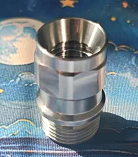
Date:2026-09-10Article editor:Starting Point PrecisionViews:134As electric vehicles become more powerful and compact, thermal management is increasingly important for batteries, inverters, electric motors, and other high-load components. Liquid cooling systems depend on reliable connectors to maintain coolant circulation, prevent leakage, and support efficient heat transfer. Liquid Cooling Connector Machining provides the dimensional accuracy and surface quality required for these demanding applications.
Why Liquid Cooling Connectors Matter in EVs
EV thermal-management systems may use liquid coolant loops for batteries, power electronics, and electric machines. The U.S. Department of Energy identifies thermal control as an important factor in the performance, reliability, and power density of electric-drive systems.
A machined liquid cooling connector may need to provide:
● Accurate ports and internal passagesThese requirements make precision machining a practical solution for custom EV cooling hardware.
Key Machining Requirements
| Requirement | Machining Focus | EV Benefit |
| Port accuracy | CNC milling/turning | Reliable hose or tube connection |
| Sealing surface | Fine finishing | Reduced leakage risk |
| Internal channels | Precision drilling | Consistent coolant flow |
| Thread quality | CNC turning/tapping | Secure assembly |
| Burr control | Deburring and inspection | Cleaner coolant circuits |
| Dimensional stability | In-process inspection | Consistent system performance |
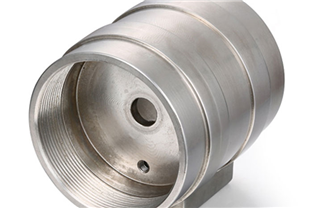
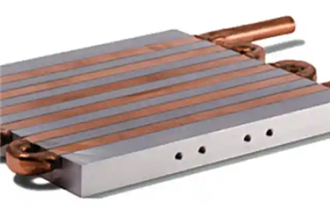
Common materials include aluminum alloys, copper alloys, stainless steel, and other engineering metals selected according to coolant compatibility, thermal requirements, strength, and weight targets.
Precision Processes for EV Cooling Connectors
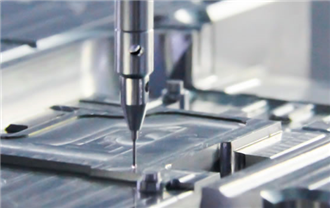
An effective Liquid Cooling Connector Machining process can combine CNC turning, CNC milling, drilling, tapping, grinding, and inspection.
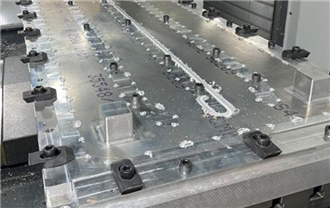
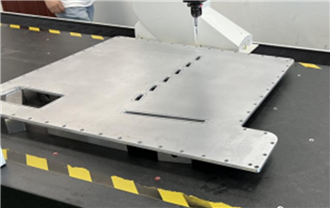
For complex geometries, multi-axis machining can reduce repositioning and improve the relationship between ports, mounting surfaces, and internal features. Start Precision have a Germany DMG HSC 75 linear five-axis machining center, DMG DMC 835V vertical machining centers, Mazak VCN-510C machines, and HAAS VF3 machines.
Start Precision can achieve tolerances within ±0.01 mm according to customer CAD and 3D drawings.
For more information about precision machining capabilities, visit Start Precision.
Inspection and Quality Control
EV cooling connectors must be checked beyond basic dimensional measurements. Depending on the design, manufacturers may verify:
● Critical diameters and hole positions
● Thread dimensions
● Flatness and surface finish
● Concentricity of sealing features
● Visual burr and contamination conditions
● Leak or pressure-test requirements specified by the customer
Quality control should begin with drawing review and continue through machining, finishing, inspection, and final packaging.
Example: Custom EV Coolant Connector
Consider a compact aluminum connector designed to join a coolant hose to an EV battery cooling manifold. The component may require multiple angled ports, threaded interfaces, mounting holes, and a precision sealing face.
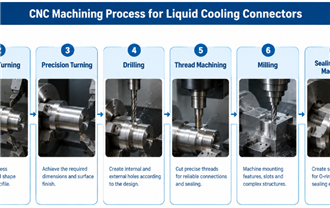
A suitable machining sequence could be:
1. CNC mill the external profile.
2. Drill and machine coolant passages.
3. Turn or tap connection interfaces.
4. Apply controlled deburring and surface finishing.
5. Inspect critical dimensions and sealing features.
6. Conduct the required cleanliness or leak verification.
This approach helps maintain accurate interfaces while supporting repeatable assembly in EV thermal-management systems.
Conclusion
Reliable cooling connectors are small but important components in modern EV thermal-management systems. Proper Liquid Cooling Connector Machining combines material selection, accurate machining, controlled finishing, and systematic inspection to produce connectors capable of meeting demanding assembly and coolant-system requirements.
If you are developing custom EV cooling connectors, contact us to discuss your manufacturing requirements, drawings, materials, tolerances, production volumes, and inspection specifications.
Frequently Asked Questions
1. What materials are suitable for EV liquid cooling connectors?
Aluminum alloys, copper alloys, and stainless steel are common options. The best choice depends on thermal conductivity, corrosion resistance, strength, weight, and coolant compatibility.
2. Why is precision important for cooling connectors?
Accurate ports, threads, sealing surfaces, and internal passages help ensure proper assembly, coolant flow, and leakage control.
Yes. Five-axis machining can be useful for connectors with angled ports, complex surfaces, and multiple features requiring close positional relationships.
A 2D drawing or 3D CAD file, material specification, tolerances, surface requirements, expected quantity, and any leak-testing or inspection requirements are helpful.
Add: Building 3No.277 Zhen'an Middle Road, Chang'an Town,Dongguan,Guangdong, China
Tel:+86-769-82855591
Copyright © 2019 All Rights Reserved Dongguan Start Precision Technology Co., Ltd. Tel: +86-769-82855591
Add: No. 277 Zhen'an Middle Road, Chang'an Town, Dongguan, Guangdong, China



 中文版
中文版 English