CNC Machining Surface Finish: A Practical Guide to Ra and Rz Standards
Date:2026-02-07Article editor:Starting Point PrecisionViews:1292In CNC machining, achieving the right surface finish is crucial for part functionality, aesthetics, and cost. Two key parameters, Ra (Average Roughness) and Rz (Mean Roughness Depth), form the cornerstone of surface finish specifications. Understanding their differences is essential for effective communication between designers and machinists.
Ra: The Arithmetic Average
Ra is the most commonly used parameter. It measures the average of the absolute heights and depths of the surface profile from its mean line over a sampling length. Think of it as the overall "texture" of the surface. A lower Ra value indicates a smoother finish.
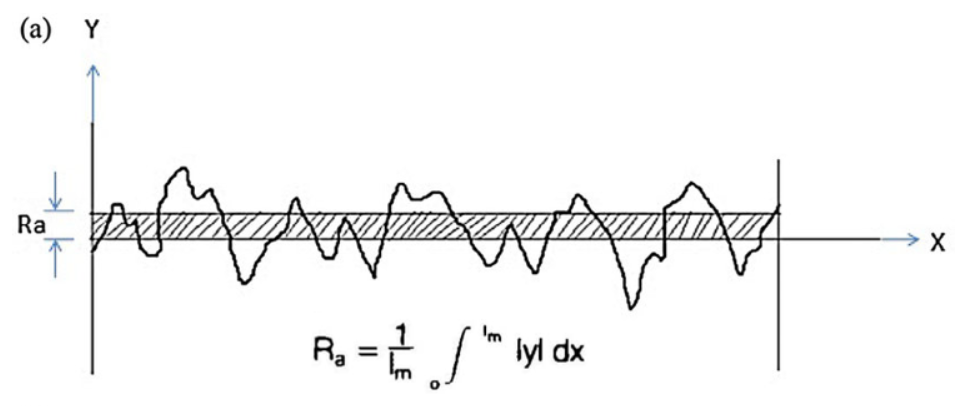
Typical Applications: General part specifications, visible surfaces, parts requiring good cosmetic appearance, and surfaces where friction needs to be controlled. For example, an aluminum CNC machined enclosure might call for an Ra ≤ 3.2 µm for a uniform, smooth look.
Rz: Assessing Peak-to-Valley
Rz measures the average maximum height of the profile by calculating the distance between the highest peak and the deepest valley over five sampling lengths. It is more sensitive to extreme surface variations that Ra might average out. This makes Rz critical for applications where peak integrity or sealing is vital.
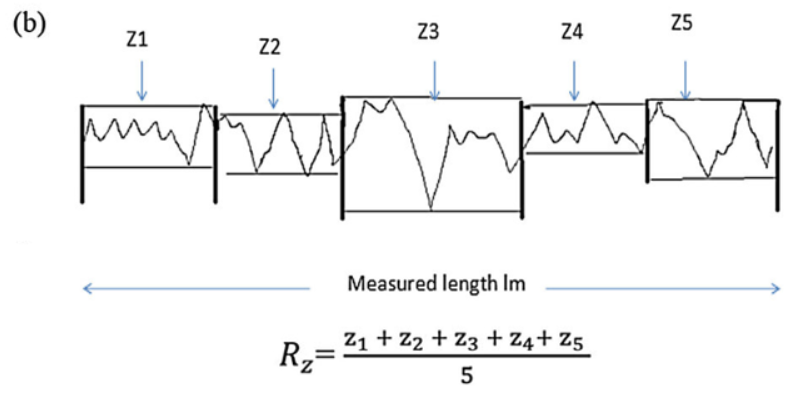
Typical Applications: Sealing surfaces, bearing contact areas, and parts subject to fatigue stress. For instance, a hydraulic manifold block sealing face would often be specified with a strict Rz value to ensure leak-proof performance.Refer to ISO 21920-2:2021, the standard for surface texture parameters.
Ra vs. Rz: Choosing the Right Callout
While related, Ra and Rz are not interchangeable. A surface can have a decent Ra but a poor Rz if it has deep, isolated scratches. Rz often provides a better picture of surface extremes.
Use Ra for: General smoothness requirements, cosmetic finishes, and controlling friction/wear in most dynamic applications.
Use Rz for: Functional surfaces where the deepest valleys or highest peaks are critical, such as for sealing, coating adhesion, or load-bearing fatigue resistance.
common Ra/Rz values and their corresponding machining processes
| Machining Process | Machining Precision Grade | Common Ra Value (μm) | Common Rz Value (μm) | Core Application Scenarios (CNC Machining-dominated) |
|---|---|---|---|---|
| CNC Turning (General) | Rough Machining | 6.3~12.5 | 25~63 | Non-mating outer circles/end faces, rough turning stock for blanks, non-critical structural surfaces |
| Precision CNC Turning | Semi-finishing/Finishing | 0.8~3.2 | 3.2~16 | General mating shafts/discs, bearing housing end faces, common hole chamfers |
| Ultra-precision CNC Turning | High-precision Finishing | 0.2~0.8 | 0.8~4 | Precision shaft outer circles, hydraulic part mating surfaces, low-precision sealing surfaces |
| Milling (General End/Face Milling) | Rough Machining | 6.3~25 | 25~100 | Rough milled cavity for blanks, non-mating planes, non-critical surfaces of bracket parts |
| Milling (Precision/High-speed) | Semi-finishing/Finishing | 1.6~6.3 | 6.3~32 | Semi-precision milled mold surfaces, box body mating planes, flange connection surfaces |
| Milling (Ultra-precision/Mirror) | High-precision Finishing | 0.4~1.6 | 1.6~8 | Precision mold cavities, optical part mounting surfaces, precision planes of thin-walled parts |
| Grinding (Cylindrical/Surface) | Finishing | 0.2~0.8 | 0.8~4 | High-precision mating shafts/holes, guide rail surfaces, gear datum surfaces |
| Grinding (Precision/Centerless) | High-precision Finishing | 0.05~0.2 | 0.2~1 | Bearing raceways, precision mandrels, hydraulic valve core mating surfaces |
| Grinding (Mirror) | Superfinishing | 0.012~0.05 | 0.05~0.2 | Mirror molds, optical instrument mating surfaces, high-precision sealing surfaces |
| Drilling (General Twist Drill) | Rough Machining | 12.5~25 | 50~100 | Non-mating holes, thread bottom holes, pipeline through holes |
| Reaming (Rough) | Semi-finishing | 1.6~3.2 | 6.3~16 | General mating holes, positioning holes, bolt holes |
| Reaming (Precision) | Finishing | 0.4~1.6 | 1.6~8 | Precision positioning holes, bearing mounting holes, hydraulic pipe joint holes |
| Boring (General CNC) | Semi-finishing | 3.2~6.3 | 16~32 | Rough bored holes of box bodies, non-precision mating holes |
| Boring (Precision/Deep Hole) | Finishing | 0.8~3.2 | 3.2~16 | Engine cylinder bores, precision box body holes, gearbox bearing holes |
| Broaching (Internal/External) | Finishing | 0.8~3.2 | 3.2~16 | Spline holes, keyways, mass-produced precision planes/internal holes |
| Lapping (Manual/Machinery) | Superfinishing | 0.012~0.4 | 0.05~1.6 | Gauge working surfaces, precision mold cavities, hydraulic valve sleeve holes |
| Polishing (Mechanical/Electrolytic) | Superfinishing | 0.008~0.2 | 0.03~0.8 | Mirror product appearance surfaces, optical parts, high-precision sealing surfaces |
| Roller Burnishing (Cylindrical/Internal Hole) | Finishing | 0.1~0.8 | 0.4~3.2 | Wear-resistant shaft surfaces, hydraulic cylinder bores, piston rod outer circles |
Specifying Surface Finish: Best Practices
1.Specify the Parameter: Always state whether you require Ra or Rz.
2.Define the Value: Use standard values (e.g., Ra 1.6. Rz 10). Unnecessarily tight tolerances increase cost.
3.Indicate the Sampling Length: This is often implied by the value but can be specified for clarity.
4.Consider the Process: Different CNC machining operations produce characteristic finishes. A finish of Ra 0.4 µm will require grinding or polishing after milling, significantly impacting lead time and price.
Conclusion
Specifying the correct surface finish standard is a balance between function and cost. By understanding the distinct roles of Ra and Rz, engineers can create more precise drawings, and manufacturers can deliver parts that perform reliably. Always consult with your CNC machining partner early to determine the most efficient and cost-effective way to achieve your desired surface texture.
Add: Building 3No.277 Zhen'an Middle Road, Chang'an Town,Dongguan,Guangdong, China
Tel:+86-769-82855591
Copyright © 2019 All Rights Reserved Dongguan Start Precision Technology Co., Ltd. Tel: +86-769-82855591
Add: No. 277 Zhen'an Middle Road, Chang'an Town, Dongguan, Guangdong, China



 中文版
中文版 English