Precision CNC Machining for Self-Lubricating Parts: Engineering Frictionless Reliability
Date:2026-06-18Article editor:Starting Point PrecisionViews:344In modern industrial applications, downtime equals lost revenue. Moving components that require constant lubrication introduce maintenance overhead, contamination risks, and unpredictable failure points. Precision CNC machining for self-lubricating parts solves this problem by producing components that inherently reduce friction—without external oil or grease. These low-maintenance components are transforming sectors from aerospace to medical devices, and CNC technology is the key enabler.
Self-lubricating materials—such as oil-impregnated bronze, PTFE composites, graphite-filled polymers, and metal-matrix composites—are not forgiving. Their heterogeneous structure requires exceptional cutting control to avoid smearing, delamination, or tearing. Standard machining often destroys the very porosity that stores solid lubricants. Precision CNC machining, however, uses custom toolpaths, negative rake angles, and cryogenic cooling to preserve material integrity while holding tolerances as tight as ±0.005 mm.
For a deeper dive into material-specific strategies, explore CNC machining guidelines for advanced polymers.
The true value of self-lubricating CNC parts lies in total cost of ownership. By eliminating grease ports, oil reservoirs, and scheduled re-lubrication, these components:
● Reduce maintenance labor by up to 70%.
● Prevent product contamination in food/pharma lines.
● Perform reliably in vacuum or cleanroom environments (e.g., semiconductor handling).
● Extend service life in high‑temperature furnaces where oil would carbonize.
One prominent example is graphite‑bronze bushings used in heavy construction equipment. Precision-machined to a surface finish of Ra ≤ 0.4 µm, they run dry for thousands of hours with negligible wear. Learn more about wear-rate validation in ASTM G133 standard wear testing.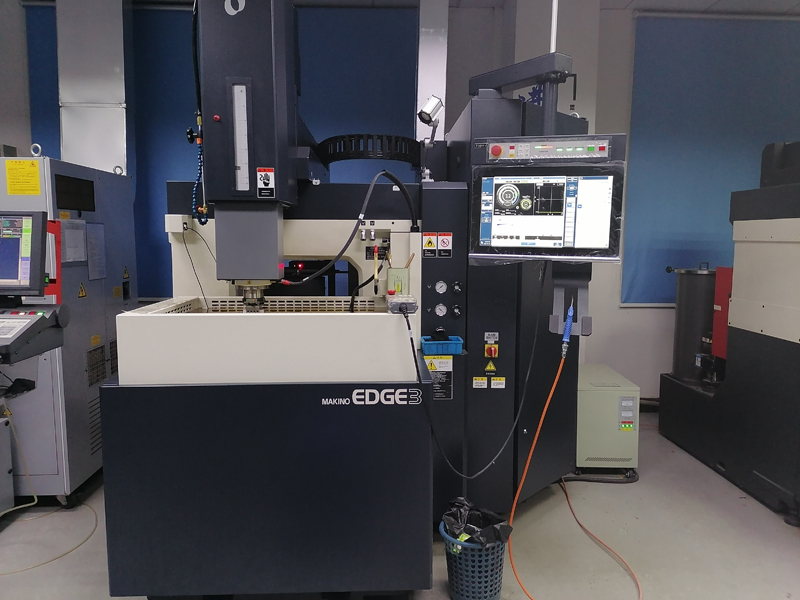
Every micron matters. CNC milling, turning, and Swiss‑type lathes enable:
● Controlled edge break – prevents delamination of PTFE skin layers.
● Micro‑grooving – acts as additional lubricant reservoirs.
● Dimensional stability – ensures proper interference fits, so the solid lubricant film is activated only under load.
Advanced 5‑axis CNC centers also allow complex geometries—like helical oil‑free gears or eccentric cams—in a single setup, reducing tolerance stack‑up.
● Automotive – turbocharger vanes, EGR valves.
● Aerospace – flap actuators, landing gear pivot pins (non‑corrosive).
● Medical – surgical robot joints, MRI‑compatible bearings.
● Renewable energy – pitch control bearings in wind turbines, where access for maintenance is hazardous.
Each industry demands traceability and process validation—capabilities native to modern CNC workshops with ISO 13485 or AS9100 certifications.
To get the most from your low‑maintenance components:
1. Specify surface roughness – Ra 0.2–0.8 µm for optimal tribological film transfer.
2. Avoid sharp internal corners – use a fillet radius ≥ 0.2 mm to reduce stress risers.
3 Allow for thermal expansion – self‑lube materials often have higher CTE than steel.
Q1: Which self-lubricating material is best for high-load applications?
Metal‑matrix composites with graphite or molybdenum disulfide (e.g., bronze‑graphite) excel under loads > 50 MPa. For lower loads, PTFE‑filled acetal offers very low friction.
Q2: Can CNC‑machined self‑lubricating parts replace bearings in high‑temperature environments (>200 °C)?
Yes—provided you choose materials like carbon‑graphite or silicon‑nitride‑based composites. Always verify the continuous operating temperature with your material supplier.
Q3: Does precision machining affect the self‑lubricating property?
If done incorrectly—yes. Overheating can seal porosity; aggressive feeds can smear the lubricant phase. That’s why CNC parameters (speed, feed, coolant type) must be tailored specifically to each material grade.
Q4: How do I know if my part truly needs self‑lubrication?
If your application involves limited access, cleanroom requirements, or frequent start‑stop cycles (where oil film breaks), self‑lubricating is often the most reliable solution.
Add: Building 3No.277 Zhen'an Middle Road, Chang'an Town,Dongguan,Guangdong, China
Tel:+86-769-82855591
Copyright © 2019 All Rights Reserved Dongguan Start Precision Technology Co., Ltd. Tel: +86-769-82855591
Add: No. 277 Zhen'an Middle Road, Chang'an Town, Dongguan, Guangdong, China



 中文版
中文版 English