How to Reduce Cycle Time in CNC Lathe Parts: Process Optimization Guide
Date:2026-04-06Article editor:Starting Point PrecisionViews:710In precision machining, cycle time directly impacts production cost, delivery speed, and profitability. For CNC lathe parts, even a few seconds saved per component can translate into thousands of dollars annually. This article explores proven process optimization strategies to reduce cycle time without compromising quality.
1. Analyze the Current Process with a Cycle Time Breakdown
Before optimizing, you must measure. Break down the cycle time into:
● Cutting time (actual material removal)
● Idle time (tool changes, rapid movements, spindle acceleration)
● Setup and part handling time
A simple time study or CNC program simulation can reveal hidden inefficiencies. For example, unnecessary tool retracts or excessive safety distances often add 10–15% idle time.
[Image link: /assets/images/cnc-lathe-cycle-time-chart.jpg]
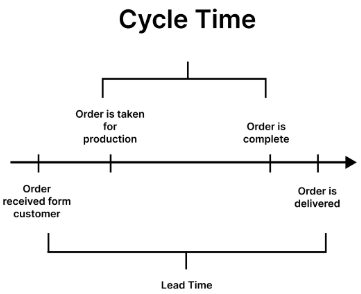
Cycle time breakdown chart for a typical aluminum part
2. Optimize Cutting Parameters (Speed, Feed, Depth of Cut)
Modern carbide tooling allows significantly higher parameters than older standards. Increase:
● Cutting speed (Vc) – up to tool manufacturer’s limit
● Feed rate (f) – especially for roughing passes
● Depth of cut (ap) – reduce number of passes
For example, switching from 150 m/min to 250 m/min on a 6061 aluminum part reduces roughing time by ~40%. Always verify tool life and surface finish.
Refer to Machining formulas and cutting data.
3. Minimize Non-Cutting Movements
Rapid traverse moves, tool approach, and tool change are often overlooked. Use these techniques:
● Reduce G00 distances – program shorter retract planes
● Combine operations – use live tooling for milling/drilling on the same setup
● Optimize tool change position – place tools closer to the part
One shop reduced idle time by 28% simply by moving the tool change position from Z200 to Z50.
4. Implement Multi-Turret or Multi-Spindle Machining
If your CNC lathe has a secondary turret or subspindle, use them in parallel. While one turret roughs the main diameter, the second turret can drill a cross hole or groove. This simultaneous machining can cut total cycle time by 30–50% for complex parts.
5. Reduce Setup Time with Quick-Change Tooling and Fixtures
Setup time is not part of the cycle time per piece, but it affects batch economics. For small to medium batches, reducing setup time allows more frequent optimizations. Use:
● Collet chucks instead of 3-jaw chucks
● Preset tool holders
● Zero-point clamping systems
Less setup time means you can afford to run optimized programs even for short runs.
6. Use High-Performance Toolpaths (Peel Milling / Trochoidal Turning)
While trochoidal milling is common for mills, turning has similar concepts: peel turning or dynamic roughing uses smaller depth of cut but very high feed and speed, reducing heat and allowing faster material removal on long, slender parts. Some CAM software offers “adaptive turning” strategies.
7. Automate Part Loading/Unloading
Manual part handling adds variability and non-productive time. A simple bar feeder or gantry loader can reduce idle time between cycles to near zero. For high-volume CNC lathe parts, automation pays back in months.
Real-World Example: Cycle Time Reduced by 34%
We recently optimized a steel valve body machined on a 2-axis lathe. Original cycle time: 4 minutes 20 seconds. Changes made:
● Increased feed from 0.12 to 0.22 mm/rev (roughing)
● Reduced safety distances from 5mm to 1mm
● Combined two grooving operations into one
New cycle time: 2 minutes 52 seconds. Annual savings at 50.000 parts: over 700 machine hours.
Conclusion
Reducing cycle time for CNC lathe parts requires a systematic approach: measure, optimize cutting parameters, eliminate idle movements, and consider automation. Start with the easiest change (e.g., feed rate increase) and measure the impact. Over time, cumulative improvements will dramatically lower your cost per part.
For personalized process optimization, our engineering team offers a free cycle time analysis.
Request a free consultation.
Add: Building 3No.277 Zhen'an Middle Road, Chang'an Town,Dongguan,Guangdong, China
Tel:+86-769-82855591
Copyright © 2019 All Rights Reserved Dongguan Start Precision Technology Co., Ltd. Tel: +86-769-82855591
Add: No. 277 Zhen'an Middle Road, Chang'an Town, Dongguan, Guangdong, China



 中文版
中文版 English