Gauge Parts Lathe Machining: Ultra-Precision Turning for Plug, Ring & Thread Gauges
Date:2026-04-08Article editor:Starting Point PrecisionViews:424Gauge parts—such as plug gauges, ring gauges, thread gauges, and snap gauges—are the masters of measurement. They must verify the dimensional accuracy of other manufactured components, which means they themselves must be manufactured to sub‑micron tolerances and exceptional surface finishes. Achieving this requires specialized gauge parts lathe parts machining capabilities that go far beyond standard turning.
Why Lathe Machining Is Critical for Gauge Parts
Most gauge parts are cylindrical or have rotational symmetry: go/no‑go plugs, taper ring gauges, and threaded masters. Turning on a high‑precision CNC lathe is the most efficient way to generate these geometries while maintaining concentricity, roundness, and straightness. However, unlike general turning, gauge part production demands:
● Tolerances as tight as ±0.001 mm (1 µm) or even IT2 grade.
● Surface roughness Ra ≤ 0.1 µm (superfinish or lapping may follow).
● Extreme thermal stability – room temperature controlled to ±1°C.
● Zero burrs or edge defects that could affect measurement.
Material Selection for Gauge Components
To maintain dimensional stability over thousands of measurements, gauge parts are typically made from:
● Tool steel (e.g., O1. A2. D2) – hardened to 60–65 HRC.
● Stainless steel (e.g., 440C) – corrosion‑resistant for inspection environments.
● Tungsten carbide – extremely wear‑resistant, but requires diamond grinding or hard turning with CBN.
For hardened materials (above 55 HRC), gauge parts lathe parts machining often employs hard turning with CBN (cubic boron nitride) inserts, eliminating the need for grinding on certain features.
Key Technical Requirements for Gauge Lathe Machining
1. Machine Rigidity and Spindle Accuracy
A standard CNC lathe is not sufficient. Dedicated gauge manufacturing uses ultra‑precision lathes with:
● Hydrostatic or aerostatic spindles (runout <0.5 µm).
● Linear motor drives or precision ballscrews with glass scale feedback (resolution 0.01 µm).
● Fully enclosed thermal compensation systems.
2. Tooling and Edge Preparation
● CBN inserts for hard turning (65 HRC) – wiper geometries to improve surface finish.
● PCD inserts for non‑ferrous or carbide gauges.
● Edge hone and negative land preparation to prevent micro‑chipping on interrupted cuts.
3. Metrology Integration
Machining gauge parts is not complete without in‑process or post‑process measurement. We use:
● Touch probes and laser systems on the lathe for real‑size adjustment.
● Air gauging and CMM for final certification.
Common Gauge Parts We Produce on CNC Lathes
| Gauge Type | Typical Material | Critical Feature |
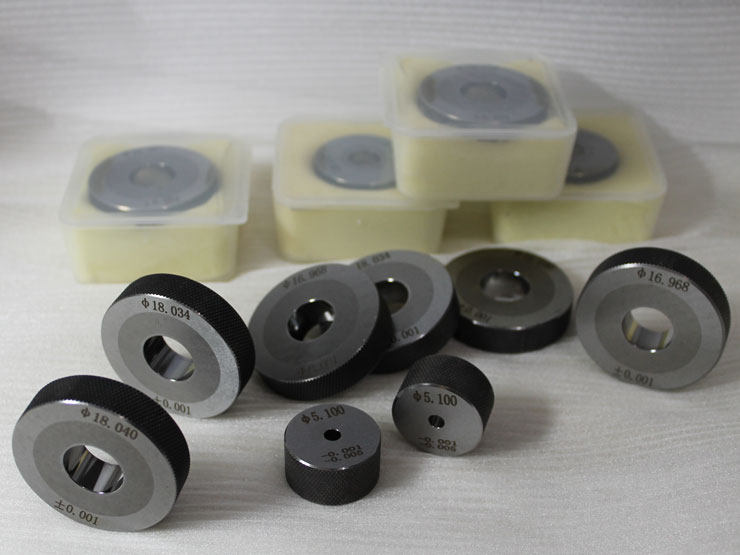
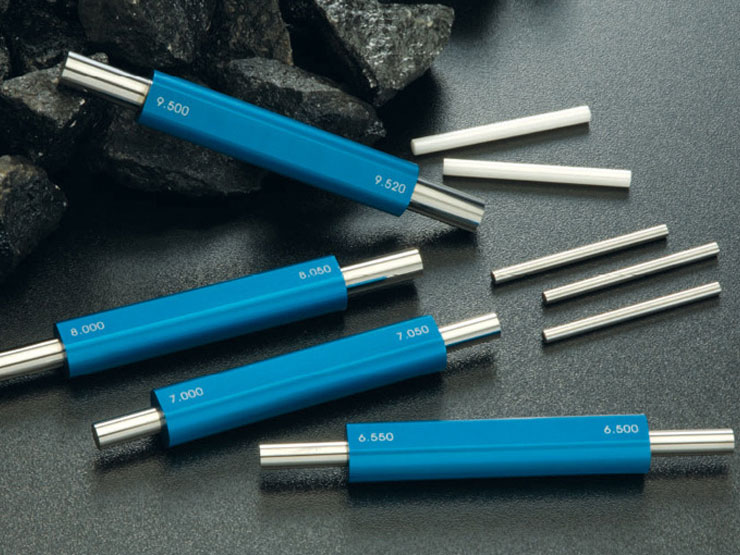
| Plug gauge (plain) | Tool steel 60 HRC | Diameter tolerance ±1 µm, roundness <0.5 µm |
| Thread plug gauge | High‑speed steel | Pitch diameter, flank angle, lead accuracy |
| Ring gauge (taper) | Hardened stainless | Taper angle ±0.001 mm per 100 mm |
| Snap gauge (calliper) | Carbide | Parallelism of measuring faces |
Each part receives a serial number and a full dimensional report with measurement uncertainty calculation.
View gallery of lathe‑machined gauge components.
Challenges in Gauge Parts Lathe Machining
● Thermal growth: Even a 2°C rise can push a 100 mm plug gauge out of tolerance. We machine in climate‑controlled rooms (20°C ±0.5°C) and let parts soak before final passes.
● Edge burrs: A microscopic burr on a go‑gauge can reject good parts. We use deburring passes with specially honed tools and optional vibratory finishing.
● Thread accuracy: For thread gauges, we combine single‑point threading with CNC interpolation, followed by lapping for Class 3 fit.
For an authoritative discussion on thread gauge production standards, refer to this external guide: Thread gauge standards and machining considerations.
Why Choose a Specialist for Gauge Parts?
Many job shops can turn a cylinder, but very few can consistently hold 1‑micron tolerances on hardened steel or carbide. As a dedicated provider of gauge parts lathe parts machining, we offer:
● ISO 17025‑calibrated in‑house metrology (temperature‑controlled lab).
● Full traceability from raw material certification to final inspection.
● Short runs accepted – from 1 prototype to 50 pieces, each inspected 100%.
Request a Quote for Your Gauge Components
Upload your technical drawing (PDF or STEP). Our engineers will review tolerances, recommend the optimal turning strategy, and provide a firm quote within 48 hours. We also offer reverse engineering of worn‑out master gauges.
Add: Building 3No.277 Zhen'an Middle Road, Chang'an Town,Dongguan,Guangdong, China
Tel:+86-769-82855591
Copyright © 2019 All Rights Reserved Dongguan Start Precision Technology Co., Ltd. Tel: +86-769-82855591
Add: No. 277 Zhen'an Middle Road, Chang'an Town, Dongguan, Guangdong, China



 中文版
中文版 English