Oil Cooler Housing Low Volume Precision Parts Machining
Date:2026-03-05Article editor:Starting Point PrecisionViews:501Oil cooler housings are critical components that must withstand high pressures, temperature extremes, and corrosive environments while maintaining leak-free performance. When production volumes are too low for die casting, or when design iterations continue, low volume precision machining offers the ideal solution—delivering functional housings without the lead time and tooling costs of high-volume methods.
The Critical Function of Oil Cooler Housings
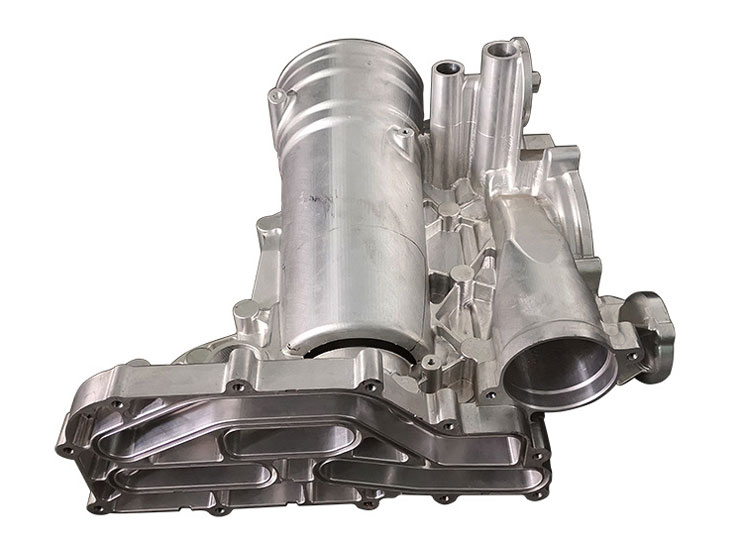
Oil coolers maintain proper operating temperatures in engines, transmissions, and hydraulic systems. The housing provides fluid containment, heat transfer interface, port mounting, structural support, and flow management. Failure can lead to catastrophic system loss, making precision manufacturing essential.
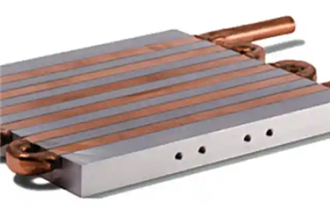
A typical oil cooler assembly with machined housing is shown here:
Why Machining Beats Casting for Low Volumes
| Factor | Casting | Machining |
|---|---|---|
| Tooling cost | $20,000 - $50,000 | $0 - $2,000 |
| Lead time | 8-16 weeks | 1-2 weeks |
| Minimum quantity | 500-1000 pieces | 1-100 pieces |
| Design changes | Expensive mold modifications | Instant CAD updates |
| Material properties | Potential porosity | 100% dense wrought material |
For quantities under 500 pieces annually, machining is almost always more economical.
1. Material Selection
Aluminum Alloys: 6061-T6 (corrosion resistance, economical), 7075-T6 (highest strength)
Stainless Steels: 303 (best machinability), 304/316 (superior corrosion resistance)
Brass/Bronze: 360 brass (excellent machinability), C954 aluminum bronze (wear resistance)
Material certification and traceability are essential.
2. Critical Features and Machining Challenges
Threaded Ports: SAE, NPT, or metric threads with strict class requirements and O-ring sealing contours.
Sealing Surfaces: Flatness within 0.025mm, surface finish of 0.8µm Ra or better, no tool marks crossing seal paths.
Internal Passages: Cross-drilled holes intersecting precisely, burr-free to prevent contamination.
Mounting Features: Dowel pin holes, counterbored fastener clearance, threaded mounting holes.
Modern CNC turning centers with live tooling from Haas and DMG MORI machine all features in single setups.
3. Sealing Integrity and Leak Testing
Machining achieves leak-free performance through mirror finishes on sealing faces, controlled flatness, proper thread quality, and correct port geometry.
After machining, every housing requires leak testing:
Pressure decay testing
Helium mass spectrometry
Immersion bubble testing
Flow testing
4. Surface Treatment Options
Anodizing: Type II for corrosion protection, Type III hard coat for wear resistance.
Passivation: For stainless steel, removes free iron.
Plating: Electroless nickel, zinc, or silver plating.
Painting: Epoxy or polyurethane coatings.
Selection depends on operating environment and fluid compatibility.
5. Cleanliness Requirements
Oil cooler housings must be surgically clean. Machining processes include:
Complete deburring of all edges
Aqueous or solvent washing
Internal passage flushing
Filter testing to ISO 4406 or NAS 1638 standards
6. Design for Machinability
Avoid deep, small-diameter passages
Specify generous radii to reduce stress
Standardize thread sizes
Ensure tool access to all features
Design for single setup
Allow adequate wall thickness
Early design-manufacturing collaboration optimizes both function and producibility.
7. Prototype to Production Transition
Prototype (1-5 pieces): Validate geometry, fit, thermal performance, sealing concept.
Validation (10-50 pieces): Statistical verification, environmental testing, field trials.
Low Volume Production (50-500 pieces/year): Consistent quality, JIT delivery, continuous improvement.
This approach eliminates expensive tooling risk before design validation.
8. Quality Assurance
First article inspection with full dimensional reporting
In-process verification of critical features
CMM final inspection
Surface finish measurement
Thread gauging
Hardness testing
Material certification traceability
Statistical process control maintains capability above 1.33 for critical dimensions.
Applications Across Industries
Automotive: Engine, transmission, power steering, differential coolers
Heavy Equipment: Hydraulic system, transmission, engine coolers
Industrial: Lubrication systems, hydraulic power units, compressor cooling
Marine: Engine, transmission, hydraulic system cooling
Motorsports: High-performance racing, weight-optimized designs
Conclusion
Oil cooler housing low volume precision machining delivers production-ready components without the lead time, cost, and risk of casting. By leveraging modern CNC technology, rigorous quality systems, and deep understanding of sealing requirements, machined housings meet or exceed cast equivalent performance while offering greater design flexibility and faster time to market.
Please contact our engineering team to discuss your requirements.
Add: Building 3No.277 Zhen'an Middle Road, Chang'an Town,Dongguan,Guangdong, China
Tel:+86-769-82855591
Copyright © 2019 All Rights Reserved Dongguan Start Precision Technology Co., Ltd. Tel: +86-769-82855591
Add: No. 277 Zhen'an Middle Road, Chang'an Town, Dongguan, Guangdong, China



 中文版
中文版 English