Laboratory‑Instrument Lathe Parts Machining: Precision & Sensitivity
Date:2026-04-10Article editor:Starting Point PrecisionViews:455In analytical and biomedical laboratories, instruments such as spectrometers, centrifuges, and atomic force microscopes depend on mechanical components that operate at the edge of physical limits. Lathe parts machining for these instruments is not conventional turning—it is a specialized process where precision (dimensional exactness) and sensitivity (response to thermal and dynamic loads) directly determine experimental validity.
Why Precision Is Non‑Negotiable
A deviation of just 0.5 µm in a centrifuge spindle or an optical mount can introduce unacceptable measurement errors. Precision lathe machining achieves tolerances of ±1 µm or better through:
● Hydrostatic or air‑bearing spindles with <0.05 µm runout.
● Closed‑loop servo drives and linear scales with 0.1 µm resolution.
● Real‑time tool wear and thermal compensation.
For example, a rotor shaft in an ultracentrifuge must be concentric within 0.2 µm to avoid vibration that ruins sample separation. Such accuracy is only possible with ultra‑precision CNC lathes combined with laser interferometry feedback.
Sensitivity: The Overlooked Requirement
Sensitivity refers to how a lathe‑machined part behaves under temperature changes, mechanical loads, or rotational forces. A sample holder in a nano‑indenter must not drift more than 20 nm/°C. To achieve this:
● Materials with low thermal expansion (super invar, silicon carbide) are selected.
● Designs incorporate symmetry and stress‑relieving features.
● Machining uses sharp tools and low cutting forces to avoid residual stresses.
Key Machining Techniques for Lab Instruments
1.Diamond turning – Produces optical finishes (Ra < 5 nm) on non‑ferrous metals and plastics. Ideal for lens holders and mirror mounts.
2.Hard turning – Replaces grinding for hardened steels (up to 65 HRC) with tolerances ±2 µm, reducing lead time for prototype parts.
3.Vibration‑assisted machining – Lowers cutting forces, preventing deformation of thin‑walled lab components such as capillary tube holders.
Each method requires in‑process metrology. White light interferometers and laser micrometers verify dimensions to 0.01 µm.
Quality Assurance: Validating Both Precision and Sensitivity
Every batch of laboratory lathe parts undergoes:
● Geometric inspection – Roundness, cylindricity, and flatness measured with CMM and air‑gauge probes.
● Sensitivity test – The part is subjected to a temperature cycle (15 °C to 35 °C) while deflection is recorded using capacitive sensors. Acceptance criterion: thermal drift <0.1 µm/°C.
● Surface integrity check – No burrs, micro‑cracks, or residual stresses (validated by X‑ray diffraction if needed).
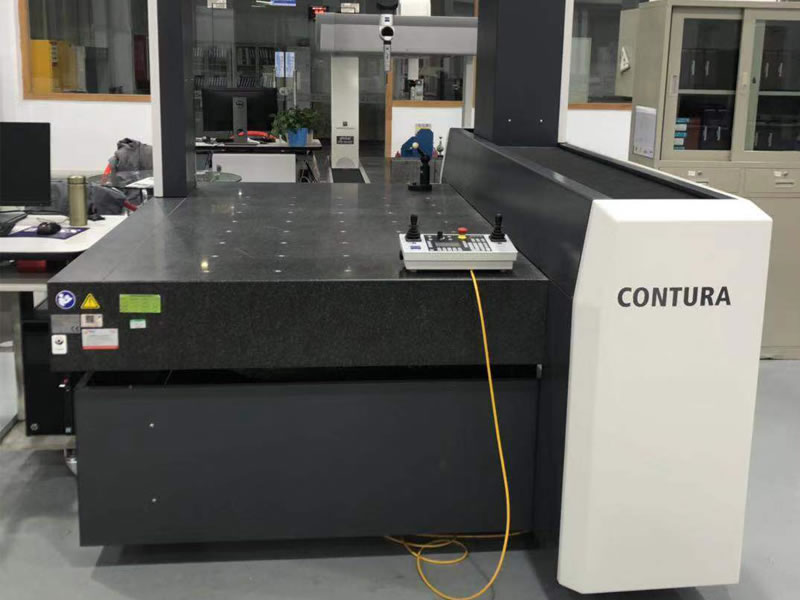
Real‑World Example: NMR Spectrometer Rotor
A recent project involved a rotor shaft for a nuclear magnetic resonance (NMR) spectrometer. Requirements: total indicated runout (TIR) <0.3 µm, thermal drift <50 nm/°C, and surface roughness Ra <0.02 µm. By combining hard turning with cryogenic treatment and selective assembly, the final parts achieved TIR 0.2 µm and drift 35 nm/°C. This enabled sub‑ppm spectral resolution, directly improving analytical sensitivity.
Conclusion
Laboratory‑instrument lathe parts machining is a field where precision and sensitivity are inseparable. Manufacturers must control every variable—material selection, cutting parameters, thermal management, and metrology—to produce components that support breakthrough science. By adopting advanced lathe technologies and rigorous validation protocols, it is possible to deliver parts that not only fit but also perform reliably under the most demanding lab conditions.
For further reading on advanced turning methods:
[External Link: https://www.sciencedirect.com/topics/engineering/ultra-precision-turning]
Request a quote for your custom lathe parts.
Add: Building 3No.277 Zhen'an Middle Road, Chang'an Town,Dongguan,Guangdong, China
Tel:+86-769-82855591
Copyright © 2019 All Rights Reserved Dongguan Start Precision Technology Co., Ltd. Tel: +86-769-82855591
Add: No. 277 Zhen'an Middle Road, Chang'an Town, Dongguan, Guangdong, China



 中文版
中文版 English