CNC Turning Parts with Anti-Rust Treatment: Ensuring Long-Term Performance
Date:2026-04-15Article editor:Starting Point PrecisionViews:498Moisture, chemicals, and humidity are silent enemies of precision metal components. For mechanical equipment operating in harsh environments, rust can lead to premature failure, increased downtime, and costly replacements. That’s why CNC turning parts with anti-rust treatment have become essential for industries ranging from agriculture to marine engineering.
What Is Anti-Rust Treatment for CNC Turned Parts?
Anti-rust treatment refers to surface finishing processes applied after CNC turning to protect metal parts from oxidation and corrosion. Common methods include zinc plating, nickel plating, black oxide, passivation (for stainless steel), and organic coatings like epoxy or PTFE. These treatments create a barrier between the metal surface and environmental elements such as water, salt, acids, or industrial pollutants.
Why Anti-Rust Protection Matters
CNC turned parts are often made from carbon steel, alloy steel, or cast iron – materials that offer excellent mechanical strength but are vulnerable to rust. Even stainless steel can suffer from surface corrosion in aggressive conditions (e.g., chloride-rich environments). Applying anti-rust treatment delivers four key benefits:
1. Extended component life – Protection against pitting, crevice corrosion, and uniform surface rust.
2. Reduced maintenance – Less frequent replacement of bushings, shafts, and fasteners.
3. Improved aesthetics – Consistent appearance for exposed parts in consumer or industrial equipment.
4. Compatibility with lubricants – Certain coatings (like zinc phosphate) improve oil retention and reduce friction.
Common Anti-Rust Methods for CNC Turned Parts
Depending on the application and cost constraints, manufacturers choose among several proven techniques:
● Zinc electroplating – Cost-effective, provides sacrificial protection (zinc corrodes before steel). Ideal for fasteners, small shafts, and brackets. Yellow or clear chromate conversion adds extra corrosion resistance.
● Nickel plating (electroless or electrolytic) – Excellent hardness, uniformity, and corrosion resistance. Suitable for hydraulic components and precision threads.
● Black oxide – A thin conversion coating that adds mild rust resistance and reduces light reflection. Often used with a top oil or wax seal.
● Passivation – For stainless steel turned parts, passivation removes free iron from the surface, forming a passive oxide layer that resists rust.
● Powder coating or PTFE – Thicker organic layers for extreme environments (marine, chemical plants).
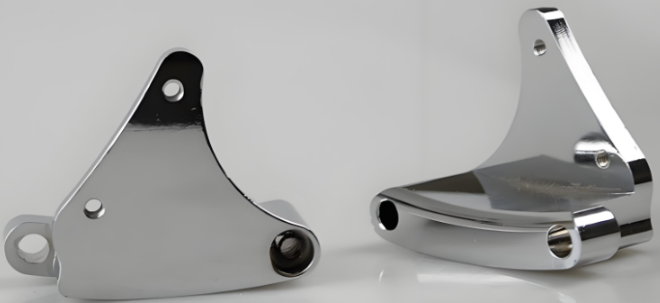
Machined parts that have undergone electroplating
Applications in Mechanical Equipment
CNC turned components with anti-rust treatment are widely found in:
● Outdoor machinery – Tractor linkage pins, pivot shafts, and exposed gearbox parts.
● Pump and valve systems – Stainless steel or nickel-plated valve stems, impeller shafts.
● Marine equipment – Deck hardware, winch drums, and steering components (often zinc-plated or coated with marine-grade epoxy).
● Food processing machinery – Passivated 304/316 stainless steel turned parts to prevent contamination.
Quality Control for Anti-Rust Coatings
Reputable CNC turning shops perform salt spray testing (ASTM B117) to verify corrosion resistance. Coating thickness is measured using X-ray fluorescence (XRF) or eddy current gauges. Adhesion tests (e.g., cross-cut tape test) ensure the treatment does not peel or flake during assembly or operation.
How to Specify Anti-Rust Treatment for Your Turned Parts
When ordering custom CNC turning parts with anti-rust treatment, provide the following information to your supplier:
● Base material (e.g., 1045 carbon steel, 303 stainless, or 6061 aluminum)
● Service environment (indoor, outdoor, saltwater, chemical exposure)
● Required coating type and thickness (e.g., zinc plating 8–12 µm, clear chromate)
● Post-treatment sealing (oil, wax, or topcoat)
● Testing requirements (e.g., 72 hours salt spray resistance)
Best Practices for Storage and Handling
Even with anti-rust treatment, proper storage extends part life. Keep treated parts in low-humidity environments (<50% RH), avoid contact with bare hands (acidic skin oils can degrade coatings), and use VCI (vapor corrosion inhibitor) packaging for long-term storage.
Conclusion
CNC turning parts with anti-rust treatment are a smart investment for any mechanical system exposed to moisture or chemicals. By selecting the right coating – zinc, nickel, black oxide, or passivation – engineers can dramatically reduce corrosion-related failures. Pairing precision CNC turning with robust anti-rust finishing ensures that your equipment runs reliably for years, even in the toughest conditions.
Add: Building 3No.277 Zhen'an Middle Road, Chang'an Town,Dongguan,Guangdong, China
Tel:+86-769-82855591
Copyright © 2019 All Rights Reserved Dongguan Start Precision Technology Co., Ltd. Tel: +86-769-82855591
Add: No. 277 Zhen'an Middle Road, Chang'an Town, Dongguan, Guangdong, China



 中文版
中文版 English