Sustainable Manufacturing of CNC Machining Parts: Eco-Friendly Practices
Date:2026-02-25Article editor:Starting Point PrecisionViews:593As global industries shift toward sustainability, the precision manufacturing sector is undergoing a significant transformation. The production of CNC machining parts traditionally involves significant energy consumption, material waste, and coolant usage. However, forward-thinking manufacturers are now adopting eco-friendly practices to reduce environmental impact while maintaining the highest quality standards. This article explores how sustainable manufacturing is reshaping the CNC machining industry.
Why Sustainability Matters in CNC Machining
The manufacturing sector accounts for a substantial portion of global carbon emissions and resource consumption. For companies producing CNC machining parts, embracing sustainability is no longer just an ethical choice—it is a competitive advantage. Customers increasingly demand environmentally responsible supply chains, and regulatory pressures are mounting worldwide.
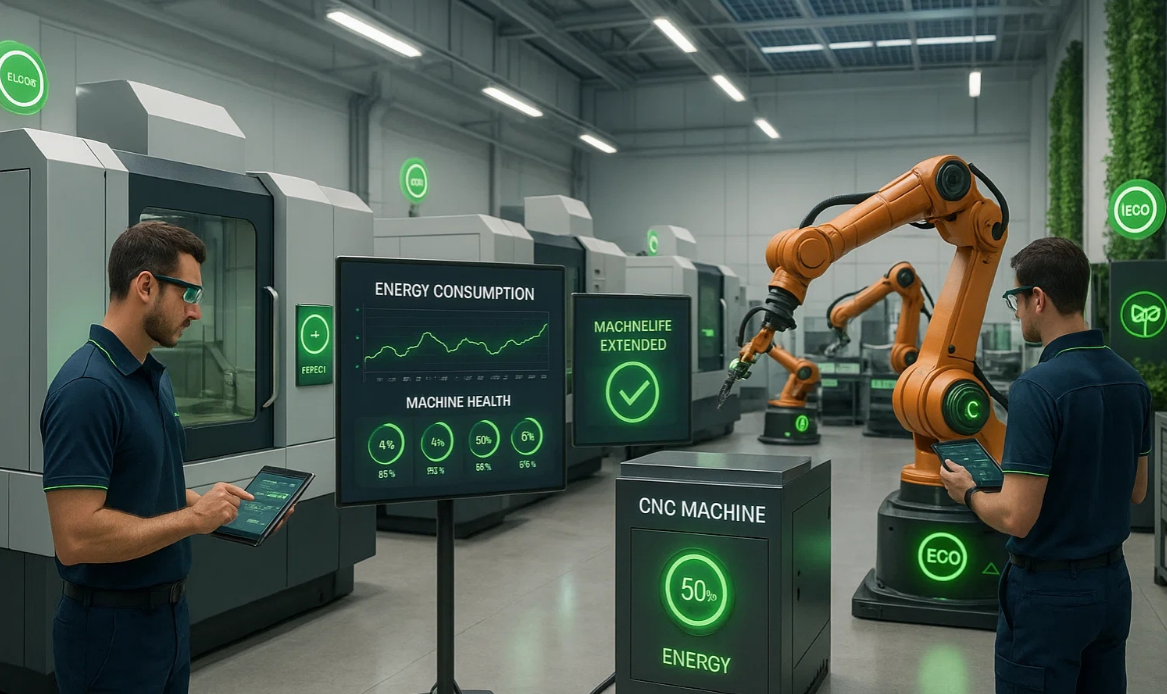
Modern CNC machining facility with energy-efficient equipment and proper waste management systems
Key Eco-Friendly Practices in CNC Machining
1. Energy-Efficient Machinery and Operations
Modern CNC machines are designed with energy efficiency in mind. Servo motors, regenerative braking systems, and intelligent power management can reduce electricity consumption by up to 30% compared to older models. Manufacturers can further optimize by:
● Scheduling production runs to minimize idle time
● Using high-efficiency coolant pumps
● Implementing machine shutdown protocols during extended breaks
2. Material Optimization and Waste Reduction
Material waste is a significant concern in machining, where parts are carved from solid blocks. Sustainable practices include:
● Near-net shape manufacturing: Using forging or casting to create blanks close to final dimensions
● Toolpath optimization: Advanced CAM software that minimizes scrap
● Recycling chips and swarf: Metal scraps are collected and sent for re-melting
● Reusing drop material: Smaller parts are designed to fit into leftover material from larger components
According to the U.S. Environmental Protection Agency – Sustainable Manufacturing, material efficiency improvements can significantly reduce both costs and environmental footprint.
3. Eco-Friendly Cutting Fluids and Coolant Management
Traditional cutting fluids contain hazardous chemicals and require proper disposal. Sustainable alternatives include:
● Vegetable-based or synthetic biodegradable coolants that break down safely
● Minimum Quantity Lubrication (MQL) systems that use tiny amounts of lubricant in an air stream, nearly eliminating fluid waste
● Coolant recycling systems that filter and reuse fluids, extending their life by months
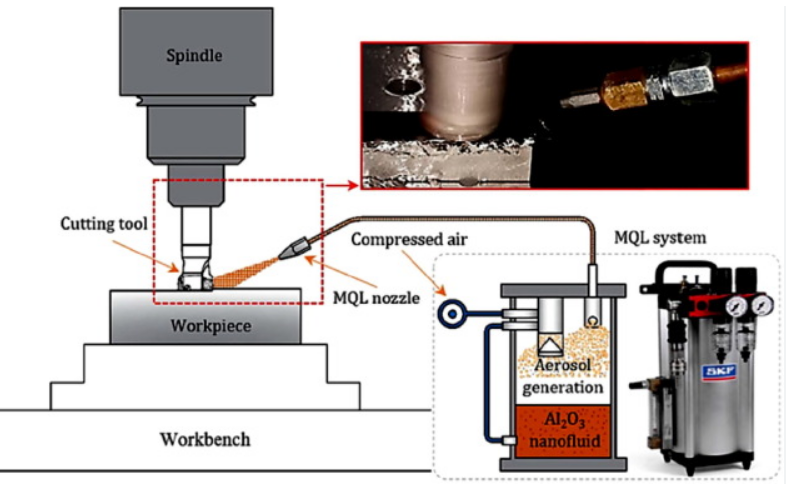
MQL system delivering precise lubrication to a cutting tool
4. Sustainable Packaging and Logistics
The environmental impact of CNC machining parts extends beyond the factory floor. Eco-friendly packaging solutions include:
● Using recycled and recyclable materials
● Right-sizing packages to reduce waste
● Eliminating single-use plastics
● Consolidating shipments to reduce transportation emissions
5. Lean Manufacturing Principles
Lean manufacturing naturally aligns with sustainability by eliminating waste in all forms—not just material waste, but also wasted time, energy, and motion. Implementing 5S methodology, value stream mapping, and continuous improvement (Kaizen) creates a culture of efficiency that benefits both the bottom line and the planet.
Certifications and Standards
Customers seeking sustainable CNC machining parts often look for certifications that validate environmental claims. Relevant certifications include:
● ISO 14001: Environmental management systems
● ISO 50001: Energy management
● LEED certification for green buildings
● Carbon footprint reporting according to GHG Protocol standards
For more information on environmental management standards, visit ISO.org – ISO 14001.
Case Study: Reducing Carbon Footprint in Aerospace Machining
A recent collaboration between our facility and an aerospace client demonstrates the potential of sustainable practices. By optimizing toolpaths, switching to MQL cooling, and recycling titanium chips, we achieved:
● 22% reduction in energy consumption
● 35% decrease in coolant usage
● 95% recycling rate for metal waste
● 15% cost savings passed to the customer
The Future of Sustainable CNC Machining
Emerging technologies promise even greater sustainability gains:
● Additive-subtractive hybrid manufacturing that combines 3D printing with CNC finishing
● Artificial intelligence for predictive maintenance and process optimization
● Green energy powered facilities with solar or wind energy
● Blockchain-based traceability for verifying sustainable supply chains
Conclusion
Sustainable manufacturing of CNC machining parts is not just an environmental imperative—it is a smart business strategy. By implementing energy-efficient practices, reducing waste, using eco-friendly coolants, and optimizing packaging, manufacturers can lower costs, meet customer expectations, and contribute to a healthier planet.
As a responsible CNC machining partner, we are committed to continuous improvement in our environmental performance. We invite you to join us on this journey toward greener manufacturing.
For inquiries about our sustainable manufacturing capabilities or to discuss your project requirements, please contact our team.
Add: Building 3No.277 Zhen'an Middle Road, Chang'an Town,Dongguan,Guangdong, China
Tel:+86-769-82855591
Copyright © 2019 All Rights Reserved Dongguan Start Precision Technology Co., Ltd. Tel: +86-769-82855591
Add: No. 277 Zhen'an Middle Road, Chang'an Town, Dongguan, Guangdong, China



 中文版
中文版 English