Aluminum Precision Turned Parts with Mirror Surface Finish
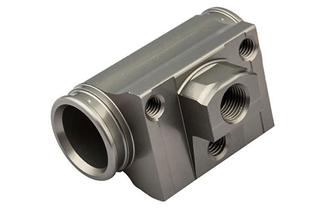
Date:2026-08-07Article editor:Starting Point PrecisionViews:166In the realm of high-precision manufacturing, Aluminum Precision Turned Parts with a mirror surface finish represent the ultimate benchmark of quality and precision. These components are critical in industries where surface integrity and dimensional accuracy are non-negotiable, ranging from aerospace and automotive to medical devices and optics.
Producing Aluminum Precision Turned Parts with a mirror-like finish is a sophisticated process that demands an intersection of superior materials, state-of-the-art machinery, and meticulous process control. The journey to achieving this reflective surface begins not at the polishing stage, but with the selection of the right aluminum alloy and the deployment of advanced turning centers.
The foundation of any high-quality Aluminum Precision Turned Part is the material itself. For mirror finishes, alloys like 6061 or 7075 are often preferred for their excellent machinability and consistent grain structure. For detailed material properties, you may refer to industry standards from the Aluminum Association . However, the raw material is only the starting point. The true transformation occurs on the machine, where precision and stability are paramount.
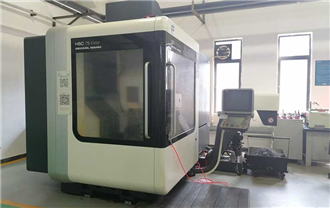
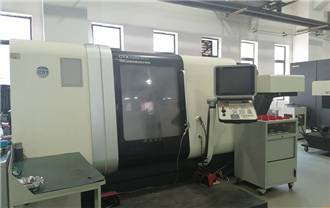
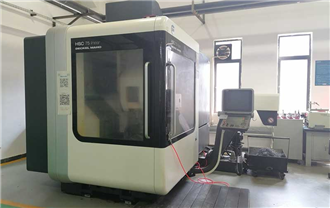
For example, our facility utilizes advanced CNC turning machining centers like the Germany DMG CTX beta 800 and Japan TAKZSAWA NEX-108. These machines are equipped with high-speed spindles and ultra-rigid construction, which are essential for minimizing vibration—the primary enemy of a mirror finish.
Below is a comparative look at key turning equipment specifications:
| Equipment Model | Brand | Key Feature | Application for Mirror Finish |
| DMG CTX beta 800 | Germany | High stability, powerful spindle | Ideal for larger diameter Aluminum Precision Turned Parts requiring extreme consistency. |
| TAKZSAWA NEX-108 | Japan | High-speed, high-rigidity turret | Excellent for high-volume production of smaller, intricate parts with demanding surface finish requirements. |

The precision is further enhanced by our supporting equipment, which includes Japan Seibu M50B and Sodick ALN400Gs slow wire cutting machines for secondary operations, ensuring that every feature of the Aluminum Precision Turned Part meets the most stringent specifications.
Achieving a mirror surface finish on Aluminum Precision Turned Parts is a multi-step endeavor that goes far beyond simple machining. It requires a holistic approach to the manufacturing process.
1. High-Speed Precision Turning: The initial turning operation is performed with carefully selected polycrystalline diamond (PCD) tools. For guidance on PCD tooling selection, you can explore resources from leading manufacturers like Sandvik Coromant . These tools, combined with high cutting speeds and very low feed rates, create a primary surface that is exceptionally smooth. This step is crucial for Aluminum Precision Turned Parts as it minimizes the depth of the "peaks and valleys" left by standard machining.
2. Vibration Dampening and Rigidity: A mirror finish cannot be achieved if the machining system is unstable. The rigidity of the DMG and TAKZSAWA machines, coupled with the use of specialized workholding, ensures that even the finest cuts are executed without chatter.
3. Micro-Polishing and Burnishing: In many cases, a secondary micro-polishing or diamond burnishing process is applied to the Aluminum Precision Turned Parts. This step mechanically deforms the microscopic peaks of the surface, flattening them into a continuous, mirror-like plane.
4. Rigorous Quality Control: The final surface is validated using profilometers and visual inspection under high-intensity light to ensure that the finish meets or exceeds an Ra value of 0.05 µm, a true mirror shine. Surface roughness measurement standards are defined by ISO 21920.
Quality assurance for these parts is stringent. We adhere to ISO 9001:2015 standards and employ advanced Coordinate Measuring Machines (CMM) to verify every critical dimension. This commitment to quality ensures that every batch of Aluminum Precision Turned Parts performs reliably.
The application of these high-finish parts is diverse:
● In the medical field, they are used for surgical tools and optical components.
● In the automotive industry, they are essential for sensors and precision fuel system components.
● In aeronautics, they contribute to lightweight, high-performance assemblies.
A leading manufacturer of high-end optical equipment approached us with a challenge: they required a series of aluminum housings with a mirror surface finish for their next-generation laser systems. The components had complex internal geometries and required a flawless exterior finish to ensure proper light reflection and a premium aesthetic.
By leveraging our DMG CTX beta 800 and a tailored PCD tooling strategy, combined with a secondary diamond burnishing process, we were able to produce Aluminum Precision Turned Parts that not only met but exceeded their surface finish requirements of Ra < 0.04 µm. Our rigorous quality control protocols ensured 100% compliance with their dimensional tolerances, leading to a long-term partnership and a significant reduction in their post-processing costs.
The mastery of producing Aluminum Precision Turned Parts with a mirror surface finish is a testament to a manufacturer's technical capability and commitment to excellence. It is a process that demands the best in materials, equipment from leaders like DMG and TAKZSAWA, and an unwavering dedication to quality.
For your most demanding projects, trust in a partner who understands the science and art of precision. We invite you to explore our capabilities and see how our expertise can bring your designs to life. Visit our homepage to learn more about our overall services, or check our precision equipment list for detailed machine specifications.
Contact us to discuss your manufacturing requirements and discover the Start Precision difference.
Q1: What is the typical surface roughness (Ra) for a "mirror finish" on aluminum parts?
A1: A true mirror finish on Aluminum Precision Turned Parts typically achieves a surface roughness average (Ra) of 0.05 µm or less. In some specialized cases, we can achieve finishes as fine as Ra 0.01 µm.
Q2: Which aluminum alloy is best for achieving a mirror surface finish?
A2: While many alloys can be polished, 6061-T6 and 7075-T6 aluminum are excellent choices due to their fine grain structure and consistent machining properties. The choice often depends on the required mechanical properties of the final Aluminum Precision Turned Part.
Q3: How does vibration affect the surface finish of turned parts?
A3: Vibration is the primary cause of chatter marks and poor surface finish. The high-rigidity design of machines like the DMG CTX beta 800 and TAKZSAWA NEX-108 is critical for dampening vibration and achieving a smooth, mirror-like surface on Aluminum Precision Turned Parts.
Q4: What quality standards do you follow for these parts?
A4: Our facility operates under strict ISO 9001:2015 quality management systems. Additionally, we utilize advanced CMM and surface profilometers for 100% inspection of critical features, ensuring every Aluminum Precision Turned Part meets your exact specifications.
Q5: How do you ensure consistent quality across a large production run?
A5: Consistency is achieved through a combination of automated CNC processes, in-process gauging, and a strict statistical process control (SPC) protocol. This ensures that each Aluminum Precision Turned Part remains within its tight tolerances from the first piece to the last.
Add: Building 3No.277 Zhen'an Middle Road, Chang'an Town,Dongguan,Guangdong, China
Tel:+86-769-82855591
Copyright © 2019 All Rights Reserved Dongguan Start Precision Technology Co., Ltd. Tel: +86-769-82855591
Add: No. 277 Zhen'an Middle Road, Chang'an Town, Dongguan, Guangdong, China



 中文版
中文版 English