Precision Brass Components for Hydraulic Valves
Date:2026-08-06Article editor:Starting Point PrecisionViews:202In the demanding world of fluid power systems, the performance and reliability of hydraulic valves depend fundamentally on the quality of their internal components. Precision brass components for hydraulic valves represent a critical intersection of material science, machining precision, and rigorous quality control. This article explores the manufacturing processes, quality parameters, and engineering considerations that define superior brass valve parts, essential for applications ranging from construction equipment to aerospace actuation systems.
Brass, an alloy of copper and zinc, offers unique properties that make it ideal for hydraulic valve components. Its natural lubricity reduces friction between moving parts, while its corrosion resistance ensures longevity in challenging environments. Furthermore, brass provides excellent machinability, allowing the creation of complex geometries essential for modern valve designs.
When manufacturing precision brass components for hydraulic valves, the process must account for several critical factors. The material’s microstructure directly influences machinability and final part performance. High-quality brass alloys, such as CW614N or CZ121, are preferred for their balanced properties of strength and formability.
The production of high-precision brass components requires state-of-the-art equipment and meticulous process control. Modern manufacturing facilities employ a range of advanced machinery to achieve the required tolerances and surface finishes. Key equipment includes CNC turning centers, multi-axis machining centers, and specialized finishing equipment.
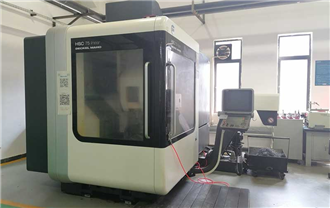
Below is a representative list of precision equipment used in manufacturing such components, sourced from advanced facilities (see our complete Precision Equipment List for more models):
| Equipment Type | Brand/Model | Key Capability | Typical Application |
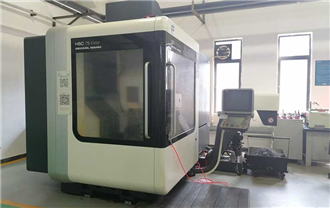
| 5-Axis Machining Center | Germany DMG HSC 75 linear | Complex contouring, ±0.01mm tolerance | Valve bodies with intricate ports |
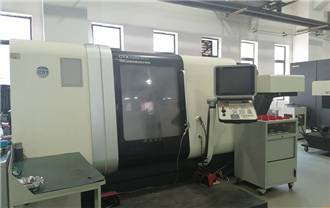
| CNC Turning Center | Germany DMG CTX beta 800 | High-speed precision turning | Spools, pistons, and threaded fittings |
| CNC Turning Center | Japan TAKZSAWA NEX-108 | Hard turning, fine surface finish | Precision sleeves and seats |
| Vertical Machining Center | Japan LGMazak VCN-510C | Multi-face milling and drilling | Manifold blocks and mounting flanges |
| Slow Wire Cutting EDM | Japan Sodick ALN400Gs | High-accuracy profile cutting | Complex internal slots and forms |
For precision brass components for hydraulic valves, three key quality parameters dominate engineering specifications:
1. Internal Bore Roughness
The internal bore roughness of a hydraulic valve component directly impacts its performance. Excessive roughness causes increased leakage (internal cross-port leakage) and higher friction, leading to sticky valves and poor response times.
● Parameter: Surface roughness (Ra) is typically specified.
● Target: For critical sealing and spool bores, Ra ≤ 0.4 μm is often required.
● Achievement: This level of finish is achieved through a combination of precise turning, followed by processes like reaming, ball-sizing, or diamond burnishing.
Flow path smoothness influences pressure drop and cavitation risk. Rough surfaces in flow channels create turbulence, reducing efficiency and generating noise.
● Requirement: Flow channels must have a smooth finish, typically Ra ≤ 0.8 μm to 1.6 μm, depending on flow velocity.
● Process: Achieved through meticulous milling, deburring, and abrasive flow machining (AFM) where necessary.
Hydraulic systems frequently operate at high pressures, with 35 MPa (approx. 5,000 PSI) being a common benchmark for mobile and industrial hydraulics.
● Test Protocol: Every critical brass component must withstand a hydrostatic or pneumatic pressure test at 35 MPa (or 1.5 times working pressure) without leakage or deformation.
● Standard: Meets or exceeds ISO 4413 and relevant international standards for hydraulic fluid power systems.
A recent project involved manufacturing a complex brass spool for a high-flow directional control valve used in mobile excavators. The challenges included maintaining a micron-level bore fit over a 120mm length and achieving a leak-free seal at 35MPa.
Project Requirements & Solutions:
| Requirement | Specification | Solution |
| Material | CZ121 Brass, free-cutting grade | Selected for machinability and wear resistance. |
| Key Tolerances | Spool diameter: 25.000 mm / 24.995 mm | Achieved using a DMG CTX beta 800 with in-process gauging. |
| Surface Finish (Bore) | Ra ≤ 0.4 μm | Implemented a diamond burnishing step post-turning. |
| Flow Geometry | Complex port profiles for smooth flow | Programmed on a DMG HSC 75 linear 5-axis machine. |
| Pressure Integrity | Zero leakage @ 35 MPa for 60 seconds | Each part serialized and tested on a dedicated pressure test stand. |
The project delivered a 20% improvement in spool response time due to the reduced friction afforded by the superior surface finish, exceeding the customer's performance expectations.
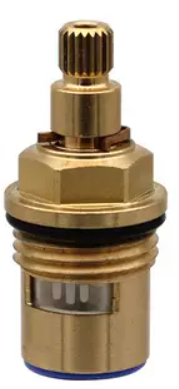
At Dongguan Start Point Precision Technology Co., Ltd., we combine advanced manufacturing capabilities with decades of engineering expertise to produce superior precision brass components for hydraulic valves. Our facility is equipped with the high-end machinery listed above, including DMG and Mazak equipment, allowing us to maintain tolerances as tight as ±0.01mm. For a complete overview of our precision equipment, please visit our dedicated precision machining page.
Our commitment to quality is evidenced by our strict adherence to ISO 9001 standards, and every component undergoes rigorous inspection using coordinate measuring machines (CMMs) and surface roughness testers.
The manufacturing of precision brass components for hydraulic valves is a sophisticated engineering discipline. The interplay of advanced CNC machining, meticulous process control, and rigorous testing—including internal bore roughness management, flow channel optimization, and 35MPa pressure testing—is what differentiates a reliable component from a potential point of failure. By partnering with a manufacturer that understands these nuances and invests in world-class equipment, you ensure the performance and safety of your hydraulic systems.
Contact us today to discuss your manufacturing requirements and discover how our precision engineering capabilities can bring your most demanding hydraulic designs to life.
1. Why is brass often chosen over steel for hydraulic valve components?
Brass is chosen for its excellent machinability, natural lubricity (which reduces wear on moving parts like spools), and superior corrosion resistance compared to many steels, especially in environments with water-contaminated hydraulic fluids. It also provides good thermal conductivity.
2. What is the typical surface roughness (Ra) achieved for the internal bore of a high-precision brass valve spool?
For critical applications, the internal bore or spool surface roughness is typically held to Ra ≤ 0.4 μm. This is often achieved using techniques like diamond burnishing or fine honing after the initial CNC turning process.
3. How do you ensure a component can withstand a 35 MPa pressure test without leaking?
Ensuring 35 MPa integrity involves three key steps: 1) Using high-quality, defect-free brass material; 2) Achieving extremely tight dimensional tolerances and a mirror-like surface finish on sealing diameters; and 3) Conducting a 100% pressure test on specialized equipment that monitors for pressure decay or uses a helium mass spectrometer for leak detection.
4. What is the minimum quantity you can produce for custom precision brass components?
As a specialist in both prototyping and volume production, we support projects from single-piece development to high-volume runs. We have no strict minimum order quantity (MOQ) for custom parts, facilitating concurrent engineering and rapid product development.
Add: Building 3No.277 Zhen'an Middle Road, Chang'an Town,Dongguan,Guangdong, China
Tel:+86-769-82855591
Copyright © 2019 All Rights Reserved Dongguan Start Precision Technology Co., Ltd. Tel: +86-769-82855591
Add: No. 277 Zhen'an Middle Road, Chang'an Town, Dongguan, Guangdong, China



 中文版
中文版 English