Copper CNC Turning Parts for Fittings: Precision, Performance, and Process
Date:2026-10-13Article editor:Starting Point PrecisionViews:95Copper fittings demand exacting tolerances, superior surface finishes, and reliable performance across plumbing, HVAC, electrical, and industrial fluid systems. Achieving these requirements at scale requires more than standard machining—it requires Copper CNC Turning Parts engineered with the right alloy selection, tooling strategy, and process control. This article breaks down how modern turning operations deliver fitting components that seal, thread, and endure.
Why Copper Alloys Are Specified for Fittings
Copper and its alloys—brass, bronze, and copper-nickel—offer a rare combination of thermal conductivity, corrosion resistance, and machinability. For fittings, the choice of alloy directly affects thread strength, pressure rating, and longevity.
| Alloy | Typical UNS | Key Properties | Common Fitting Applications |
| C36000 Free-Cutting Brass | C36000 | Excellent machinability, good strength | Valves, adapters, couplings |
| C37700 Forging Brass | C37700 | High ductility, hot forgeable | Gas fittings, plumbing connectors |
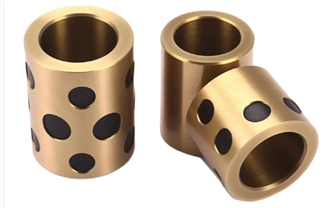
| C93200 Bearing Bronze | C93200 | Wear resistance, load capacity | Pump fittings, bushings |
| C70600 Copper-Nickel | C70600 | Seawater corrosion resistance | Marine fittings, heat exchangers |
Turning copper alloys requires controlled speeds, sharp tooling, and thermal management to prevent galling and built-up edge. The table below outlines representative parameters for Copper CNC Turning Parts used in fitting production.
| Parameter | Typical Range | Notes |
| Spindle Speed | 1,200–3,500 RPM | Higher for free-cutting brass |
| Feed Rate | 0.05–0.25 mm/rev | Dependent on thread pitch and finish |
| Tool Material | Uncoated carbide, PCD | PCD for high-volume brass |
| Surface Finish | Ra 0.4–1.6 µm | Sealing faces require Ra ≤ 0.8 µm |
| Thread Tolerance | Class 2A/2B (UN) or 6H/6g (Metric) | Critical for leak-free joints |
| Concentricity | ≤ 0.02 mm | Ensures proper mating |
At Start Point Precision, copper fitting components move through a disciplined workflow:
● Material verification – Alloy certification and diameter inspection before loading
● CNC turning – Multi-axis turning centers with live tooling for cross-drilling and threading
● In-process gauging – Thread ring/plug gauges, optical comparators, and surface roughness testers
● Deburring and cleaning – Ultrasonic cleaning to remove chips from internal passages
● Final inspection – Dimensional report and visual inspection per sampling plan
For complex geometries—such as angled hose barbs or multi-port manifolds—we deploy five-axis precision machining to reduce setups and improve positional accuracy. The precision equipment list on that page details the specific turning and milling platforms used for copper alloy work.
Equipment and Tooling Highlights
| Equipment Type | Capability | Benefit for Copper Fittings |
| Sliding Headstock CNC | Ø2–32 mm bar capacity | High-volume small fittings |
| Multi-Spindle Turning | 6–8 spindles | Complex parts in one cycle |
| Live Tooling Turret | Drilling, milling, tapping | Reduced secondary operations |
| Automatic Bar Feeder | 3–6 m bars | Unattended production |
| High-Pressure Coolant | 70–100 bar | Chip evacuation in deep bores |
Quality Control That Matches Fitting Standards
Copper fittings often fall under ANSI/ASME B16, ISO 228, or SAE J512 standards. Our inspection protocols include:
● Thread profile verification using calibrated gauges
● Pressure testing on sample batches for leak integrity
● Material traceability from heat number to finished lot
● Statistical process control (SPC) on critical dimensions
External reference: Copper Development Association provides alloy property data and industry guidance.
Real-World Example: Brass Adapter Fitting
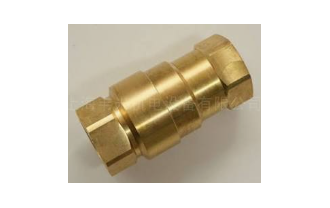
A customer required 50,000 pieces of a C36000 brass adapter with a 1/4" NPT male thread, 3/8" hose barb, and a hexagonal wrench flat. The challenge was maintaining thread concentricity to the barb within 0.03 mm while holding a 0.8 µm finish on the sealing face.
Our solution used a sliding headstock CNC with a dedicated form tool for the barb, integrated thread milling, and in-process laser inspection. First-article approval passed all dimensional and leak tests. Production ran at 98.5% first-pass yield with a 12-day lead time.
Conclusion
Copper CNC Turning Parts for fittings succeed when alloy selection, turning parameters, tooling, and inspection work together. By controlling speed, feed, tool material, and thread tolerance, manufacturers can deliver leak-free, corrosion-resistant components that meet stringent industry standards.
Q1: What copper alloys are best for CNC turning fittings?
C36000 brass is the most machinable. C37700 is preferred for forged fittings, while C70600 is used for marine applications.
Q2: Can copper fittings be turned with live tooling?
Yes. Live tooling allows cross-drilling, slotting, and thread milling in one setup, reducing handling and improving accuracy.
Q3: What surface finish is achievable on copper CNC turning parts?
Ra 0.4 µm is achievable with PCD tooling and proper coolant. Sealing faces typically require Ra ≤ 0.8 µm.
Q4: How do you prevent galling when turning copper?
Use sharp, polished tools, higher spindle speeds, and generous coolant flow. Avoid dwell and excessive feed hesitation.
Q5: What tolerances can be held on copper fittings?
Typical turning tolerances are ±0.02 mm, with concentricity ≤ 0.02 mm and thread class 2A/2B or 6H/6g.

Add: Building 3No.277 Zhen'an Middle Road, Chang'an Town,Dongguan,Guangdong, China
Tel:+86-769-82855591
Copyright © 2019 All Rights Reserved Dongguan Start Precision Technology Co., Ltd. Tel: +86-769-82855591
Add: No. 277 Zhen'an Middle Road, Chang'an Town, Dongguan, Guangdong, China



 中文版
 English