Copper Machining Services with Surface Finishing
Date:2026-10-19Article editor:Starting Point PrecisionViews:31Introduction
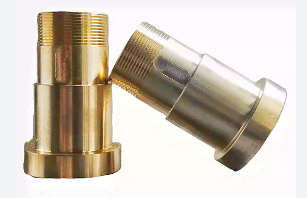
Copper Machining Services involve more than shaping raw material into a finished component. Copper's softness, ductility, and high thermal conductivity create specific challenges during cutting, deburring, and surface treatment. For parts used in electrical systems, thermal management assemblies, and precision equipment, the manufacturing process must protect critical dimensions while delivering a finish suited to the component's operating environment.
1. Copper Machining Challenges and Solutions
Copper can develop fine scratches, raised edges, and local deformation during machining. These issues become more significant when a part contains thin walls, narrow grooves, threaded holes, or close-fitting interfaces.
● Tool selection: Appropriate cutting tools and controlled machining parameters help limit material smearing and surface damage.
● Workpiece stability: Suitable clamping methods reduce movement and deformation when machining thin sections or delicate features.
● Chip management: Effective chip evacuation helps prevent loose copper chips from scratching finished surfaces.
● Edge treatment: Controlled deburring removes unwanted material around holes and slots without compromising functional edges.
● Dimensional planning: Machining allowances should account for any material added or removed during subsequent finishing operations.
These measures help establish a stable foundation for the finishing process instead of relying on polishing or coating to compensate for machining defects.
2. Surface Finishing Options for Copper Components
The appropriate finish depends on the component's function, environmental exposure, and appearance requirements.
| Surface treatment | Primary purpose | Important consideration |
| Mechanical polishing | Reduces visible machining marks and improves smoothness | Excessive polishing may alter dimensions or edge geometry |
| Brushing | Creates a consistent directional surface texture | The texture must match the specified appearance |
| Tin plating | Provides a metallic surface commonly used for electrical connections | Coating thickness and contact requirements must be defined |
| Nickel plating | Provides a functional coating for selected wear and environmental requirements | The coating may affect electrical and thermal interfaces |
| Silver plating | Supports selected high-conductivity contact applications | Tarnishing and service conditions should be evaluated |
| Protective coating | Limits exposure to selected environmental conditions | The coating must not obstruct functional contact areas |
No single treatment is suitable for every copper part. The finish should be selected according to measurable requirements rather than appearance alone.
For additional material information, consult the Copper Development Association.
3. A Manufacturing Route from Machining to Final Inspection
Each stage should address a different production risk.
1. Drawing assessment: Identify the copper grade, critical dimensions, surface roughness requirements, and areas requiring special treatment.
2. CNC machining: Produce the main geometry, mounting features, holes, threads, and mating surfaces using suitable cutting strategies.
3. Deburring and cleaning: Remove unwanted edges and machining residue before surface treatment.
4. Surface preparation: Prepare the component according to the selected finishing process to support consistent treatment results.
5. Finishing operation: Apply the specified polishing, plating, brushing, or compatible protective treatment.
6. Final verification: Check critical dimensions, surface condition, coating thickness where applicable, and other drawing-defined acceptance criteria.
For precision bores, threads, and mating faces, the inspection plan should account for coating buildup. Selected surfaces may require masking to preserve their original dimensions or electrical function.
4. Application Example: Copper Electrical Terminals
Consider a custom copper terminal designed for a power distribution assembly. It has a threaded mounting hole, a flat contact face, and a narrow section that must fit into a compact housing.
The manufacturing plan begins by identifying which features control assembly and which surfaces carry current. CNC machining establishes the geometry, followed by controlled edge finishing and cleaning. If tin or silver plating is specified, the finishing plan must define the required coating and protect surfaces that should remain untreated.
Final inspection checks the mounting dimensions, contact-face condition, and coating requirements. This application-specific approach reduces the risk of producing a part that looks correct but does not fit or perform as intended.
5. Custom Copper Machining Support
Successful production depends on coordinating material selection, machining strategy, surface treatment, and inspection requirements before manufacturing begins.
Visit Start Precision to learn more about its manufacturing services, or review the precision machining capabilities relevant to custom component production.
When requesting a quotation, provide the part drawing or 3D model, copper grade, order quantity, dimensional tolerances, surface finish requirements, and any coating or testing specifications.
Contact us to discuss your manufacturing needs. Share your drawings and technical requirements to evaluate suitable machining and finishing options for your copper components.
Frequently Asked Questions
1. What surface finish is suitable for CNC-machined copper?
The choice depends on the application. Polishing improves surface smoothness, brushing creates a directional texture, and plating can provide a specified metallic surface for selected electrical or environmental requirements.
Yes. Deposited material increases the dimensions of treated surfaces. Coating thickness should be considered when designing threads, precision bores, mating features, and close-clearance assemblies.
Yes. Masking can protect designated contact faces, threads, or other functional areas during suitable finishing processes. The masking plan should be agreed upon before production.
Appropriate tooling, stable workholding, controlled cutting conditions, and effective chip removal help reduce scratches, burrs, and material deformation. Surface preparation and inspection provide additional process control.
Provide engineering drawings or a 3D model, material grade, quantity, tolerances, surface roughness requirements, coating specifications, and inspection criteria. These details help determine a suitable production route.

Add: Building 3No.277 Zhen'an Middle Road, Chang'an Town,Dongguan,Guangdong, China
Tel:+86-769-82855591
Copyright © 2019 All Rights Reserved Dongguan Start Precision Technology Co., Ltd. Tel: +86-769-82855591
Add: No. 277 Zhen'an Middle Road, Chang'an Town, Dongguan, Guangdong, China



 中文版
 English